

Running a Retail Business Vs. Using Retail to Support Clinical Care in Your Optometry Practice
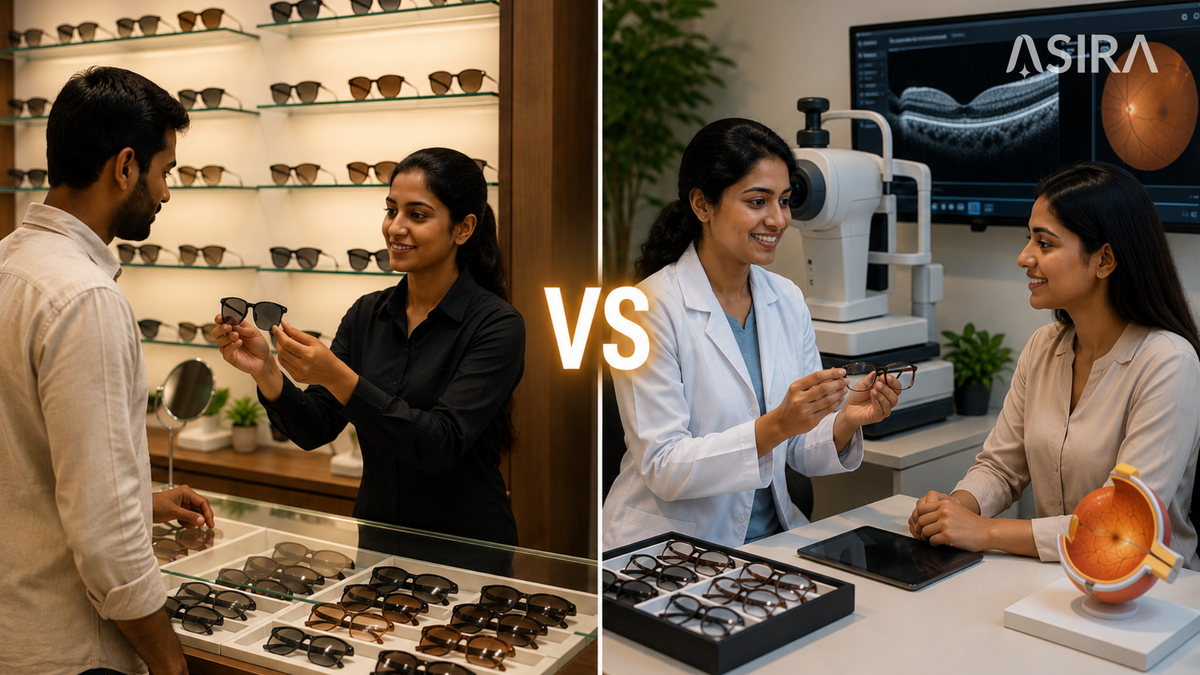
The optical dispensary occupies a unique position within contemporary eye care practice. Unlike most healthcare environments, optometric practice integrates both clinical and retail functions within the same patient journey.
Introduction
The optical dispensary occupies a unique position within contemporary eye care practice. Unlike most healthcare environments, optometric practice integrates both clinical and retail functions within the same patient journey. This dual identity has long generated debate among practitioners. Should the dispensary primarily function as a retail profit centre, or should it be viewed as an extension of clinical care?
For many independent practitioners, this distinction is more than philosophical. It influences purchasing decisions, staff training, patient communication, inventory management, and ultimately the sustainability of the practice itself. The increasing commoditisation of eyewear through online retailers and large corporate chains has intensified this challenge. Patients now have unprecedented access to low-cost spectacles, yet independent practices continue to maintain strong levels of patient loyalty and satisfaction. The differentiating factor is rarely price alone. Rather, it is the integration of clinical expertise with personalised dispensing and patient-centred care.
Successful independent practices increasingly recognise that the optical dispensary should not exist separately from clinical services. Instead, retail activities should support, reinforce, and enhance clinical outcomes. In this model, the sale of spectacles becomes a consequence of appropriate clinical recommendation rather than the primary objective of the patient encounter.
The Dispensary as an Extension of Clinical Care
Eyewear is fundamentally a medical device. Although spectacle frames possess obvious fashion and lifestyle components, the primary purpose of ophthalmic dispensing remains the optimisation of visual function. A spectacle prescription alone does not guarantee successful visual outcomes. Appropriate lens design, frame selection, fitting, centration, adjustment, and patient education are all essential components of effective spectacle provision. Research examining spectacle non-tolerance demonstrates that dispensing errors and communication failures contribute substantially to patient dissatisfaction and unsuccessful outcomes.
Historically, optometrists were closely involved in the dispensing process. Over time, increasing clinical demands and expanding scopes of practice have resulted in greater delegation to dispensing opticians and optical assistants. Nevertheless, the principle remains unchanged: dispensing decisions should arise directly from clinical findings and individual patient needs.
Consider, for example, a patient with early cataract, significant glare symptoms, and frequent night driving requirements. The clinical examination may indicate the need for enhanced contrast sensitivity, anti-reflective coatings, and specific lens designs. Similarly, a progressive lens wearer with cervical arthritis may benefit from occupational lenses or customised frame dimensions. In such cases, the dispensary becomes an extension of the consulting room, translating clinical findings into practical solutions.
When practitioners conceptualise the dispensary primarily as a retail environment, there is a risk that product recommendations become detached from clinical rationale. Conversely, when dispensing is embedded within a clinical philosophy, recommendations become evidence-based, personalised, and more likely to improve patient outcomes.
Reframing the Patient Experience
The modern patient journey extends far beyond the eye examination itself. Every interaction within the practice influences patient perceptions regarding quality, trust, and value.
Studies exploring patient experiences within optometric practice consistently demonstrate that personalised care, effective communication, empathy, and continuity of service significantly influence patient satisfaction and loyalty. Patients frequently value professional advice and personalised recommendations more highly than purely transactional interactions.
Patients entering an independent practice are rarely seeking the lowest possible price. Rather, they are often seeking reassurance, expertise, and confidence that the recommended solution is appropriate for their visual needs. The dispensary therefore represents an important opportunity to reinforce professional trust established during the clinical consultation.
This process begins with a seamless transition between clinician and dispenser. A warm handover from the optometrist, summarising relevant clinical findings and visual requirements, reinforces continuity of care. Patients should clearly understand why specific lens options, coatings, or frame characteristics have been recommended.
Equally important is the avoidance of overtly sales-driven language. Discussions centred on lifestyle, occupational demands, hobbies, digital device usage, and visual symptoms are considerably more effective than traditional product-focused selling. Patients should perceive recommendations as solutions to identified problems rather than attempts to increase revenue.
Contemporary evidence also highlights the importance of tailoring the dispensing experience according to individual patient preferences. Some patients value efficiency and rapid decision-making, whereas others require additional education and reassurance. Personalisation of the patient journey strengthens trust and improves both clinical and commercial outcomes.
Curating Rather Than Accumulating Frame Selection
Frame inventory represents one of the largest capital investments within most optical practices. Nevertheless, many independent practices continue to approach frame purchasing reactively rather than strategically.
A common misconception is that a larger frame inventory inevitably results in increased sales. In reality, excessive inventory frequently leads to higher carrying costs, reduced stock turnover, and significant levels of obsolete stock. Effective dispensaries curate their collections rather than simply expanding them.
Frame selection should reflect the identity and clinical philosophy of the practice. Independent practices must ask several important questions:
Who are our patients?
What visual and lifestyle needs predominate?
What socioeconomic demographic do we serve?
How do we wish our practice to be perceived?
Practices specialising in paediatric care, myopia management, specialty contact lenses, or dry eye disease may require substantially different frame portfolios compared with practices predominantly serving presbyopic or premium lifestyle populations.
Data-driven purchasing is increasingly recognised as essential. Sales analyses should identify high-performing frame styles, brands, price categories, and patient demographics. Frames that demonstrate poor turnover should be removed systematically to prevent capital from becoming locked in stagnant inventory. Regular inventory reviews, typically conducted at least annually, allow practices to align stock holdings with patient demand and evolving market trends.
Successful practices often maintain a carefully balanced inventory encompassing entry-level, mid-range, and premium offerings. Such an approach ensures accessibility while preserving opportunities for premium dispensing where clinically appropriate.
Importantly, frame selection should not be delegated exclusively to suppliers. Practice owners must retain ownership of inventory strategy, ensuring that purchasing decisions align with long-term business and clinical objectives.
The Clinical and Financial Implications of Inventory Management
Inventory management within optical practice extends beyond traditional retail stock control. Optical inventory is inherently complex, encompassing spectacle frames, ophthalmic lenses, contact lenses, accessories, and laboratory orders. Poor inventory management can adversely affect both profitability and patient care.
Excess inventory ties up valuable working capital, while inadequate inventory may delay patient care, increase remakes, and compromise patient satisfaction. Effective inventory systems therefore play a critical role in operational efficiency.
Modern inventory management increasingly relies upon integrated digital systems capable of tracking stock movements in real time. Such systems facilitate accurate stock visibility, automated reordering, inter-branch transfers, and comprehensive reporting. This is particularly important for practices operating across multiple locations, where inventory fragmentation may otherwise result in duplication, stock shortages, and unnecessary purchasing.
Several key performance indicators should be monitored routinely, including:
- Frame turnover rates.
- Gross margin by product category.
- Capture rates.
- Stock ageing.
- Dead stock percentage.
- Remake rates.
- Inventory carrying costs.
Demand forecasting techniques, safety stock calculations, and reorder point analysis are increasingly being adopted within optical retail environments to optimise inventory investment while maintaining service levels. Evidence suggests that data-driven inventory strategies reduce waste and improve overall operational efficiency.
However, technology alone is insufficient. Effective inventory management requires clearly defined workflows, staff accountability, and regular auditing procedures.
Integrating Dispensing into Clinical Philosophy
The most successful independent practices no longer view clinical care and dispensing as separate activities. Instead, they adopt an integrated care model in which the dispensary reinforces clinical recommendations and enhances patient outcomes.
Within such practices, clinicians routinely document visual lifestyle requirements during examinations. Dispensing staff have access to comprehensive clinical records and understand the rationale behind product recommendations. Communication between clinicians and dispensers is continuous rather than episodic.
This integration also facilitates improved continuity of care. When patients return with concerns regarding adaptation, comfort, or visual performance, clinical and dispensing teams collaborate to identify underlying causes and implement appropriate solutions.
Importantly, integrated models appear to strengthen patient trust. Patients increasingly value practices that demonstrate continuity, expertise, and personalised care throughout the entire patient journey. In a marketplace where spectacle products themselves have become increasingly commoditised, the professional relationship remains the independent practice's most valuable asset.
Conclusion
Independent optometric practice is unlikely to compete successfully against large corporate chains or online retailers on price alone. The future of independent practice lies not in becoming better retailers, but in becoming better healthcare providers who use retail strategically to support clinical excellence.
The modern optical dispensary should therefore be viewed as an integral component of patient care rather than merely a sales environment. Frame selection, inventory management, patient communication, and dispensing processes should all be aligned with the overarching clinical philosophy of the practice.
When retail supports clinical care, patients experience greater trust, improved outcomes, and stronger loyalty. The result is a practice that is not only commercially sustainable but also professionally fulfilling.
References
- Fylan F, Grunfeld EA, Turvey A. Four different types of client attitudes towards purchasing spectacles in optometric practice. Health Expectations. 2005;8(1):18-25.
- Bist J, et al. Spectacle non-tolerance: a systematic review. Ophthalmic and Physiological Optics. 2021. Discussed in: Ocuco. Spectacle Dispensing: Issues to Avoid.
- What are patients' beliefs about, and experiences of, optometric practice? Ophthalmic and Physiological Optics. 2021.
- The College of Optometrists. Ensuring patient-centred care. 2024.
- Association of Optometrists. Perfecting the patient experience. 2024.
- HumanAbility. Optical Dispensing Functional Analysis Report. 2025.
- Optometry Times. Optical Inventory: Out with the Old, In with the New. 2024.
- Review of Optometry. Reclaim Your Role in Optical Dispensing. 2008.
ASIRA is a simple and secure, cloud-based software tool, that helps eye care professionals reduce the time and effort required to maintain clinical records, schedule appointments, generate bills, manage inventory and much more!
To find out more, visit www.asira.health and sign up for a FREE TRIAL!


Comments ()