

Why Small Eye Care Practices Struggle With Follow-Ups and How to improve your Follow-Up Rate.
Patient follow-up remains one of the most overlooked operational challenges in independent optometry and ophthalmology practices.

Patient follow-up remains one of the most overlooked operational challenges in independent optometry and ophthalmology practices. While practitioners invest heavily in diagnostics, patient experience, and clinical expertise, follow-up systems are often dependent on manual reminders, paper registers, fragmented spreadsheets, or the memory of front desk staff. The result is inconsistent continuity of care, reduced treatment compliance, lower patient retention, and measurable revenue leakage.
Globally, healthcare literature has consistently demonstrated that poor follow-up adherence contributes to delayed diagnosis, disease progression, and poorer long-term outcomes, particularly in chronic eye diseases such as glaucoma, diabetic retinopathy, dry eye disease, keratoconus, and post-operative care. In India, where patient volumes are often high and clinics are understaffed, maintaining structured follow-up systems becomes even more difficult.
Independent eye care practices frequently encounter barriers including fragmented communication systems, inconsistent documentation, lack of automated recalls, and the absence of centralized patient management. These operational inefficiencies create gaps in patient engagement that ultimately affect both clinical outcomes and business sustainability.
The Clinical Importance of Follow-Ups
Eye care relies heavily on longitudinal management. Unlike acute care specialties, many optometric and ophthalmic conditions require continuous monitoring over months or years. Contact lens aftercare, myopia progression management, glaucoma monitoring, cataract post-operative reviews, and diabetic retinal screening all depend on reliable recall systems.
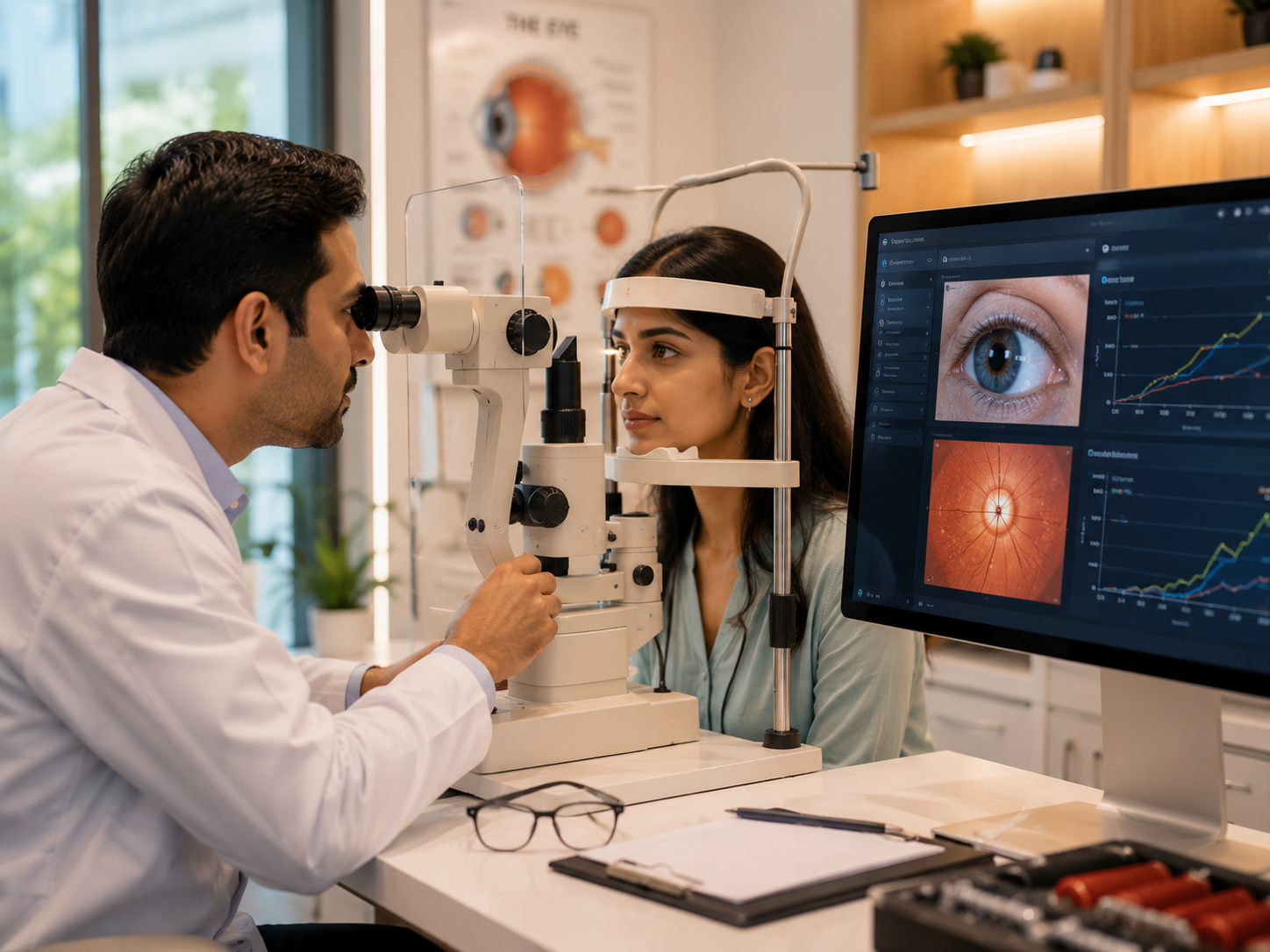
Studies have shown that patient adherence improves significantly when reminder systems are automated and integrated into clinical workflows. Missed appointments are associated with increased risk of disease progression and reduced treatment effectiveness.
For example, glaucoma management depends on consistent intraocular pressure monitoring, visual field testing, and optic nerve imaging. Similarly, myopia management protocols require periodic reassessment of refractive progression and treatment efficacy. Without structured follow-up systems, clinicians risk losing continuity of care.
Operational Challenges in Small Practices

Smaller clinics typically operate with limited administrative staff. Receptionists often manage appointments, billing, calls, inventory, and patient coordination simultaneously. Under these circumstances, follow-up management becomes reactive rather than proactive.
Several recurring problems emerge:
1. Manual appointment registers
2. Lack of centralized patient communication
3. No automated recall systems
4. Poor documentation consistency
5. Difficulty tracking pending follow-ups
6. Inability to segment patients by condition
7. Loss of patients after initial consultation
Practices operating across multiple branches face additional complexity. Without centralized data access, patient history may remain isolated within individual locations.
Financial Impact of Poor Follow-Up Systems
Poor follow-up management directly impacts practice revenue. Missed reviews translate into reduced consultation revenue, lower treatment adherence, and reduced optical conversion.
Patient retention is significantly more cost-effective than acquiring new patients. Marketing costs continue to rise across digital platforms, making retention strategies increasingly important for independent practices.
Additionally, practices lose opportunities for:
- Repeat contact lens sales
- Optical dispensing
- Chronic disease monitoring
- Dry eye treatment plans
- Specialty lens follow-ups
- Pediatric vision monitoring
A poorly managed recall system therefore affects both patient care and financial stability.
The Role of Digital Workflow Systems
Modern electronic medical record systems have transformed how clinics manage continuity of care. Platforms such as ASIRA provide integrated patient management systems specifically designed for eye care workflows.
ASIRA enables clinics to automate appointment recalls, monitor pending reviews, and centralize communication within a unified workflow environment. Automated reminders through WhatsApp, SMS, or email reduce dependency on manual calls and significantly improve patient response rates.
The platform’s patient timeline allows clinicians to quickly review historical interactions, prescriptions, investigations, and treatment progression. This continuity becomes particularly valuable for chronic disease management.
ASIRA’s task management system also enables delegation of recall activities among staff members. Instead of relying on memory or paper notes, clinics can assign pending follow-up actions systematically.
Multi-Branch Coordination
For practices operating multiple branches, centralized EMR systems become essential. ASIRA allows clinicians and staff to access records securely across locations, ensuring continuity even when patients visit different branches.
Centralized appointment tracking reduces duplication and improves scheduling efficiency. This creates a more seamless patient experience while improving operational visibility.
Data-Driven Recall Systems
Advanced recall systems enable practices to categorize patients based on diagnosis, treatment stage, or risk level. High-priority patients such as glaucoma suspects or diabetic patients can be flagged for enhanced monitoring.
Data analytics further allow practices to measure:
- Recall compliance
- Appointment conversion rates
- Missed appointment trends
- Patient retention metrics
- Revenue linked to follow-up care
These insights help practices refine operational strategies and improve resource allocation.
Improving Patient Engagement
Modern patients increasingly expect digital convenience. Appointment confirmations, reminders, digital prescriptions, and integrated communication channels improve the overall patient experience.
Practices that implement structured communication workflows are often perceived as more professional and reliable. This directly affects patient trust and referral growth.
ASIRA’s integrated communication ecosystem helps practices maintain ongoing engagement without significantly increasing administrative workload.
Medico-Legal Implications
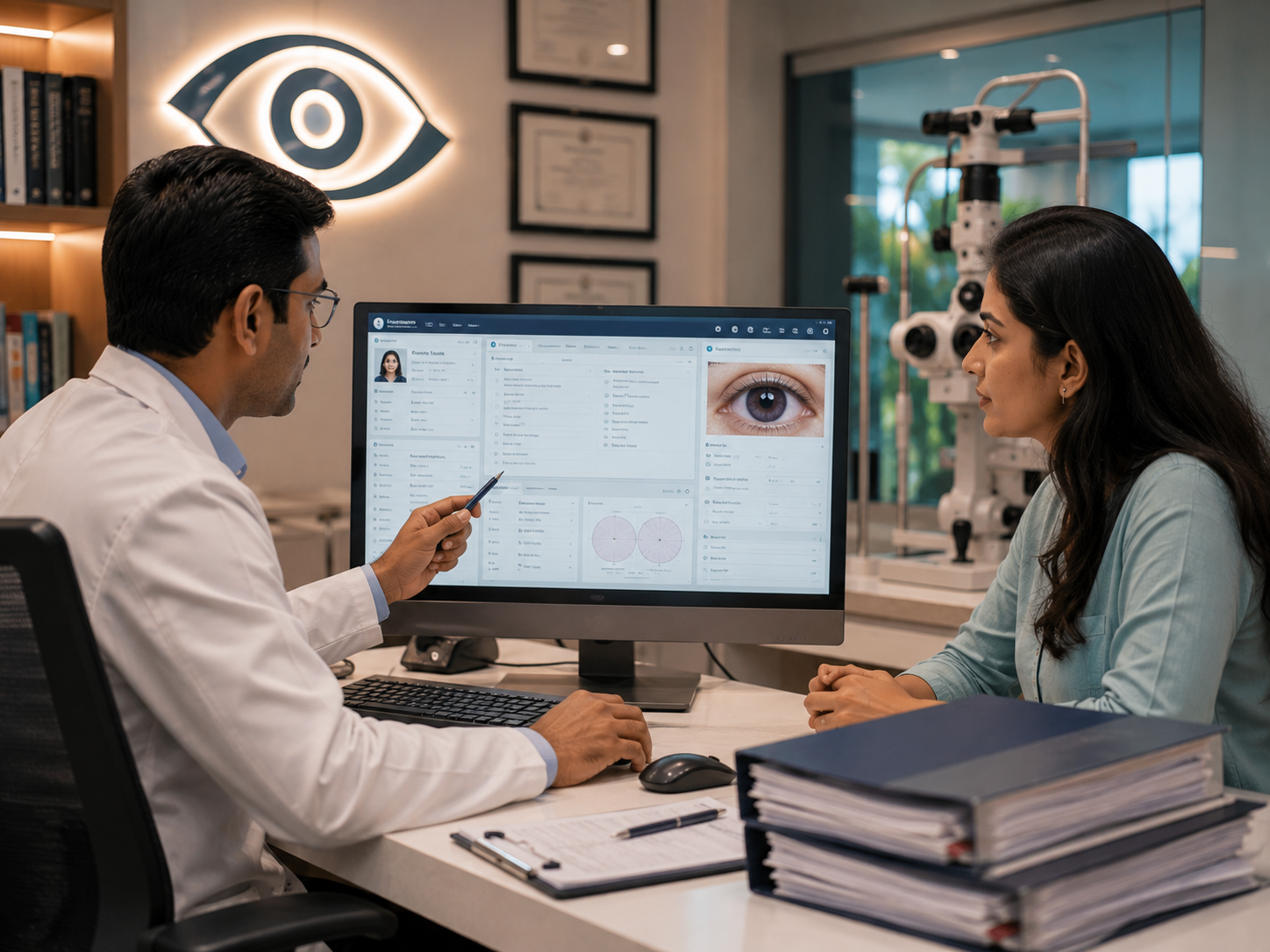
Documentation of follow-up recommendations is also critical from a medico-legal perspective. Inadequate documentation may create defensibility issues in cases involving delayed diagnosis or treatment progression.
Digital EMR systems improve timestamping, audit trails, and clinical record integrity. ASIRA maintains structured documentation pathways that improve accountability and standardization.
Future Trends
Artificial intelligence and predictive analytics may further transform follow-up management. Predictive systems could identify patients at risk of non-compliance and trigger targeted interventions.
Tele-optometry integrations may also support hybrid follow-up models, particularly in remote or underserved regions.
Conclusion
Effective follow-up management is not merely an administrative function. It is a fundamental component of quality eye care delivery. Independent practices that continue relying on fragmented manual systems may struggle with patient retention, workflow inefficiencies, and reduced continuity of care.
Digital platforms such as ASIRA offer scalable solutions that integrate appointment management, patient communication, clinical documentation, and workflow automation within a unified ecosystem. As eye care becomes increasingly data-driven and patient-centred, structured recall systems will play a critical role in both clinical excellence and sustainable practice growth.
ASIRA is a simple and secure, cloud-based software tool, that helps eye care professionals reduce the time and effort required to maintain clinical records, schedule appointments, generate bills, manage inventory and much more!
To find out more, visit www.asira.health and sign up for a FREE TRIAL!


Comments ()