

Patients Value Communication More Than Technology
Walk into any modern eye care practice and you'll likely find an impressive collection of technology. Yet when patients reflect on what made their appointment memorable, they rarely begin by talking about the equipment.

Walk into any modern eye care practice and you'll likely find an impressive collection of technology. Optical coherence tomography (OCT), ultra-widefield retinal imaging, automated perimetry, corneal topography and digital slit lamp imaging have transformed the way we examine, diagnose and manage eye disease. The pace of technological advancement has been remarkable, allowing clinicians to detect disease earlier, monitor progression more accurately and provide increasingly personalised care.
Yet when patients reflect on what made their appointment memorable, they rarely begin by talking about the equipment. Instead, they remember how they were treated. They remember whether the optometrist listened carefully to their concerns, whether their questions were answered in a way they could understand and whether they felt reassured, respected and involved in decisions about their care.
Technology undoubtedly improves clinical practice, but it is communication that shapes the patient's experience. As healthcare becomes increasingly digital, this distinction has never been more important. The most successful practices are not necessarily those with the newest equipment. They are the ones that combine clinical excellence with genuine human connection.
The patient experience extends beyond the examination
For most patients, visiting an optometrist can be an unfamiliar and sometimes worrying experience.
Some attend because their vision has changed unexpectedly. Others arrive with concerns about eye disease, a family history of glaucoma, or complications related to diabetes. Parents may be anxious about their child's eyesight, while older adults may fear losing their independence due to declining vision. In each of these situations, patients are looking for more than an accurate diagnosis. They are looking for reassurance, empathy and confidence that they are in capable hands.
Research consistently demonstrates that communication is one of the strongest predictors of patient satisfaction across healthcare. Patients who feel listened to, informed and involved in decision-making are more likely to trust their clinician, follow treatment recommendations and return for ongoing care.
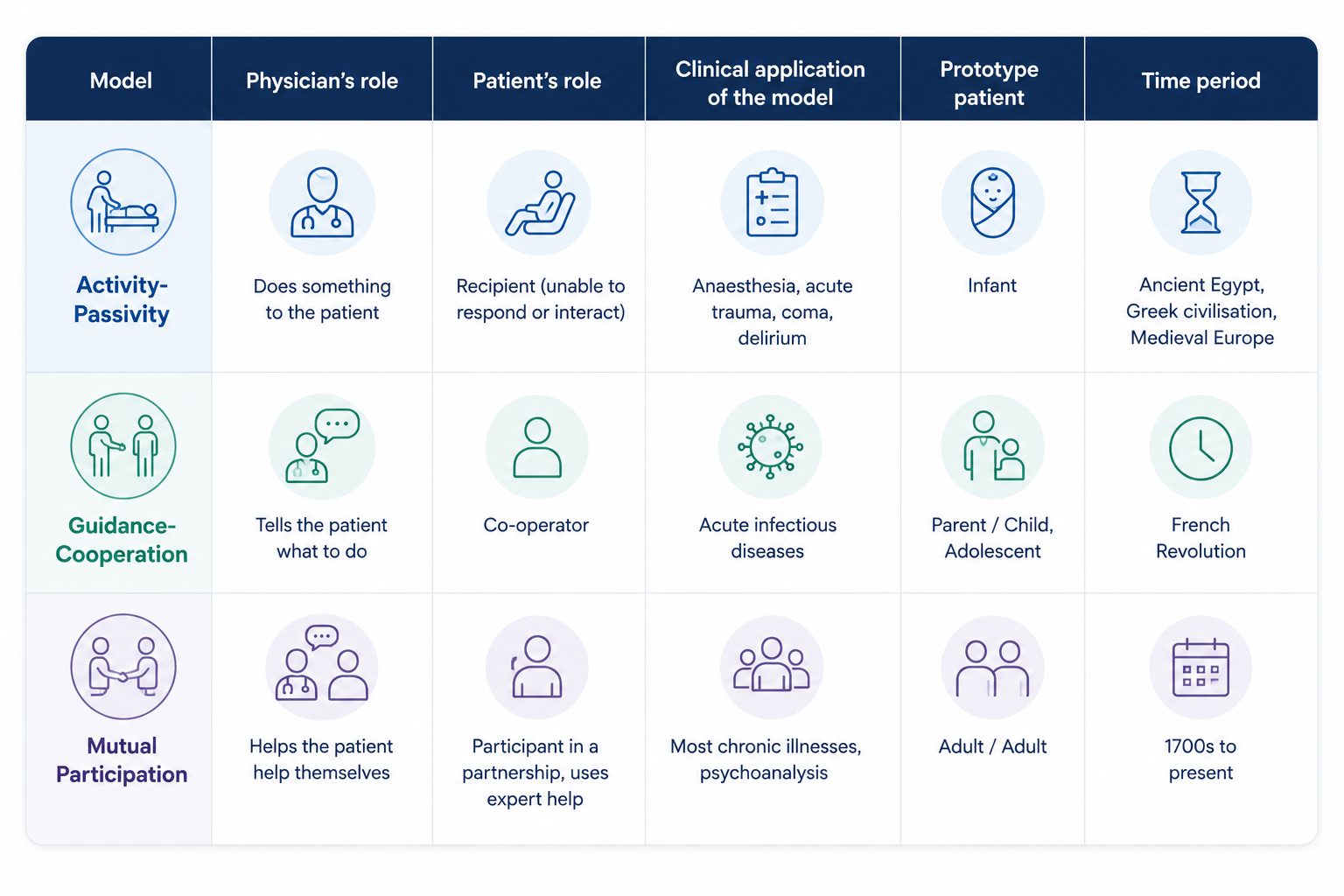
In optometry, where many conditions require long-term monitoring rather than immediate treatment, these relationships become even more valuable.
Clinical expertise deserves to be understood
Optometrists spend years developing the knowledge and skills required to recognise subtle clinical signs and make complex decisions. Unfortunately, patients often leave consultations without fully understanding the significance of what has been found.
Consider a patient diagnosed with early glaucoma. To a clinician, the diagnosis may represent careful interpretation of optic nerve appearance, retinal nerve fibre layer measurements, intraocular pressure and visual field results. To the patient, it may simply sound like, "Everything seems okay, but we'll keep an eye on it." Without a clear explanation, patients may not appreciate why follow-up appointments are essential or why treatment may become necessary in the future.
The same applies to dry eye disease, myopia management, diabetic eye disease and many other conditions where successful management depends on patient understanding and long-term adherence. The ability to translate complex clinical information into language that patients can understand is one of the most valuable skills any healthcare professional can develop.
Trust is built through conversation
Patients are increasingly well informed. Many arrive having searched the internet, watched videos or spoken to friends and family before attending their appointment. This presents both opportunities and challenges. Some patients have gained useful knowledge, while others arrive with misconceptions or unnecessary anxiety.
Rather than dismissing these concerns, effective clinicians acknowledge them, explore the patient's understanding and provide balanced, evidence-based advice. When patients feel heard rather than corrected, trust grows. Trust cannot be generated by technology alone but is built through honest conversations, careful listening and a willingness to answer questions without rushing.
These interactions often determine whether a patient follows advice, returns for future care or recommends the practice to others.
Communication improves clinical outcomes
Good communication is often viewed as a "soft skill," but its impact on healthcare outcomes is anything but soft. Patients who understand their condition are more likely to adhere to treatment plans, attend review appointments and recognise when symptoms require urgent attention.
A patient who understands why myopia management requires regular monitoring is more likely to remain engaged over several years. A patient who understands the progressive nature of glaucoma is more likely to comply with prescribed medication and attend follow-up visits. A contact lens wearer who fully understands hygiene advice is less likely to develop preventable complications.
In each of these examples, communication directly influences clinical success. Technology may help to identify disease, but communication helps patients participate in managing it.
The hidden impact of digital documentation
Ironically, one of the greatest threats to communication in modern healthcare is technology itself. Many clinicians have experienced consultations where their attention is divided between the patient and the computer screen. The conversation becomes fragmented as information is entered into electronic records. Patients notice this. Maintaining eye contact, responding naturally and listening without interruption become more difficult when documentation demands constant attention.
This is not a failure of digital healthcare. It is often the result of poorly designed software that forces clinicians to spend more time documenting than communicating. Technology should support the consultation, not dominate it.
When technology works quietly in the background
The most effective digital systems are those that become almost invisible during the consultation.
- Patient history is readily available before the examination begins.
- Clinical templates guide documentation logically.
- Previous findings can be reviewed instantly.
- Images, scans and test results are organised in one place.
- Follow-up recommendations are generated efficiently.
Rather than interrupting the consultation, technology removes unnecessary administrative burden. This allows clinicians to focus their attention where it belongs: on the patient sitting in front of them.
How ASIRA supports better patient communication
At ASIRA, every feature has been designed with one simple principle in mind: technology should enhance the clinician-patient relationship, not compete with it.
By bringing patient history, examination findings, diagnostic images and previous visits together in a single, organised record, practitioners spend less time searching for information and more time engaging with patients.
Structured clinical templates reduce repetitive documentation while ensuring important findings are consistently recorded. Side-by-side comparisons of previous visits make it easier to explain disease progression visually, helping patients understand why ongoing monitoring matters.
Digital records also support continuity of care. Whether a patient returns six months or six years later, previous consultations remain accessible, allowing clinicians to build upon earlier conversations rather than starting from the beginning.
Perhaps most importantly, efficient workflows create time.
- Time to explain.
- Time to educate.
- Time to answer questions.
- Time to build trust.
These moments often become the most valuable part of the consultation.
Communication is becoming a competitive advantage
As diagnostic technology becomes more widely available, it becomes increasingly difficult for practices to differentiate themselves through equipment alone. Patients often assume that modern technology should already be available. What they continue to value, however, is personalised care. Practices that consistently communicate well create loyal patients who return regularly, recommend family and friends, and develop lasting relationships with their clinician.
In an increasingly competitive healthcare environment, communication is becoming one of the strongest differentiators. Patients may initially choose a practice because of its reputation or technology. They stay because of how they are treated.
Looking ahead
Artificial intelligence, automation and digital health will continue to transform optometry over the coming decade. New technologies will improve efficiency, support diagnosis and provide clinicians with even greater insights into patient care. These innovations should be welcomed. But no technological advancement will replace the reassurance of an empathetic conversation. No algorithm can fully understand a patient's fears about losing their vision. No imaging device can answer a worried parent's questions with compassion. No software can build trust on its own.
The future of optometry will not be defined by choosing between technology and communication. It will be defined by combining both in ways that strengthen each other. Technology should handle information and clinicians should focus on people.
Conclusion
Every consultation is more than a series of clinical tests. It is an opportunity to educate, reassure and empower someone to take better care of their vision. Technology has transformed what optometrists can see, measure and diagnose. But communication remains the bridge between clinical expertise and patient understanding.
When patients leave a practice feeling informed, respected and confident in their care, they are more likely to follow recommendations, attend future appointments and become lifelong advocates for the practice. That is why communication remains one of the most valuable clinical tools an optometrist possesses.
At ASIRA, we believe the best technology is the technology that quietly supports these conversations. By simplifying documentation, organising patient information and streamlining clinical workflows, ASIRA helps practitioners spend less time managing records and more time building meaningful relationships with the people they care for.
References
- Street RL Jr, Makoul G, Arora NK, Epstein RM. How does communication heal? Pathways linking clinician-patient communication to health outcomes. Patient Education and Counseling. 2009;74(3):295-301.
- Ha JF, Longnecker N. Doctor-patient communication: a review. The Ochsner Journal. 2010;10(1):38-43.
- Levinson W, Lesser CS, Epstein RM. Developing physician communication skills for patient-centered care. Health Affairs. 2010;29(7):1310-1318.
- Silverman J, Kurtz S, Draper J. Skills for Communicating with Patients. 3rd ed. CRC Press; 2016.
- Barry MJ, Edgman-Levitan S. Shared decision making: the pinnacle of patient-centered care. New England Journal of Medicine. 2012;366(9):780-781.
ASIRA is a cloud-based EMR and practice management software built by eye care professionals for eye care professionals. We have helped hundreds of practices change the way they work. To find out more, visit www.asira.health and sign up for a FREE TRIAL!

Comments ()