

10 Administrative Tasks That Are Secretly Stealing Hours From Your Week
Most independent practice owners do not realise how much time they spend on administration until they stop and measure it.

Most independent practice owners do not realise how much time they spend on administration until they stop and measure it.
A few minutes confirming appointments. Ten minutes chasing a patient who missed their glaucoma review. A quick stock check between patients. Searching for an invoice. Calling the laboratory. Following up on an unpaid bill.
None of these tasks feels particularly significant on its own. Yet together, they quietly consume hours every week.
For many eye care practitioners, this administrative burden has simply become accepted as part of practice ownership. Being busy is often worn as a badge of honour. However, there is a difference between being busy and being productive.
Every hour spent on repetitive administration is an hour that cannot be spent seeing patients, developing new clinical services, mentoring staff, or simply getting home on time.
If your days often feel chaotic despite working flat out, some of these hidden administrative drains may be responsible.
1. Confirming Appointments One Phone Call at a Time
Many practices still begin each day with staff making a long list of confirmation calls.
The process is familiar. Call the patient. No answer. Leave a voicemail. Call again later. Repeat.
For a busy practice, appointment confirmations alone can consume several hours each week.
The irony is that most patients today expect digital communication. They routinely receive reminders from airlines, restaurants, banks, and courier companies. Healthcare should be no different.
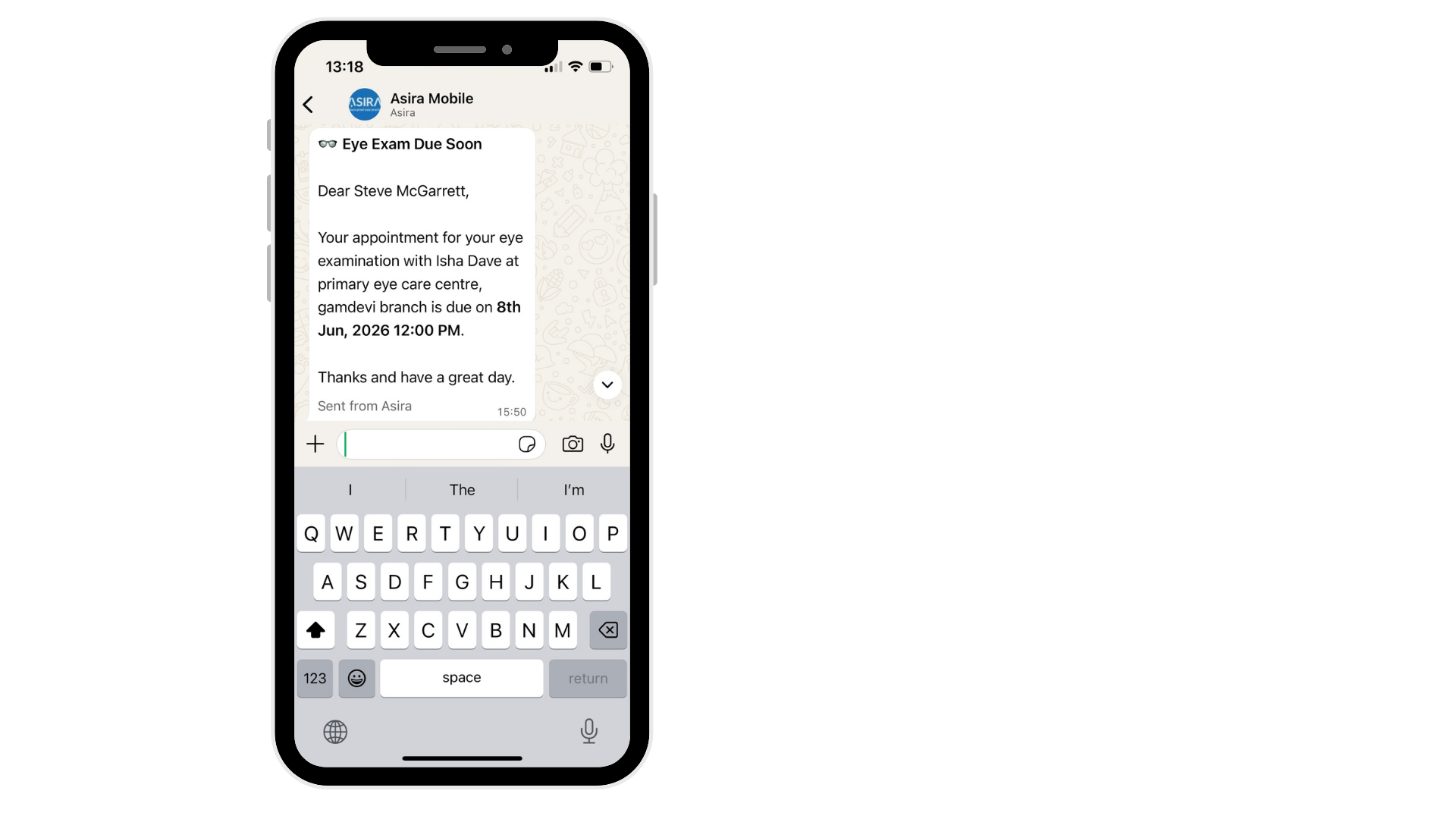
Practices that automate appointment reminders through SMS, email, or WhatsApp often discover that staff suddenly have far more time available for meaningful patient interactions. Instead of spending the morning making telephone calls, they can focus on helping patients in the practice.
This is precisely why modern practice management platforms such as ASIRA automate appointment reminders as part of the booking workflow. The reminder process happens quietly in the background, allowing practices to maintain high attendance rates without creating additional work for staff.
2. Chasing Patients for Follow-Up Appointments
Every eye care practitioner understands the importance of follow-up.
Patients with glaucoma, diabetic retinopathy, dry eye disease, keratoconus, myopia progression, or contact lens aftercare requirements depend upon timely reviews.
Unfortunately, many practices still rely on diaries, spreadsheets, or staff memory to manage recalls.
The result is predictable. Staff spend hours generating recall lists, making phone calls, sending messages, and repeatedly contacting patients who do not respond.
More importantly, patients can easily fall through the cracks.
A recall system should not depend on whether somebody remembered to check a spreadsheet.
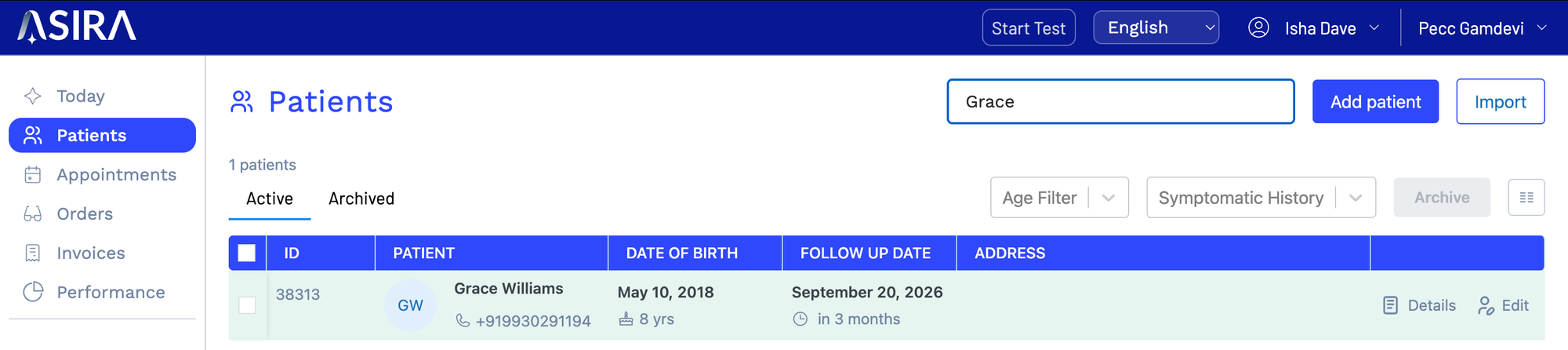
Automated recalls allow practices to maintain continuity of care without creating a significant administrative burden. Within ASIRA, recalls can be scheduled automatically at the point of care, ensuring that reminders are sent at the appropriate interval without further staff intervention.
This not only saves time but also supports better clinical outcomes by encouraging patients to return when they should.
3. Entering the Same Information Multiple Times
Duplicate data entry is one of the most frustrating inefficiencies in healthcare.
Patient demographics are entered during booking, entered again during billing, written on laboratory forms, and perhaps recorded elsewhere for communication purposes.
Apart from being tedious, duplicate entry increases the risk of errors.
Independent practices frequently operate several disconnected systems, each requiring the same information to be entered repeatedly.
Integrated platforms eliminate much of this unnecessary work.
When a patient's information is entered once within ASIRA, it becomes available throughout the entire patient journey, from appointment booking and clinical records to billing, inventory, optical dispensing, and patient communications.
The individual time saving per patient may appear small. Across thousands of patient encounters annually, however, the cumulative effect can be enormous.
4. Searching for Information
Every practice owner knows this scenario.
A patient telephones asking whether their spectacles have arrived.
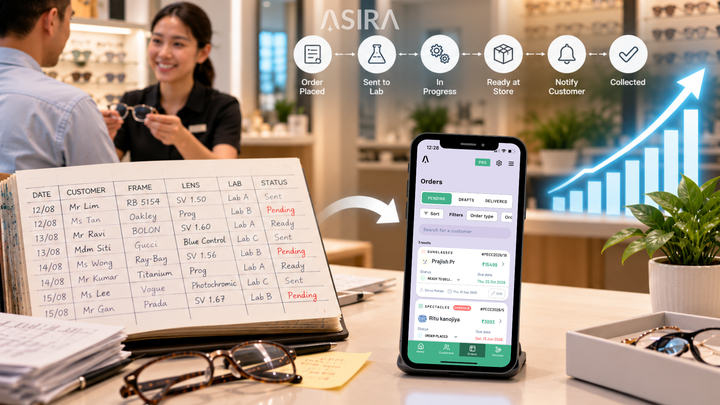
The receptionist checks one system. Then another. Someone else searches through emails. Eventually, a staff member remembers that the laboratory was contacted three days ago.
What should have taken thirty seconds takes ten minutes.
When information is scattered across paper files, emails, messaging applications, spreadsheets, and multiple software systems, inefficiency becomes inevitable.
Modern cloud-based systems centralise information so that everyone in the practice is working from a single source of truth.
Whether staff need to review clinical notes, check the status of an order, confirm a payment, or view previous communications, everything should be immediately accessible.
Practices using ASIRA frequently report that one of the greatest benefits is simply being able to find information quickly.
5. Managing Inventory Manually
Inventory management becomes increasingly complex as practices grow.
Frames, contact lenses, ophthalmic lenses, solutions, accessories, and consumables all require careful monitoring. For practices operating multiple branches, the challenge becomes even greater.
Yet many practices still rely heavily on spreadsheets or staff memory.
This often leads to duplicated orders, stock shortages, overstocking, or significant amounts of dead stock.
Inventory management should not be a monthly firefighting exercise.
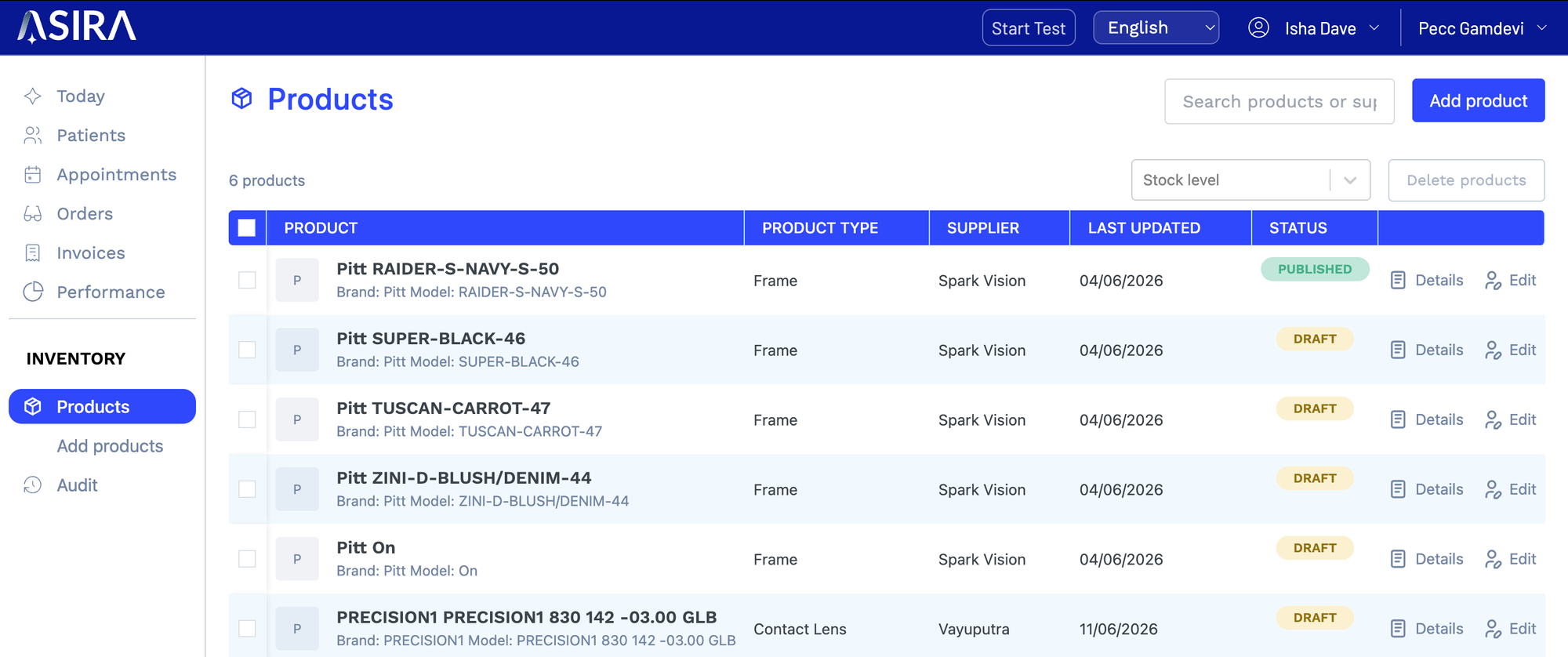
Real-time inventory tracking allows practices to know exactly what stock they have, where it is located, and when it needs to be reordered. Integrated inventory systems can also provide valuable insights into stock movement, helping practices make more informed purchasing decisions.
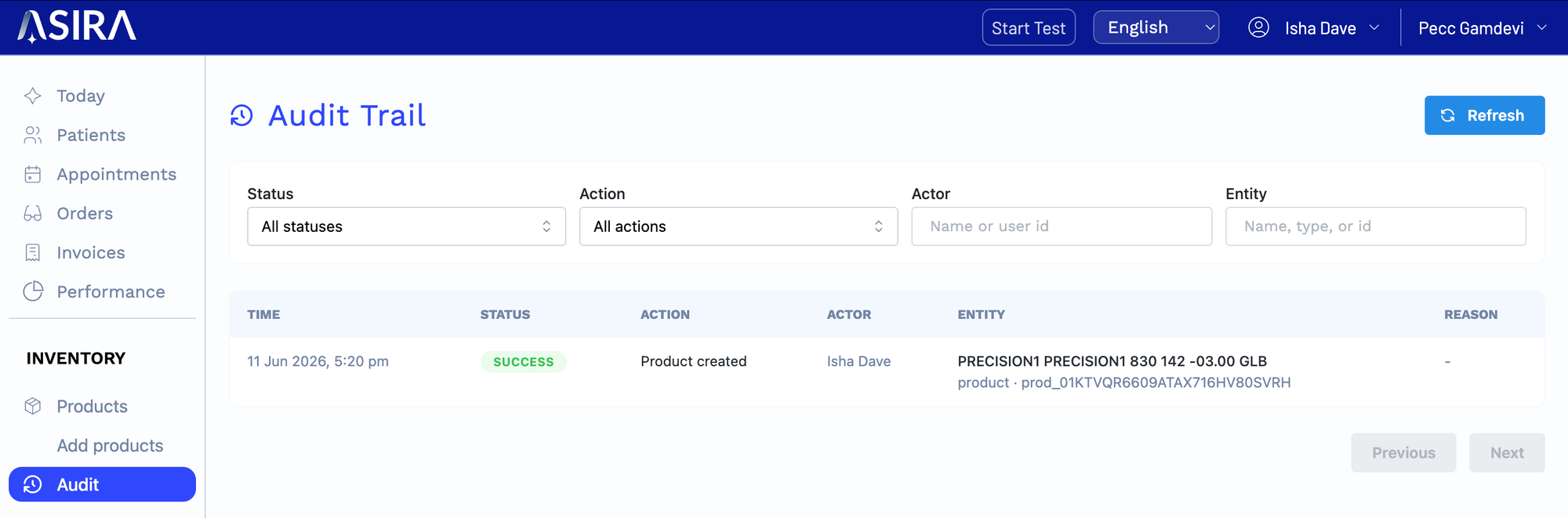
Because ASIRA integrates inventory management directly into clinical and dispensing workflows, stock movements occur automatically as products are dispensed or sold, eliminating many manual processes that traditionally consume staff time.
6. Coordinating Work Through Sticky Notes and Verbal Messages
Many practices still manage daily tasks informally.
A note is left on a desk. A verbal message is passed between team members. Somebody is asked to call a patient "when they have time."
The problem is that busy practices are noisy environments. Important tasks can easily be forgotten or duplicated.
As practices grow, informal communication becomes increasingly unreliable.
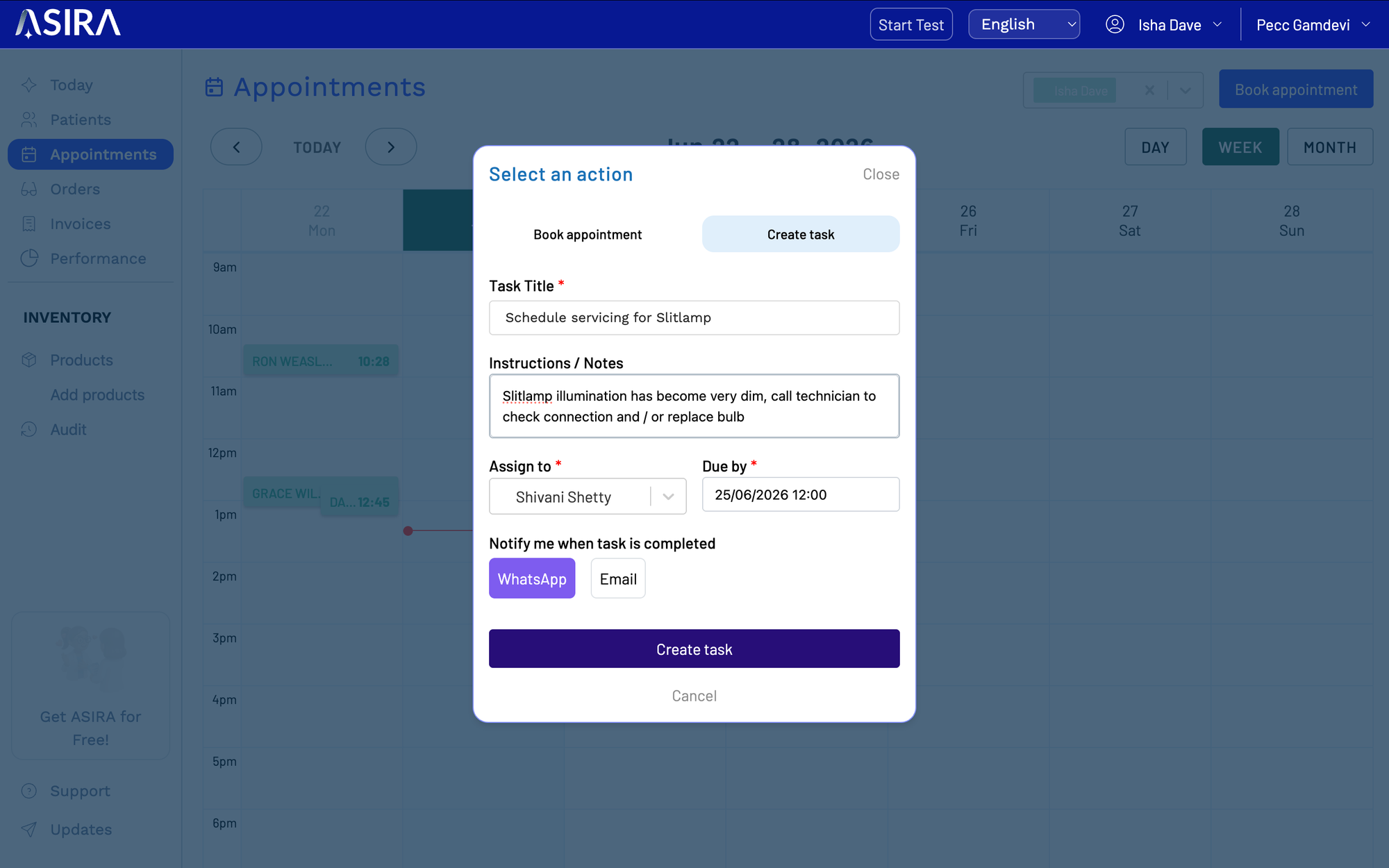
Structured task management ensures that everyone knows what needs to be done, who is responsible, and whether the task has been completed.
Within ASIRA, tasks can be linked directly to patients, orders, or specific workflows. This creates accountability and significantly reduces the risk of important actions being overlooked.
Perhaps more importantly, it reduces the mental burden on clinicians and staff who no longer need to remember everything themselves.
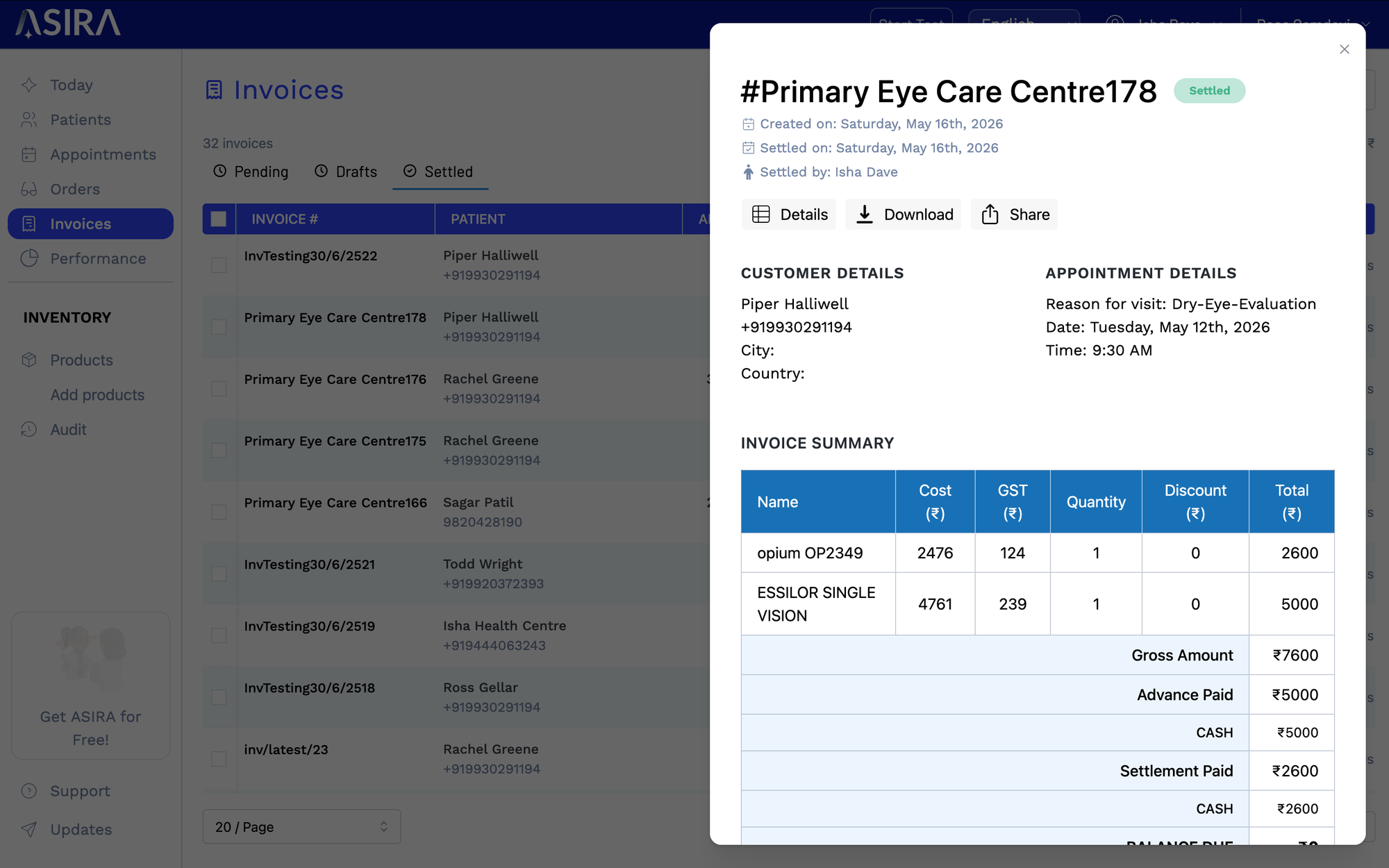
7. Switching Between Multiple Systems for Billing and Payments
Many practices use separate systems for clinical records, billing, inventory, and payments.
Unfortunately, every additional system creates friction.
Staff move between applications, duplicate information, reconcile discrepancies, and manually transfer data.
The process is time-consuming and increases the likelihood of errors.
Integrated workflows simplify the entire patient journey.
When clinical records, optical dispensing, billing, and payments exist within the same ecosystem, staff spend less time on administration and more time caring for patients.
This philosophy sits at the heart of ASIRA. Rather than forcing practices to manage multiple disconnected systems, the platform brings clinical and business workflows together into a single environment.
8. Answering the Same Questions Every Day
Practice staff answer many identical questions every day.
"When is my appointment?"
"Have my glasses arrived?"
"Can I book online?"
"Do you stock contact lenses?"
Although each interaction may only take a minute or two, together they consume a surprising amount of time.
Patients increasingly expect self-service options.
Online appointment booking, automated reminders, digital forms, and patient communication tools allow patients to access information independently while reducing the volume of routine enquiries received by the practice.
By automating routine communication, practices can ensure that staff spend their time where it creates the greatest value: helping patients who genuinely need assistance.
9. Producing Reports Manually
Many practice owners still spend hours each month creating spreadsheets to understand how their business is performing.
How many recalls are overdue?
What is the spectacle capture rate?
Which frames are selling?
How productive is each clinician?
How profitable is the practice?
The information exists, but extracting it often requires considerable effort.
Modern analytics tools should make these answers available instantly.
ASIRA provides real-time dashboards and reporting tools that allow practice owners to monitor both clinical and business performance without manually compiling reports. Better visibility enables better decision-making.
10. Keeping Track of Compliance Requirements
Healthcare practices face increasing regulatory responsibilities.
Consent forms, audit trails, staff records, privacy documentation, equipment maintenance logs, and clinical records all need to be maintained accurately and securely.
Paper-based systems make this difficult.
Digital records not only reduce administrative workload but also simplify audits, improve accessibility, and strengthen data security.
Cloud-based systems such as ASIRA ensure that documentation is stored securely and can be retrieved quickly whenever required.
Final Thoughts
Administration will always be part of running an eye care practice.
The question is not whether administration can be eliminated. It cannot.
The real question is whether highly trained clinicians and staff should continue spending large portions of their working week performing repetitive tasks that technology can manage more efficiently.
Independent practices succeed because of relationships, clinical expertise, and personalised care.
The less time spent on unnecessary administration, the more time practitioners have to focus on precisely those things.
After all, patients do not remember how efficiently you updated a spreadsheet.
They remember the care you provided.
ASIRA is a simple and secure, cloud-based software tool, that helps eye care professionals reduce the time and effort required to maintain clinical records, schedule appointments, generate bills, manage inventory and much more!
To find out more, visit www.asira.health and sign up for a FREE TRIAL!


Comments ()