

Why Optical Stores Should Build a Customer Database, Not Just a Billing History
Discover why optical stores need more than billing records, and how the ASIRA Optician App can help improve customer management, follow-ups and business growth.
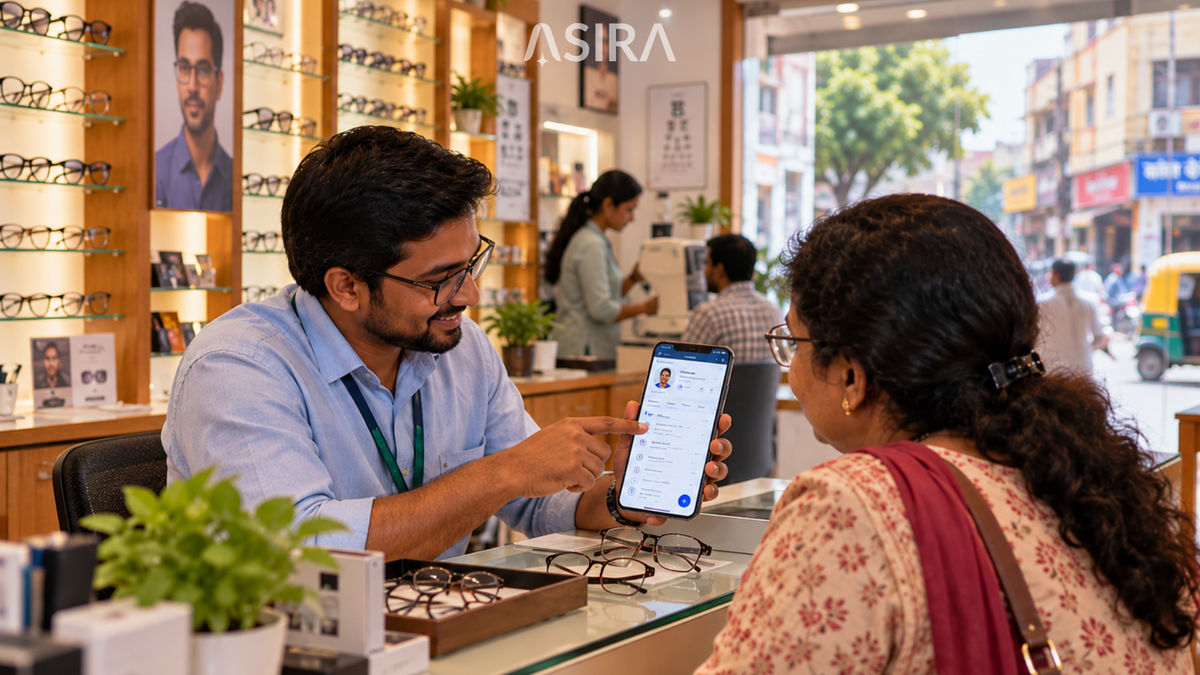
Every day, optical stores interact with customers who come in for eye examinations, purchase spectacles, order contact lenses, get their frames adjusted or enquire about a new pair of glasses. Each interaction creates an opportunity to build a lasting customer relationship. Yet, in many stores, the information collected during these interactions is used primarily for billing and then forgotten.
A billing history tells you what a customer purchased. A customer database tells you much more: who they are, what they need, what they have purchased in the past and how your store can serve them better in the future.
For independent optical stores looking to grow, this distinction matters. Building a customer database is not simply about maintaining records. It is about creating a foundation for better service, stronger customer relationships and more informed business decisions.
A bill records a transaction. A customer record tells a story.
Imagine a customer who purchased progressive spectacles from your store eighteen months ago. You might have the invoice showing the frame, lenses and amount paid. But can you easily find out which lens design they chose, whether they were satisfied with the spectacles, when they last visited or whether they might benefit from a follow-up?
Now consider a parent who purchased spectacles for their child. Do you have a record of the child's previous purchases, the frame selected, any relevant dispensing information and when the family might need to return?
If these details are scattered across invoices, notebooks, WhatsApp conversations and the memory of individual staff members, providing consistent service becomes difficult.
A structured customer database brings relevant information together, making it easier for your team to understand each customer's history and respond to their needs.
Five ways a customer database can help your optical store grow
1. Turn one-time buyers into returning customers
Acquiring a new customer takes time and effort. Yet many optical stores focus so heavily on attracting new walk-ins that they overlook the customers they have already served.
A customer database gives you a way to reconnect with existing customers. Depending on the customer's needs and consent, you can send relevant reminders, share useful information or invite them back for appropriate services.
For example, you could contact customers who have not visited for some time, remind them about a service they previously requested or let interested customers know about a new collection that matches their preferences.
The aim is not to send everyone the same promotional message. It is to make communication relevant and useful.
2. Provide a more personalised customer experience
Customers appreciate it when they do not have to explain their history every time they visit.
Knowing a customer's previous frame preferences, lens choices, purchase history and service requirements can help your team make more relevant recommendations. An optometrist or dispensing professional may also be able to review appropriate historical information when discussing a customer's eyewear needs.
This is particularly useful when customers return for replacement spectacles, repairs, adjustments or questions about a previous purchase.
Personalisation does not mean pushing customers towards more expensive products. It means understanding their needs well enough to offer appropriate choices and advice.
3. Make follow-ups more systematic
How often does a customer leave an optical store with a spectacle order, only to call later asking whether it is ready? How often does a staff member forget to follow up on an enquiry or a pending order because the information was never recorded properly?
A customer database can help your team keep track of interactions and outstanding requirements. When combined with an effective order and task management system, it becomes easier to identify which customers need an update, which orders require attention and which enquiries are awaiting a response.
This improves the experience for customers while reducing the burden on staff to remember everything.
4. Understand who your customers really are
Your existing customers are a valuable source of business intelligence.
A well-maintained database can help you identify patterns such as:
- Which customers regularly purchase spectacles or contact lenses.
- Which frame styles, lens options and price segments are popular.
- How many customers return for repeat purchases.
- Which enquiries convert into sales and which do not.
- Which customer groups may benefit from particular services or communications.
These insights can help you make better decisions about purchasing, marketing and customer service. Rather than relying entirely on intuition, you can begin to understand your business through the people who support it.
5. Build a business that does not depend on one person's memory
In a small optical store, the owner or a long-serving employee may know almost every regular customer. They remember which frames people like, which orders are pending and who needs to be contacted.
This works until that person is absent, leaves the business or becomes too busy to manage everything.
When customer information is recorded systematically and accessible to authorised team members, the business becomes less dependent on individual memory. Staff can provide more consistent service, new employees can learn customer requirements more easily, and owners can maintain oversight without personally handling every interaction.
A customer database is therefore not just a customer service tool. It is part of building a more organised and sustainable business.
Why spreadsheets and manual records may not be enough
Many optical stores begin with a notebook, a spreadsheet or a billing application. These tools may be sufficient when the business is small, but managing customer relationships becomes increasingly difficult as the number of customers, orders and staff grows.
Customer details may be duplicated, previous purchases may be difficult to locate, and follow-ups can become inconsistent. A spreadsheet also does not automatically connect customer information with spectacle orders, inventory or day-to-day store operations.
The answer is not necessarily to collect more information. It is to organise the right information in a system that your team can actually use.
How the ASIRA Optician App helps
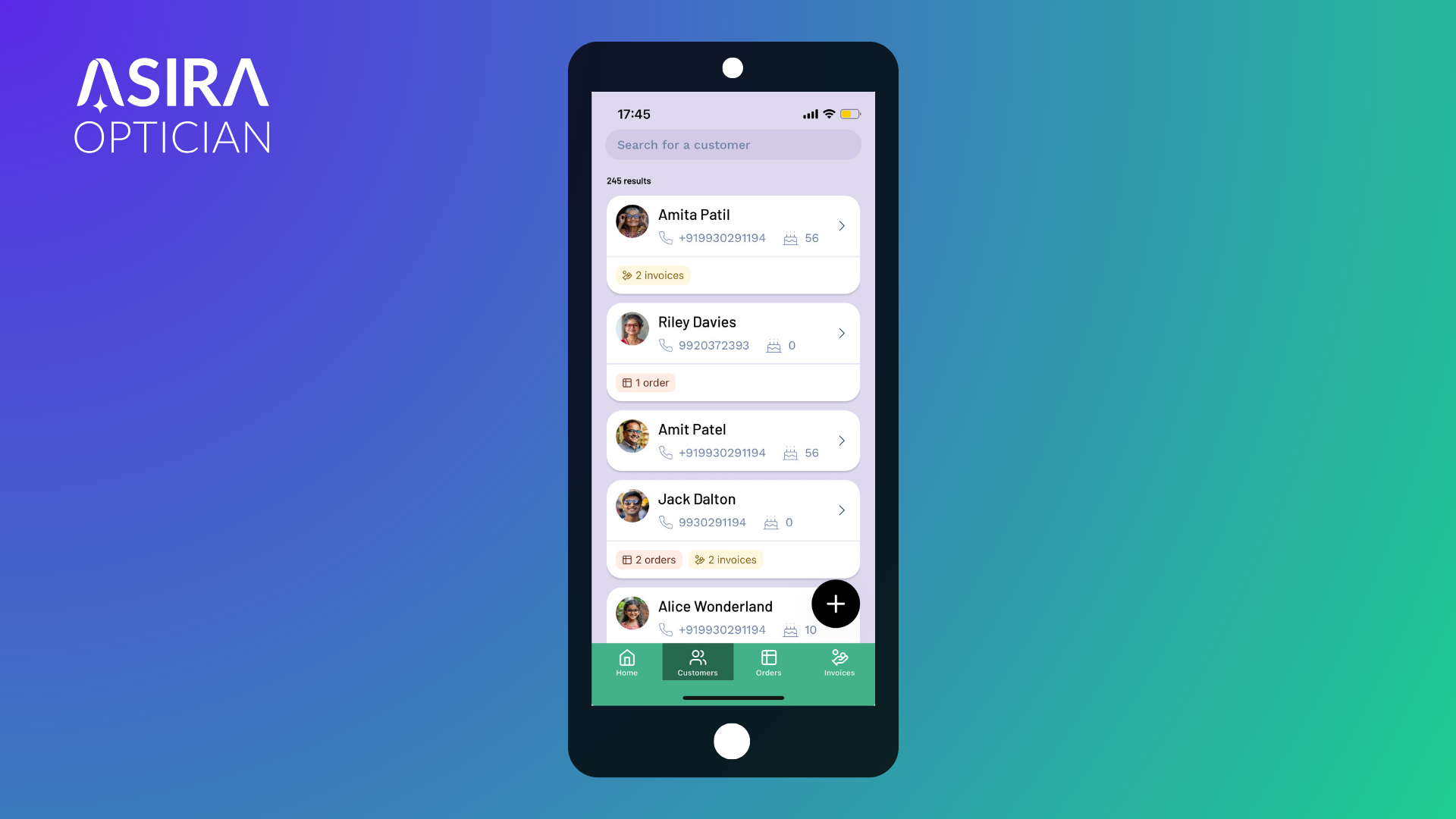
This is where the ASIRA Optician App becomes an important part of running a modern optical store.
Rather than treating each sale as an isolated transaction, optical retailers need a practical way to manage customer information alongside their everyday operations. The ASIRA Optician App is designed for the needs of optical retail, helping store owners move towards more organised digital record-keeping and business management.
By bringing customer-related workflows into a digital system, an optical store can build a more useful record of its interactions with customers and connect that information with the wider process of managing the business.
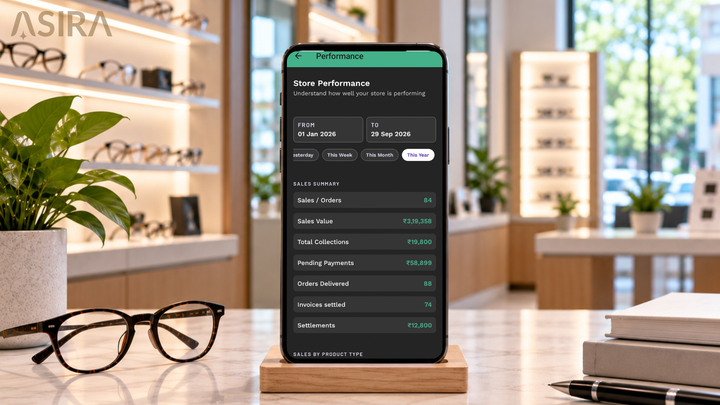
The real benefit is not simply having customer details stored on a screen. It is being better equipped to use those records to support customer service, manage orders, understand sales activity and make informed decisions as the business grows.
For store owners who still rely heavily on paper records, disconnected spreadsheets or individual staff members' memories, adopting a purpose-built optical retail application is an important step towards making customer management more consistent and less dependent on manual effort.
Start with the right information
Building a useful customer database does not require collecting every possible detail about every customer. Start with information that has a clear purpose.
Depending on your store's services and workflows, this might include:
- Customer contact details and communication preferences.
- Purchase history, including frames and lenses.
- Relevant prescription or dispensing information, where appropriate.
- Pending orders, service requests and follow-up requirements.
- Customer enquiries and preferences that help improve service.
Keep the information accurate, update it when necessary and ensure that staff access only what they need for their roles. Prescription and other health-related information require particular care, appropriate access controls and compliance with applicable privacy and data protection requirements. Marketing communications should respect customer consent and preferences.
The objective is to build a database that helps your store serve people better, not one that simply accumulates information.
Your next customer may already know you
Growing an optical business does not always mean finding more customers. Sometimes it means building better relationships with the customers who have already trusted you.
Your billing history tells you what happened in the past. A well-maintained customer database helps you decide how to serve those customers in the future.
For independent optical stores, that difference can mean more consistent service, better follow-ups, stronger customer relationships and a clearer understanding of the business.
Stop treating every bill as the end of a transaction. Start treating every customer interaction as the beginning of a relationship.
With the ASIRA Optician App, you can take a step towards managing those relationships more systematically and building an optical business that is ready to grow.
Download the ASIRA Optician App TODAY and start your FREE TRIAL! www.asira.health/optician


Comments ()