

Could Red Light Be the Next Frontier in Myopia Control?
Could red light help slow myopia progression? Explore the science behind RLRL, its potential benefits, safety, and what the latest evidence tells us.
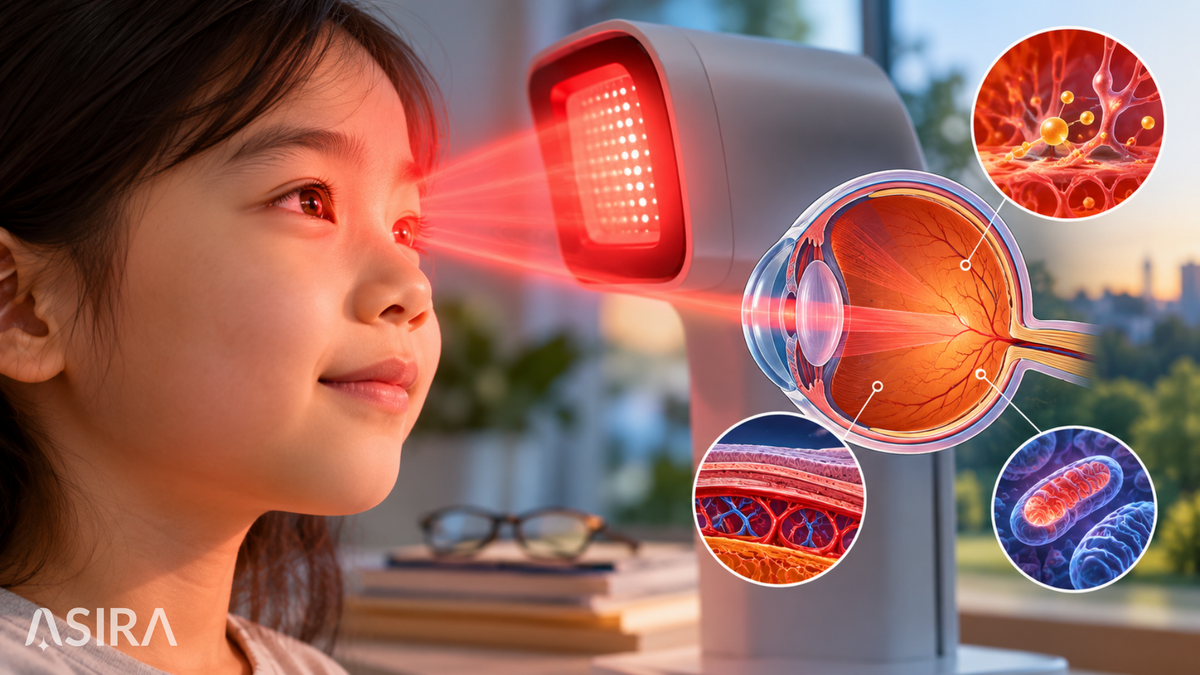
A simple beam of red light is attracting growing attention in the fight against myopia. Early research suggests it may slow eye growth, but important questions about long-term effectiveness and rebound remain unanswered.
Myopia management has changed considerably over the past decade. Rather than simply correcting blurred distance vision, clinicians are increasingly focused on slowing the underlying growth of the myopic eye. Low-dose atropine, orthokeratology, specialised spectacle lenses and multifocal contact lenses are now established options, but researchers continue to look for approaches that are effective, practical and well tolerated by children.
One of the more unusual developments in this field is repeated low-level red-light therapy (RLRL). The concept is remarkably simple: expose the eyes to a controlled, low-intensity red light for a few minutes, usually twice a day, with the aim of influencing the biological processes that regulate ocular growth. It sounds almost too simple to be a serious myopia-control strategy, yet a growing body of research suggests that something interesting may be happening.
A 2023 systematic review and meta-analysis published in the American Journal of Ophthalmology brought together the evidence available at the time. The review included 13 studies involving 1,857 children and adolescents, with eight studies contributing to the quantitative meta-analysis. Overall, the researchers found that children receiving RLRL experienced less myopic refractive progression, less axial elongation and greater increases in subfoveal choroidal thickness than children in control groups.
But before red light can be considered another tool in the myopia-control toolbox, it is worth asking a fundamental question: why should red light slow myopia in the first place?
The eye is not simply becoming "more short-sighted"
To understand the theory behind RLRL, it is important to look beyond the spectacle prescription. Myopia occurs when light entering the eye is focused in front of the retina rather than directly on it. During childhood, however, the more important biological concern is often progressive axial elongation, where the eye becomes increasingly long from front to back.
This distinction matters because myopia is not simply a problem of blurred vision. Increasing axial length is associated with a greater lifetime risk of ocular complications, including myopic retinal disease, glaucoma, cataract and visual impairment. This is why contemporary myopia management aims not merely to improve a child's vision, but to influence the biological process responsible for excessive ocular growth.
Current approaches attempt to do this in different ways. Atropine alters ocular signalling through pharmacological pathways, while orthokeratology, specialised spectacle lenses and multifocal contact lenses modify the retinal image and peripheral defocus. RLRL is different. Instead of changing the optical image or introducing a drug, it uses light as the therapeutic stimulus.
So, what does red light actually do?
The red light used in these studies generally falls within the 600-700 nm wavelength range, with many of the clinical trials using wavelengths around 635-650 nm. The treatment protocols were remarkably similar across the studies included in the review. Most involved approximately three minutes of exposure per session, twice a day, with an interval of at least four hours between sessions. Most protocols provided treatment either five or seven days a week.
The biological explanation is not yet completely understood, but several mechanisms have been proposed. One of the most interesting involves the retina and its role in regulating ocular growth.
The retina is not simply a structure that detects light and forms an image. It also participates in biochemical signalling pathways that influence how the eye grows. One molecule that has attracted particular attention is dopamine. Previous research cited by Tang and colleagues suggests that red light may stimulate dopamine production, while dopamine itself is thought to play an important role in regulating ocular growth. This has led researchers to propose that red-light exposure may influence retinal signalling in a way that reduces the stimulus for excessive axial elongation.
This gives us one possible pathway: red-light stimulation could alter retinal biochemical signalling, which could then influence the signals controlling eye growth. However, this remains a proposed mechanism. The clinical studies demonstrate an association between RLRL treatment and reduced myopia progression, but they do not establish that increased dopamine is definitively responsible for the effect.
Could the choroid be part of the story?
The choroid may provide another important piece of the puzzle. This highly vascular layer lies between the retina and sclera and appears to be involved in the signalling pathways associated with ocular growth. Research has linked myopia with changes in choroidal thickness and blood flow, while greater choroidal thickness has frequently been associated with slower eye growth.
Red light may influence this system through nitric oxide (NO). Previous research cited in the review suggests that red light can stimulate nitric oxide production. Because nitric oxide promotes vasodilation, this could potentially increase blood flow within the choroid. The authors discuss the possibility that changes in choroidal circulation may influence the signals involved in axial growth.
There is also a broader hypothesis involving oxygen supply. The authors describe evidence linking myopia-related visual conditions with reduced choroidal blood flow and choroidal thickness, potentially contributing to scleral hypoxia. Since the sclera is the tissue that ultimately determines the structural length of the eye, changes in this environment could potentially influence axial elongation. In this model, red light may be affecting several interconnected pathways rather than acting through a single mechanism.
Another possibility relates to mitochondrial function. Red light has been shown to influence mitochondrial activity and has been investigated therapeutically in several areas of medicine. Because the retina has high metabolic demands, changes in cellular metabolism could potentially contribute to the effects of RLRL. However, as with the dopamine and nitric oxide hypotheses, the precise contribution of this pathway to myopia control has not yet been established.
What does the research actually show?
The clinical evidence is perhaps the most compelling part of the story. Tang and colleagues identified 13 relevant studies involving 1,857 children and adolescents. Eight studies, involving a total of 934 participants, provided sufficient data for the quantitative meta-analysis. The studies examined three particularly important outcomes: spherical equivalent refractive error, axial length and subfoveal choroidal thickness.
For refractive progression, the pooled analysis found that children receiving RLRL had approximately 0.68 dioptres less myopic progression over six months than those in the control groups. The 95% confidence interval ranged from 0.38 to 0.97 D. When the analysis was restricted to randomised controlled trials, the difference was 0.55 D.
The findings for axial length are particularly interesting. Across the eight studies, the RLRL groups demonstrated approximately 0.35 mm less axial elongation over six months compared with controls. When only randomised controlled trials were considered, the difference was approximately 0.25 mm.
This is an important finding because axial elongation is the structural change that underlies progressive childhood myopia. A reduction in refractive progression is useful clinically, but evidence that an intervention is also associated with slower axial growth provides a stronger indication that it may be influencing the underlying disease process rather than simply changing the refractive measurement.
The choroid gets thicker too
The third major finding concerns the choroid. Four studies reported changes in subfoveal choroidal thickness, and the pooled analysis showed that the RLRL groups had an average 36.04 μm greater increase in subfoveal choroidal thickness than the control groups. The difference was evident from the first month of treatment and generally increased with longer treatment duration.
This finding fits reasonably well with the proposed biological mechanisms. If red light influences choroidal blood flow and ocular signalling, changes in choroidal thickness could represent one of the physiological responses to treatment. The fact that changes in choroidal thickness occurred alongside reductions in axial elongation is therefore particularly intriguing.
However, the relationship should not be oversimplified. The researchers point out that choroidal thickening alone cannot fully explain the axial shortening observed in some children. This suggests that the choroid may be one component of a much more complex response involving the retina, choroidal circulation and other posterior-segment pathways.
Is more treatment necessarily better?
The results suggest that the effect of RLRL generally becomes more apparent with increasing treatment duration, but this does not necessarily mean that more treatment will always produce a proportionally greater benefit. In the subgroup analysis, the difference in refractive progression increased from approximately 0.15 D at one month to 0.54 D at six months and 0.90 D at nine months. The pattern was not completely linear, and the amount of available long-term evidence was limited.
Most of the studies followed children for only six to 12 months. Only one study included a two-year post-trial follow-up. This makes it difficult to know whether the apparent treatment effect can be sustained over several years, which is particularly important because childhood myopia is a long-term condition.
There is another reason to be cautious about interpreting longer treatment periods. The wavelength, power and treatment schedules differed between studies. Although most used a broadly similar twice-daily three-minute protocol, the researchers note that the variation in treatment parameters makes it difficult to determine the optimal dose or treatment schedule.
What happens when the red light stops?
Perhaps one of the most important unanswered questions in RLRL research is what happens after treatment is discontinued.
Myopia control is not simply about slowing progression while treatment is being used. Clinicians also need to know whether the benefit persists once treatment is stopped, or whether the eye resumes growing more rapidly.
The evidence presented in the review raises concerns about a possible rebound effect. In one randomised controlled trial, children who stopped RLRL experienced approximately 0.20 D of myopic progression and 0.16 mm of axial elongation during the three months following cessation. In contrast, the changes during the 12 months of RLRL treatment had been much smaller.
The two-year post-trial study produced a similar signal. Children who discontinued RLRL during the second year experienced greater myopia progression than those who continued treatment, with a difference of approximately 0.91 D in spherical equivalent and 0.42 mm in axial length.
These findings do not establish exactly how much rebound occurs or whether it will be seen consistently in all children, but they highlight an important issue. If RLRL is ultimately used as a long-term myopia-control strategy, clinicians will need to understand not only its efficacy during treatment but also how the eye responds when treatment is reduced or stopped.
What about safety?
So far, the safety findings have been reassuring. None of the studies included in the meta-analysis reported vision-threatening events such as glare, flash blindness or persistent afterimages following treatment. The researchers also found no evidence of structural damage to the photoreceptor layer on OCT in the available studies.
Interestingly, some studies reported improvements in uncorrected visual acuity in the RLRL groups compared with controls. In two studies, a greater proportion of children receiving RLRL achieved an improvement of at least two lines of visual acuity during follow-up.
These findings are encouraging, but they should be interpreted within the limitations of the available evidence. Most of the studies were relatively short, and the absence of significant adverse events over a limited follow-up period cannot establish long-term safety. Longer studies will be necessary to determine whether repeated exposure to red light remains safe when used over several years.
The evidence comes with some big asterisks
The headline results of the meta-analysis are certainly impressive, but there are several reasons to interpret them carefully. Perhaps the biggest is the very high heterogeneity between studies. The I² statistic was 97.7% for refractive change, 98.0% for axial length and 89.6% for choroidal thickness, indicating substantial variation in the size of the observed effects between studies.
The quality of the underlying evidence is another concern. The review found that most of the randomised controlled trials had an unclear or high overall risk of bias, while the non-randomised studies had additional concerns relating to confounding, participant selection and outcome measurement.
There is also a significant question about generalisability. All eight studies included in the quantitative meta-analysis were conducted in China. The review authors therefore point out that evidence from other ethnic groups and a broader range of ages is still needed.
For these reasons, the authors classified the overall evidence as low certainty and called for larger and better-designed randomised controlled trials with at least two years of follow-up.
So, is red light the future of myopia control?
There is certainly something compelling about RLRL. The treatment is non-invasive, the individual treatment sessions are short, and the early evidence suggests that it may influence both refractive progression and the physical growth of the eye. Unlike conventional optical approaches, it also offers a potential window into the biological pathways that regulate ocular growth.
But promising is not the same as proven.
The current evidence suggests that RLRL may be an effective approach to slowing childhood myopia, but there are still important questions about its long-term efficacy, optimal treatment parameters, rebound after discontinuation and applicability to children outside the populations studied so far.
It is also too early to say that RLRL should replace established myopia-control strategies. Direct comparisons with interventions such as atropine and orthokeratology remain limited. Tang and colleagues specifically highlight the need for further trials comparing RLRL directly with other established interventions.
For now, repeated low-level red-light therapy is best viewed as a promising emerging option in myopia management, rather than a settled standard of care.
What makes it particularly interesting, however, is the possibility that the story may extend beyond red light itself. If controlled light exposure can influence retinal signalling, choroidal physiology and ultimately the growth of the eye, researchers may be uncovering another piece of the biological puzzle of myopia.
And that may be the most interesting part of the story: we are moving beyond simply correcting the vision produced by a growing myopic eye and increasingly looking for ways to influence how that eye grows in the first place.
References
- Tang J, Liao Y, Yan N, et al. Efficacy of repeated low-level red-light therapy for slowing the progression of childhood myopia: a systematic review and meta-analysis. Am J Ophthalmol. 2023;252:153-163. doi:10.1016/j.ajo.2023.03.036.
- Baird PN, Saw SM, Lanca C, et al. Myopia. Nat Rev Dis Primers. 2020;6(1):99. doi:10.1038/s41572-020-00231-4.
- Cooper J, Tkatchenko AV. A review of current concepts of the etiology and treatment of myopia. Eye Contact Lens. 2018;44(4):231-247. doi:10.1097/ICL.0000000000000499.
- Huang J, Wen D, Wang Q, et al. Efficacy comparison of 16 interventions for myopia control in children: a network meta-analysis. Ophthalmology. 2016;123(4):697-708. doi:10.1016/j.ophtha.2015.11.010.
- Huang Z, He T, Zhang J, Du C. Red light irradiation as an intervention for myopia. Indian J Ophthalmol. 2022;70(9):3198-3201. doi:10.4103/ijo.IJO_15_22.
- Jiang Y, Zhu Z, Tan X, et al. Effect of repeated low-level red-light therapy for myopia control in children: a multicenter randomized controlled trial. Ophthalmology. 2022;129(5):509-519. doi:10.1016/j.ophtha.2021.11.023.
- Dong J, Zhu Z, Xu H, He M. Myopia control effect of repeated low-level red-light therapy in Chinese children: a randomized, double-blind, controlled clinical trial. Ophthalmology. 2022. doi:10.1016/j.ophtha.2022.08.024.
- Chen H, Wang W, Liao Y, et al. Low-intensity red-light therapy in slowing myopic progression and the rebound effect after its cessation in Chinese children: a randomized controlled trial. Graefes Arch Clin Exp Ophthalmol. 2022. doi:10.1007/s00417-022-05794-4.
- Xiong R, Zhu Z, Jiang Y, et al. Sustained and rebound effect of repeated low-level red-light therapy on myopia control: a 2-year post-trial follow-up study. Clin Exp Ophthalmol. 2022. doi:10.1111/ceo.14149.
- Zhou L, Xing C, Qiang W, Hua C, Tong L. Low-intensity, long-wavelength red light slows the progression of myopia in children: an Eastern China-based cohort. Ophthalmic Physiol Opt. 2022;42(2):335-344. doi:10.1111/opo.12939.
- Chen Y, Xiong R, Chen X, et al. Efficacy comparison of repeated low-level red light and low-dose atropine for myopia control: a randomized controlled trial. Transl Vis Sci Technol. 2022;11(10):33. doi:10.1167/tvst.11.10.33.
ASIRA is a cloud-based EMR and practice management software built by eye care professionals for eye care professionals. We have helped hundreds of practices change the way they work. To find out more, visit www.asira.health and sign up for a FREE TRIAL!
Comments ()