

How Performance Analytics Can Help Your Optical Store Grow
See how performance analytics can help optical store owners improve operations, support teams, uncover missed opportunities and drive business growth.
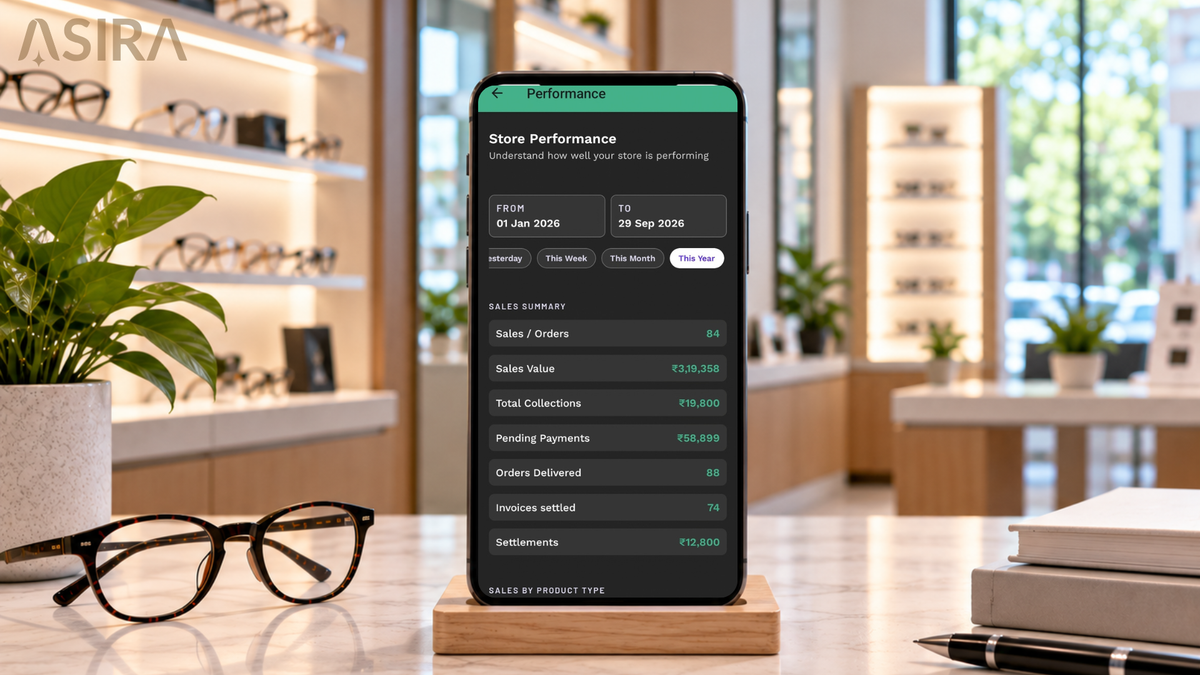
Running an optical store involves hundreds of decisions every day. From managing customer interactions and staff performance to tracking orders, sales and collections, there is always something that needs attention. In the middle of this activity, it can be difficult to get a clear picture of how the store is actually performing.
Sales figures may tell you how much you sold, but they do not always explain what is driving those sales or where opportunities are being missed. This is where performance analytics can add real value. By bringing together the information generated through everyday store operations, analytics can help optical retailers see patterns, identify gaps and make more informed decisions.
Get a clearer picture of your store
A busy store does not necessarily mean a profitable store, just as a quieter day does not necessarily indicate a problem. Looking at performance over time gives you a more reliable picture.
For example, if customer footfall is steady but sales are declining, the issue could be conversion rather than the number of visitors. If sales are increasing but the average transaction value is falling, there may be an opportunity to improve product recommendations or introduce customers to additional purchases.
Looking at these measures together gives store owners the context behind the numbers. Instead of simply knowing what happened, you can start understanding what may be influencing the result.
Make your team more effective
The performance of an optical store is closely connected to the performance of its team. Every customer interaction can influence whether a visitor makes a purchase, what they buy and how they experience the store.
Analytics can provide a clearer view of individual and team performance, making it easier to recognise strong performance and identify areas where support or training may be needed. For instance, one employee may be particularly effective at converting visitors into customers, while another may generate higher-value sales.
These insights can help store managers share effective practices across the team and set more meaningful performance goals. They also make it easier to recognise employees who are consistently contributing to the store's success.
Spot missed opportunities
One of the biggest advantages of performance analytics is its ability to highlight opportunities that might otherwise go unnoticed.
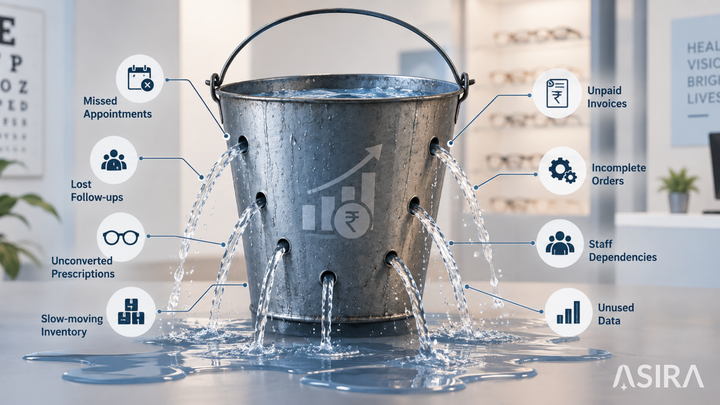
Consider customers who visit the store but leave without purchasing, orders that remain uncollected or sales that drop consistently during particular periods. Individually, these may seem like minor issues. Across hundreds of customer interactions, however, they can represent significant lost revenue.
Once these patterns become visible, store owners can take specific action. Customers who did not complete a purchase can be followed up with, quieter periods can be used for targeted promotions, and operational processes can be reviewed where delays are affecting the customer experience.
Analytics therefore becomes useful not simply for measuring performance, but for showing where there is room to improve it.
Turn store performance into a growth strategy
The long-term value of analytics comes from using these insights to shape business decisions.
Growth does not always require attracting more customers. Improving conversion, increasing average transaction value, encouraging repeat purchases and reducing lost orders can all increase revenue from the customers a store is already serving.
Over time, performance data can also reveal broader trends. You may find that certain products consistently perform better, particular days generate stronger sales or specific periods require a different staffing approach. These insights can influence everything from inventory planning and promotions to staffing and sales strategies.
This makes growth more measurable. Instead of introducing a change and relying on instinct to decide whether it worked, store owners can look at the performance before and after and understand its impact.
Making analytics part of everyday store management
For performance analytics to be genuinely useful, it needs to be part of the way a store is managed rather than something that is reviewed only at the end of the month.
A quick daily review can help identify immediate issues. Looking at performance each week can reveal emerging trends, while a monthly view can help owners assess whether the business is moving in the right direction.
This creates a simple cycle: understand what is happening, identify where there is an opportunity, take action and measure the outcome. Over time, those incremental improvements can have a meaningful effect on the overall performance of the store.
Bringing performance insights into the ASIRA Optician App
The ASIRA Optician App is designed to give optical store owners greater visibility into the performance of their business. By bringing key operational and sales information together, it helps turn everyday store activity into insights that can support better management.
The real benefit is not in having more numbers to look at. It is in having the right information at the right time to understand what needs attention, where the team can improve and where the business has room to grow.
For optical retailers, that can mean better control over day-to-day operations today and a stronger foundation for business growth tomorrow.
Download the ASIRA Optician App TODAY and start your FREE TRIAL! www.asira.health/optician


Comments ()