

Why Specialty Contact Lens Fitting Requires a Different Kind of Optometrist
Specialty contact lens fitting is more than choosing a lens. Explore the clinical reasoning, patient assessment, troubleshooting and documentation behind successful fits.
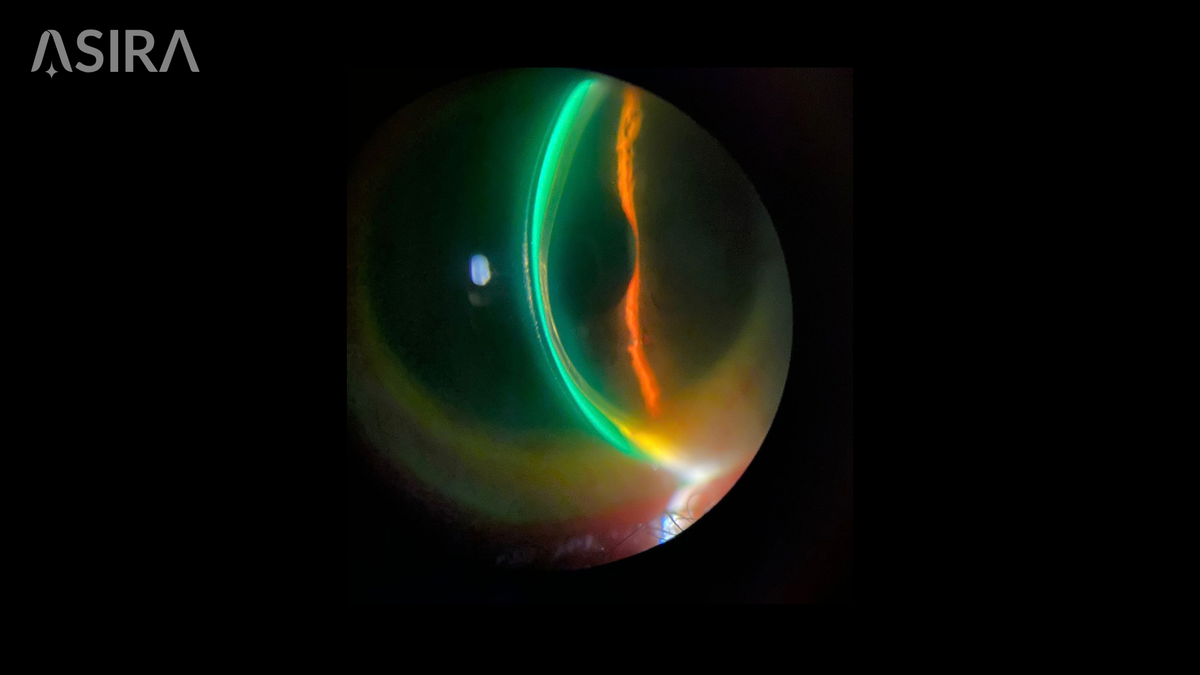
A routine contact lens fitting can sometimes feel deceptively simple. Establish the prescription, assess the ocular surface, select a lens, evaluate the fit and make adjustments until the patient is comfortable and seeing well. Specialty contact lens fitting is different.
The patient sitting in front of the optometrist may have keratoconus, irregular astigmatism, post-surgical corneal changes, ocular surface disease or another condition that makes conventional correction inadequate. The objective may no longer be simply to correct refractive error. It may be to create a usable visual system on an irregular cornea, protect a compromised ocular surface, improve comfort or provide functional vision when spectacles or conventional contact lenses are no longer enough. That requires a different way of thinking.
A specialty contact lens fitter is not simply choosing a more complicated lens. They are solving a clinical problem.
Start with the patient, not the lens
One of the biggest differences between routine and specialty contact lens practice is the temptation to start with the lens itself. With an increasingly wide range of rigid, hybrid, scleral and custom-designed lenses available, it can be easy to focus on which lens might work. But the more important question is: what are we actually trying to achieve for this patient?
A patient with keratoconus may be seeking better visual acuity, but they may also be struggling with glare, fluctuating vision, discomfort with previous lenses or difficulty performing certain tasks. A patient with ocular surface disease may be less concerned about achieving a small improvement in visual acuity and more concerned about pain, dryness or the ability to keep their eyes open comfortably.
The clinical assessment therefore has to come before the lens selection. History, symptoms, ocular health, corneal shape, tear film, previous contact lens experience, visual requirements and expectations all contribute to the decision. In keratoconus, for example, corneal topography and other imaging technologies can provide valuable information for understanding the cornea and guiding contact lens fitting.
This is where specialty contact lens fitting becomes much more than a technical exercise. The optometrist has to interpret the information and decide what matters for this particular patient.
There is rarely a single "right" lens
Specialty contact lens practice also requires an understanding that there is rarely one universally correct solution. A patient with an irregular cornea may potentially be managed with a rigid gas permeable lens, hybrid lens, piggyback system, corneoscleral lens or scleral lens. The choice depends on the shape and severity of the irregularity, ocular surface condition, visual requirements, previous lens history, handling ability and the patient's tolerance.
Scleral lenses, for example, have become increasingly important because they can provide both optical and therapeutic benefits. They vault the cornea and create a fluid reservoir between the lens and ocular surface, making them useful not only for irregular corneas but also for selected ocular surface disorders. But that does not mean that a scleral lens is automatically the answer.
The fitter has to understand how the lens interacts with the cornea, limbus and sclera, and how that relationship changes during wear. Scleral fitting can involve considerations such as sagittal depth, haptic alignment, limbal clearance, lens movement, fluid reservoir and ocular surface response. Research has also demonstrated considerable variability in scleral shape, reinforcing the importance of evaluating the individual eye rather than assuming a symmetrical ocular surface.
This is where experience becomes particularly valuable.
Specialty fitting requires patience
One of the less discussed skills in specialty contact lens practice is patience. A conventional soft lens fitting may be completed relatively quickly. A complex specialty fit may require multiple diagnostic lenses, modifications, follow-up visits and sometimes a change in strategy altogether.
The patient may not immediately adapt to the lens. The initial lens may provide excellent vision but be uncomfortable. It may be comfortable but produce an inadequate fit. A lens that looks acceptable immediately after application may behave differently after several hours of wear.
Research into scleral lens fitting reflects this reality. Studies have reported multiple visits and more than one lens being required during the fitting process, particularly in complex cases. This means that a specialty lens fitter has to be comfortable with an iterative process.
The first lens is not necessarily the final lens. The first fit is not necessarily the final fit. A problem identified at follow-up is not necessarily a failure. It may simply provide the information needed to make the next decision. That mindset is important for both the practitioner and the patient.
Troubleshooting is part of the clinical process
Specialty contact lens fitting does not end when the patient leaves the practice with a lens. The follow-up appointment is where much of the clinical reasoning continues. Is the patient comfortable throughout the day? Is vision stable? How does the lens perform after several hours? Is there adequate clearance? Is there excessive bearing? What is happening at the limbus? Is there conjunctival compression? Is the ocular surface responding as expected?
With scleral lenses, practitioners may also encounter issues such as midday fogging, epithelial changes, conjunctival prolapse or other fitting-related complications. These require the practitioner to determine whether the problem relates to the lens design, application, care routine, ocular surface or another factor.
The important point is that troubleshooting should not become guesswork. Every follow-up finding should contribute to the next clinical decision. This is one reason documentation becomes particularly important in specialty contact lens practice.
Good documentation tells the story of the fit
In routine practice, it can be tempting to think of documentation as something that happens after the clinical work is finished. In specialty contact lens practice, documentation is part of the clinical process itself.
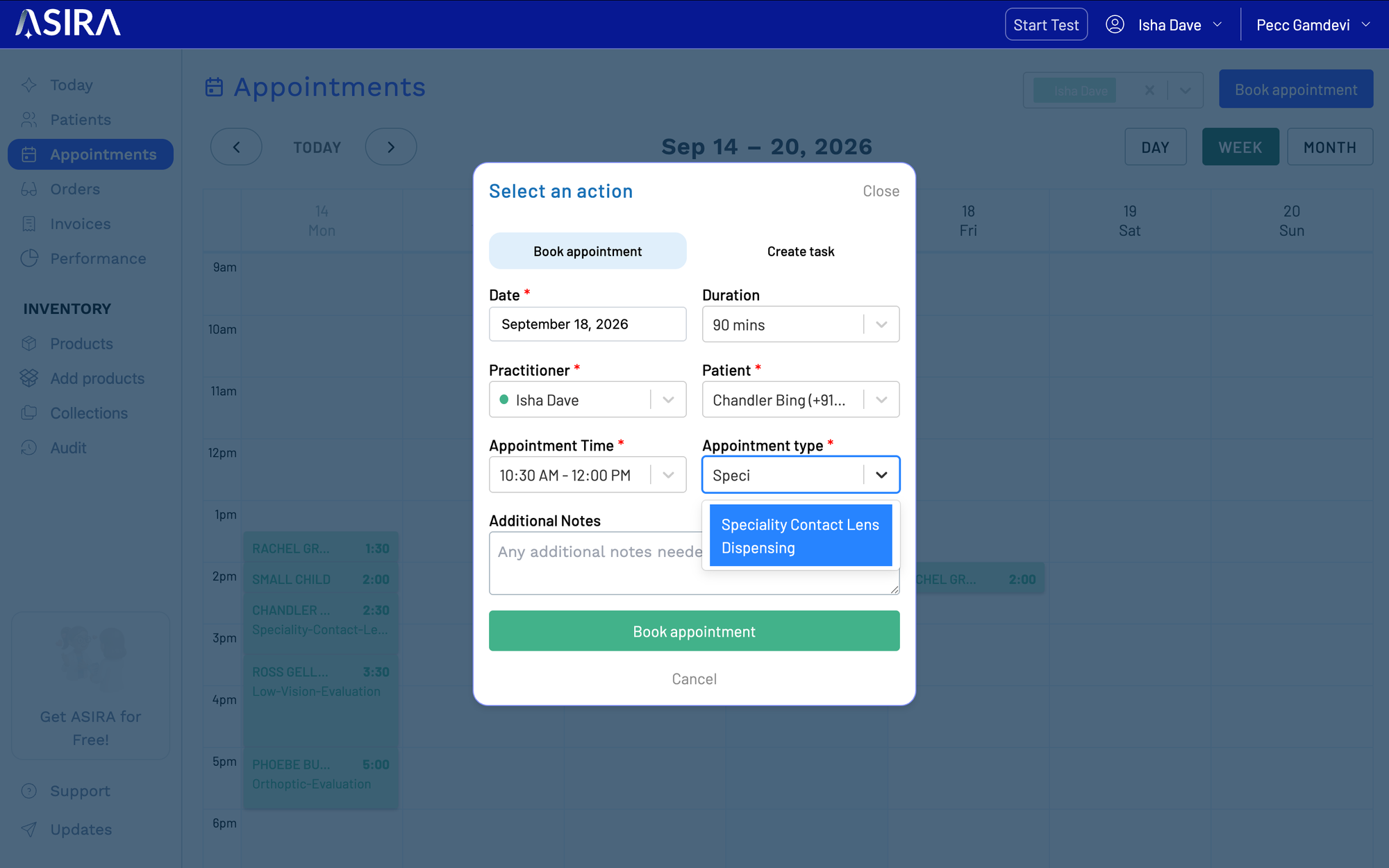
A specialty lens fit can involve a substantial amount of information. The initial symptoms and diagnosis, previous lens history, corneal measurements, topography, ocular surface findings, diagnostic lens parameters, over-refraction, visual acuity, comfort, lens assessment and follow-up findings all contribute to understanding what is happening.
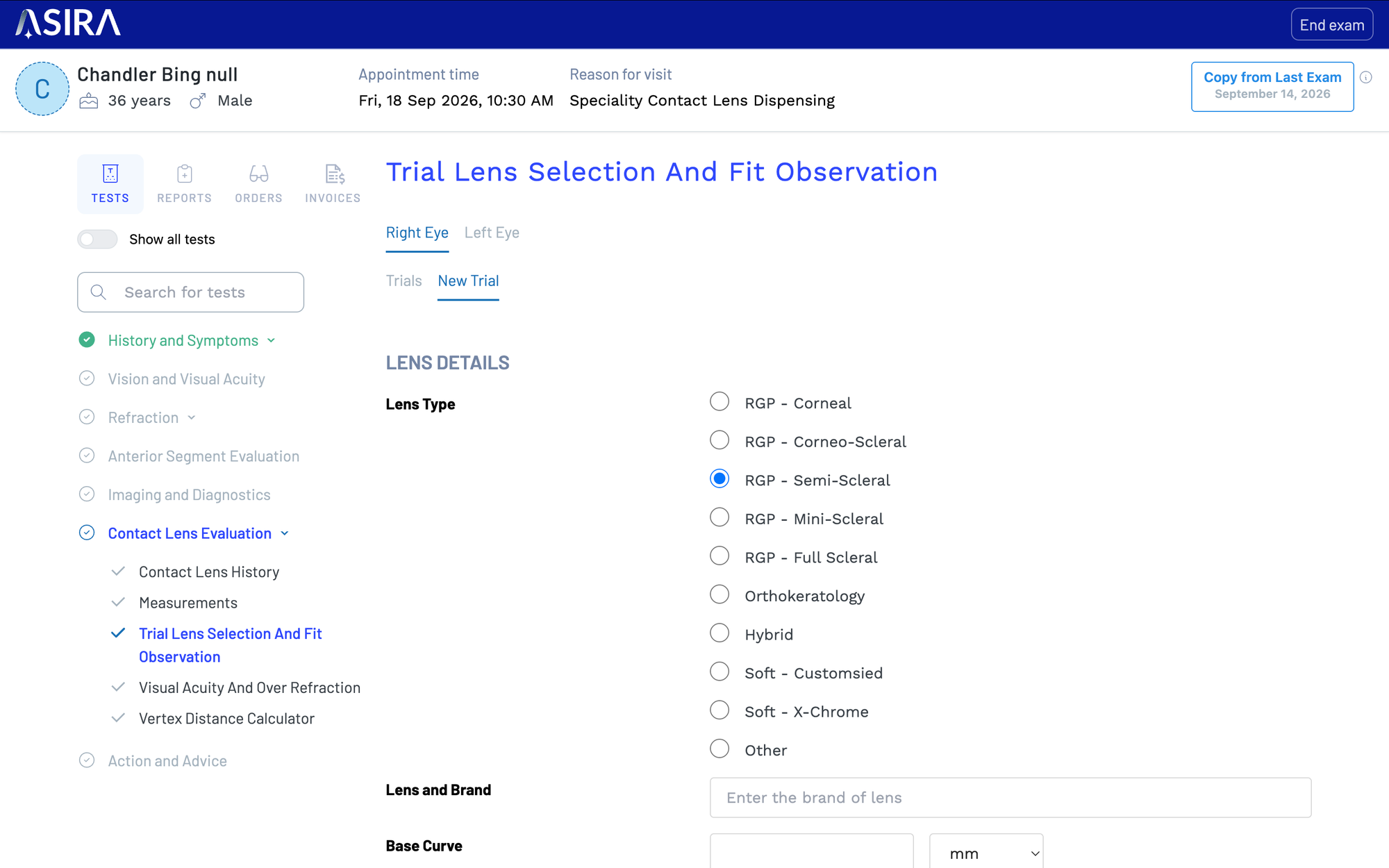
If that information is recorded inconsistently, it becomes much harder to understand why a particular lens was selected, what was changed and whether the patient is actually improving. This becomes particularly important when a patient returns after several months or is seen by another optometrist. A good record should allow another clinician to understand the journey without having to reconstruct it from memory.
This is where digital clinical documentation can become particularly useful. ASIRA, for example, includes a specialty contact lens documentation template designed to structure the information collected during the assessment and fitting process. Instead of relying on free-text notes or separate pieces of information, the optometrist can document the relevant clinical findings, lens details and follow-up information within the patient's clinical record.
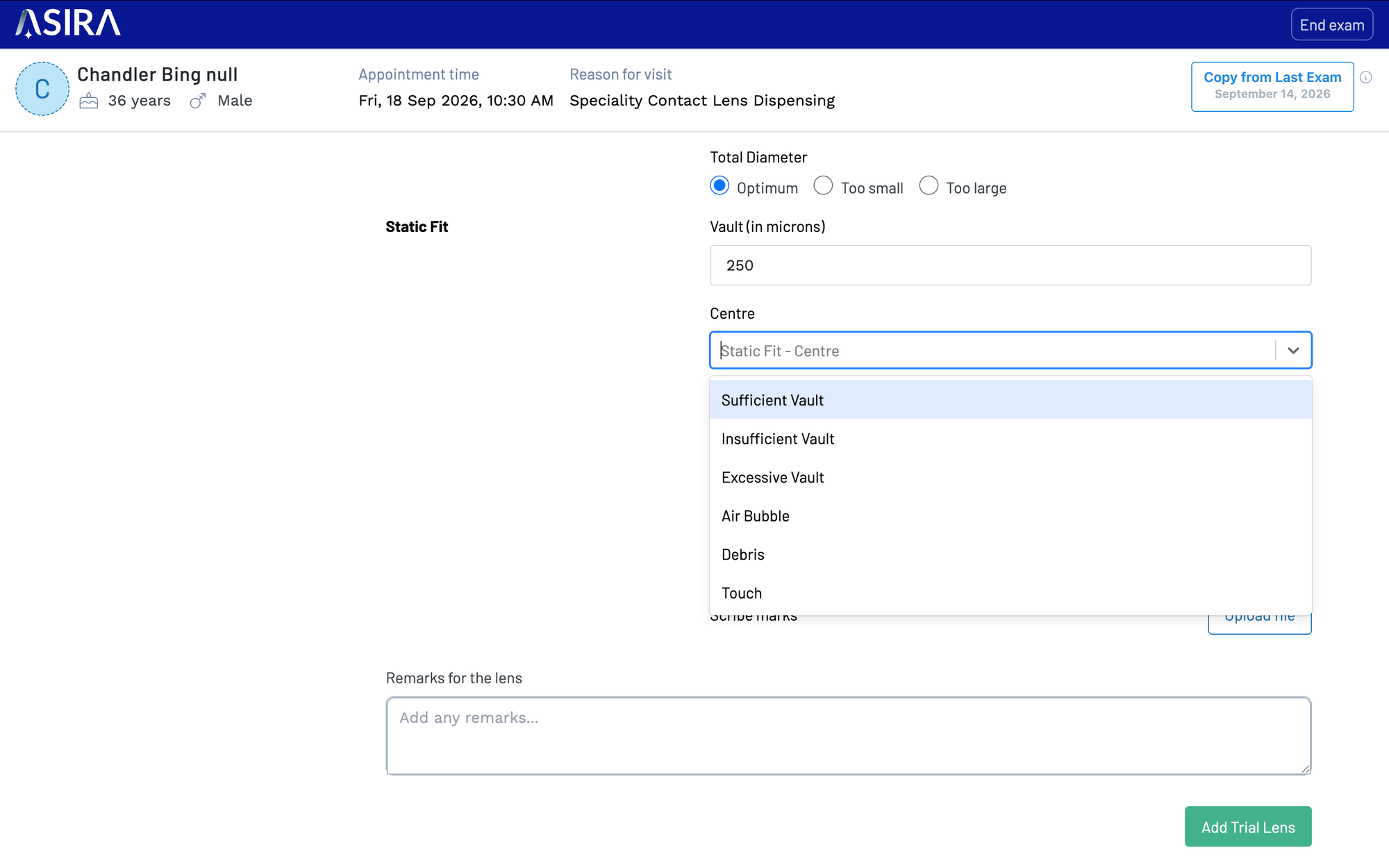
The value is not simply having a digital version of a paper form. It is having the patient's specialty lens journey documented in a consistent clinical format. That becomes especially useful when a fitting involves several visits. The clinician can look back at what was tried, what was found and what changed, rather than starting from scratch at every appointment.
Communication matters as much as the technical fit
There is another skill that separates specialty contact lens practice from routine fitting: communication. Patients who require specialty lenses have often already experienced frustration. They may have tried spectacles, conventional contact lenses or other approaches without achieving the vision or comfort they need.
Expectations therefore need to be managed from the beginning. The optometrist needs to explain what the lens is intended to achieve, what the fitting process may involve, how long adaptation may take and why more than one visit may be necessary. Patients also need to understand that a technically successful lens is only useful if they can handle it, care for it and wear it safely.
This is particularly important with larger or more complex lenses. Handling, insertion, removal and lens care become part of the clinical outcome. A patient who has excellent vision through a lens but cannot insert it independently has not necessarily achieved a successful real-world outcome.
The specialty lens fitter needs to think beyond the cornea
Perhaps the biggest difference is that specialty contact lens fitting requires the optometrist to see the whole patient rather than simply the corneal shape. The cornea matters, but so does the ocular surface. The lens matters, but so does the patient's lifestyle. Visual acuity matters, but so does visual quality. A technically acceptable fit matters, but so does comfort and the patient's ability to manage the lens.
In keratoconus, for example, contact lenses can provide important visual rehabilitation, but the underlying condition may continue to change. Monitoring disease progression remains important, particularly in younger patients, and contact lens management needs to exist alongside appropriate clinical monitoring and referral when indicated.
The specialty contact lens therefore becomes one component of a broader clinical management plan. That is what makes specialty contact lens practice so interesting.
Building specialty contact lens services into everyday optometry
As optometry develops, specialty contact lenses are likely to become an increasingly important part of clinical practice. Advances in lens design, corneal imaging and manufacturing have expanded the options available to practitioners, while modern scleral lens technology has opened applications extending beyond irregular corneas into ocular surface management.
But having access to the technology is only the beginning. A successful specialty contact lens service requires clinical knowledge, careful assessment, good equipment, patience, troubleshooting skills, communication and documentation. It requires the optometrist to be comfortable with uncertainty and willing to refine the solution rather than expecting the first lens to solve everything.
That is why specialty contact lens fitting requires a different kind of optometrist. Not necessarily one who knows the most lens designs, but one who knows how to ask the right clinical questions, interpret what they find, understand what the patient actually needs and use each fitting and follow-up visit to make a better decision.
The lens is important. But the thinking behind the lens is what makes specialty contact lens practice truly clinical.
ASIRA is a cloud-based EMR and practice management software built by eye care professionals for eye care professionals. We have helped hundreds of practices change the way they work. To find out more, visit www.asira.health and sign up for a FREE TRIAL!


Comments ()