

Why Community Eye Care Matters in India
Community eye care can bring essential eye services closer to people, strengthen referrals and help ensure timely, continuous care across India.
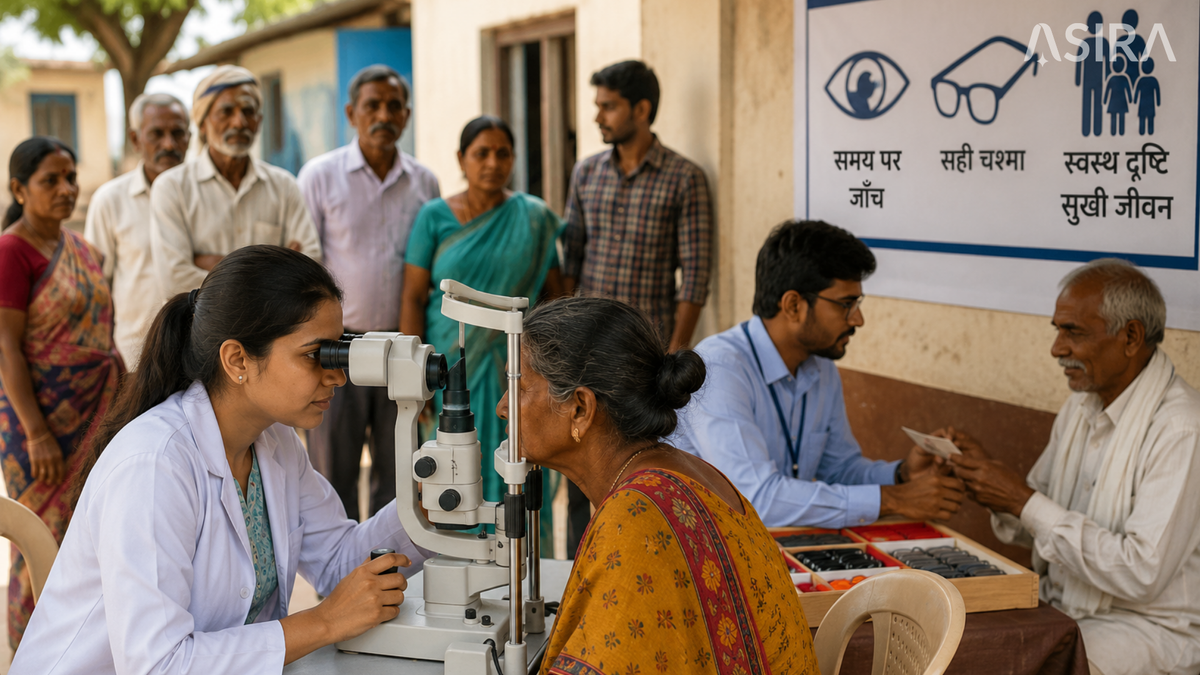
Eye care does not begin when a patient walks into an eye hospital. For many people, the biggest challenge is getting to that point in the first place.
A person may notice that their vision is becoming blurred but assume it is a normal part of ageing. A child may struggle to see the blackboard at school without anyone recognising the reason. Someone living with diabetes may have no symptoms of retinal disease and therefore see little reason to have their eyes examined. An older person may have difficulty travelling to a specialist centre for what initially appears to be a routine eye problem.
These are not simply clinical problems. They are problems of access, awareness and continuity of care. This is where community eye care has an important role to play.
What is community eye care?
Community eye care refers to eye health services that are provided closer to where people live, work, study and access other healthcare. It encompasses much more than screening camps. It can include comprehensive eye examinations, refraction and spectacle services, identification of common eye conditions, screening for conditions such as diabetic retinopathy and glaucoma, children's eye health programmes, myopia management, eye health education, referral to specialists and follow-up of patients with chronic conditions.
The purpose is not to replace specialist ophthalmic care. Rather, community eye care creates an accessible first point of contact and helps patients reach the appropriate level of care when they need it. A well-functioning community eye care system should be able to identify common problems that can be managed locally while recognising conditions that require further investigation or specialist intervention.
This approach is consistent with the World Health Organization's emphasis on integrated, people-centred eye care, where eye health is incorporated into broader health systems rather than operating as a completely separate service.
India has a huge need for accessible eye care
India has made considerable progress in addressing avoidable blindness and visual impairment. The National Programme for Control of Blindness and Visual Impairment has been in place since 1976 and addresses conditions including cataract, refractive errors, glaucoma, diabetic retinopathy, childhood blindness and corneal blindness.
Yet the availability of services does not automatically translate into access. India is a country of enormous geographical, economic and social diversity. For many people, particularly those living in rural and underserved communities, distance, transport, cost, lack of awareness and the inability to take time away from work can all become barriers to seeking care.
Uncorrected refractive error illustrates the problem particularly well. It is one of the leading causes of vision impairment worldwide and affects people across all age groups. In many cases, the intervention required is relatively straightforward: a proper eye examination followed by appropriate correction. The challenge is ensuring that people have access to that examination.
The same principle applies to potentially sight-threatening conditions. Glaucoma and diabetic retinopathy may progress without obvious symptoms, meaning that waiting for a person to notice a change in vision may mean waiting too long. Accessible eye care within the community can help identify these patients before significant vision is lost.
Community care brings eye care closer to people
One of the greatest strengths of community eye care is proximity. Instead of expecting every patient to travel to a large eye hospital, appropriate services can be provided closer to the community through primary eye care practices, vision centres, schools, workplaces and other local healthcare settings.
This is particularly relevant in India, where the needs of a person living in a major city may be very different from those of someone living in a remote village. Even within cities, there can be significant differences in access to healthcare.
A patient does not necessarily need a tertiary eye hospital for every eye-related concern. They may first need a competent eye care professional who can assess their vision and ocular health, identify abnormalities, provide appropriate management and recognise when referral is necessary.
That first point of contact can make the difference between a problem being identified early and a patient presenting much later with avoidable visual loss.
Screening is only the beginning
Community eye care is often associated with screening camps, and screening has an important role. It can identify people who might otherwise never seek eye care. However, screening by itself is not a complete eye care service.
A person identified with reduced vision needs access to refraction and appropriate correction. A patient suspected of having glaucoma needs a pathway to further investigation. Someone with signs of diabetic retinopathy needs appropriate referral and follow-up. A child identified with reduced vision needs a comprehensive assessment and, where necessary, ongoing management.
Finding a problem is therefore only the first step. The real value of community eye care lies in what happens afterwards.
A strong community eye care programme should connect detection with diagnosis, treatment, referral and follow-up. Without these links, screening can simply create a list of people with problems without guaranteeing that those people actually receive the care they need.
Community eye care is also about prevention
Good community eye care should not only respond to existing eye problems. It should also help people understand how to protect their vision and recognise when they need professional care.
This includes educating communities about the importance of regular eye examinations, children's eye health, diabetes and its effects on the eyes, myopia, occupational eye protection, safe contact lens wear and the appropriate use of eye medications. It also means helping people understand that some serious eye conditions may develop without noticeable symptoms.
This educational role is particularly important because people's decisions about seeking eye care are often influenced by what they know, or do not know, about their eyes. Someone who believes that an eye examination is only necessary when their vision becomes blurred may not seek care for years. Someone who understands that diabetes can affect the retina even when vision appears normal is more likely to recognise the importance of regular examinations.
Community eye care therefore has the potential to shift the focus from treating vision problems after they occur to preventing avoidable vision loss wherever possible.
Optometrists have an important role to play
Optometrists are well positioned to contribute to community eye care because they can serve as an important first point of contact for people with vision and eye health concerns.
A comprehensive primary eye examination can do much more than determine a spectacle prescription. It can help identify ocular abnormalities, assess risk factors, recognise patients who require further investigation and provide appropriate management for conditions that fall within the scope of primary eye care.
This makes the optometrist an important link between the community and the wider eye care system.
However, effective community eye care cannot depend on individual practitioners working in isolation. It requires clear referral pathways between optometrists, ophthalmologists, general practitioners and other healthcare professionals. A patient with diabetes, for example, may interact with several parts of the healthcare system, and their eye care should not exist separately from the rest of their health care.
The goal should be simple: a patient should not get lost between levels of care.
Technology can strengthen community eye care
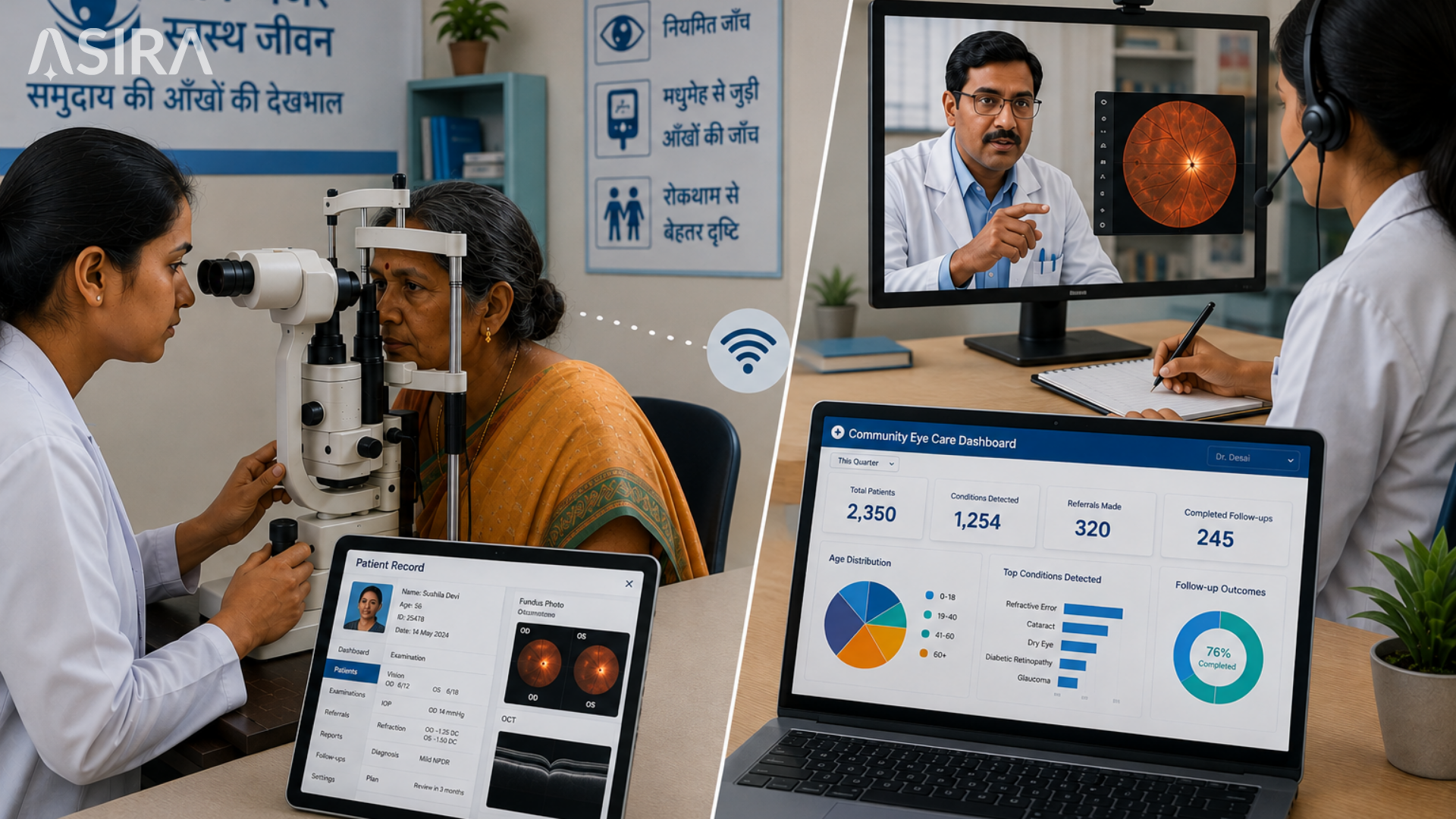
Technology has the potential to make community eye care more connected and effective. Digital clinical records can help practitioners document examinations consistently, access previous findings and follow patients over time. Teleoptometry, teleophthalmology and remote consultations can, where appropriate, help connect primary eye care providers with specialists who may not be physically available within the community.
Technology can also help us understand the needs of the communities being served. When clinical information is recorded systematically, it becomes possible to identify patterns in the types of patients presenting, the conditions being detected, referral rates and follow-up outcomes.
These data can be valuable beyond the individual patient. They can help practices and organisations understand where resources are needed, identify gaps in care and evaluate whether community eye care programmes are actually improving outcomes.
The role of technology, therefore, should not simply be to make documentation digital. Its greater value lies in helping create a more connected system of care.
From eye camps to continuous eye care
India has a long history of community-based eye health initiatives, including screening programmes and outreach camps. These programmes have helped bring eye care to people who may otherwise have had little access to it.
But the future of community eye care needs to move beyond the one-time screening model.
The question should not simply be, "How many people did we screen?" It should also be, "How many people received the care they needed?"
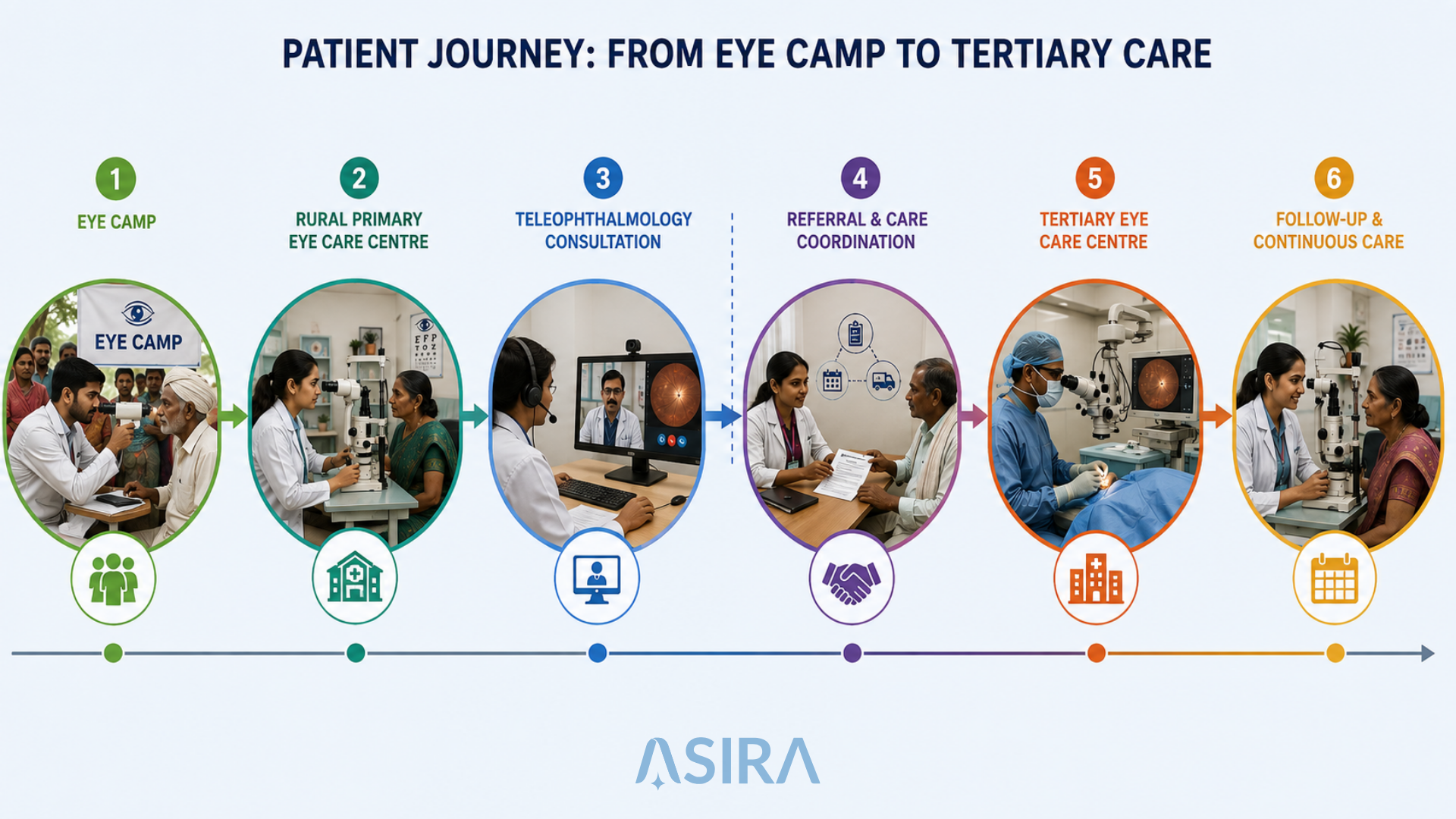
This requires a shift from measuring activity to measuring outcomes. A successful community eye care programme should be able to follow a patient from the initial point of contact through examination, treatment or referral and, where necessary, long-term follow-up.
This becomes increasingly important as India faces an ageing population and a growing burden of chronic diseases such as diabetes, alongside changing patterns of visual needs such as childhood myopia.
Community eye care needs to become a continuous process rather than a single event.
Building a stronger primary eye care system
Community eye care should not be viewed as something separate from mainstream eye care. It is an essential part of it.
A strong eye care system needs accessible primary care at the community level, clear referral pathways to secondary and tertiary services, appropriately trained eye care professionals, reliable clinical documentation, health education and systems that support patients throughout their care journey.
For India, the challenge is not simply to reach more people. It is to ensure that people receive the right care at the right time and at the appropriate level of the health system.
That may mean a patient receiving spectacles from a local optometrist, a child being identified with reduced vision and referred for further assessment, or a person with diabetes being directed towards appropriate retinal screening before they develop symptoms.
Community eye care brings these opportunities closer to people.
Preventing avoidable vision loss does not always require a sophisticated intervention. Sometimes, it begins with something much simpler: making sure that there is a place nearby where someone can have their eyes properly examined, receive appropriate advice and be connected to further care when they need it.
That is the real importance of community eye care in India.
ASIRA is a cloud-based EMR and practice management software built by eye care professionals for eye care professionals. We have helped hundreds of practices change the way they work. To find out more, visit www.asira.health and sign up for a FREE TRIAL!

Comments ()