

Making Low Vision Evaluation Easier and More Comprehensive with ASIRA
Make low vision evaluations more efficient with structured documentation, clear aid prescriptions, easier follow-up and outcome monitoring.

Low vision evaluations require a different level of clinical detail compared with a routine eye examination. Beyond assessing vision and determining whether optical correction is appropriate, the optometrist needs to understand how the patient functions in everyday life, what activities they find difficult, what their visual goals are, and what interventions could help them remain independent. A thorough low vision assessment therefore involves a detailed history, functional assessment, appropriate testing, trial of low vision aids, and careful documentation of the recommendations and outcomes.
For a busy optometry practice, documenting all of this can be time-consuming. It can also be difficult to ensure that the same level of detail is captured consistently for every patient. This is where ASIRA's Low Vision Template can make the clinical workflow easier.
A structured approach to a detailed low vision history
A good low vision assessment starts with understanding the patient, not just their vision. Patients may have difficulty reading, recognising faces, using a smartphone, watching television, moving around independently, managing medications, or carrying out work and household activities. Their priorities can be very different depending on their age, occupation, lifestyle and visual demands.
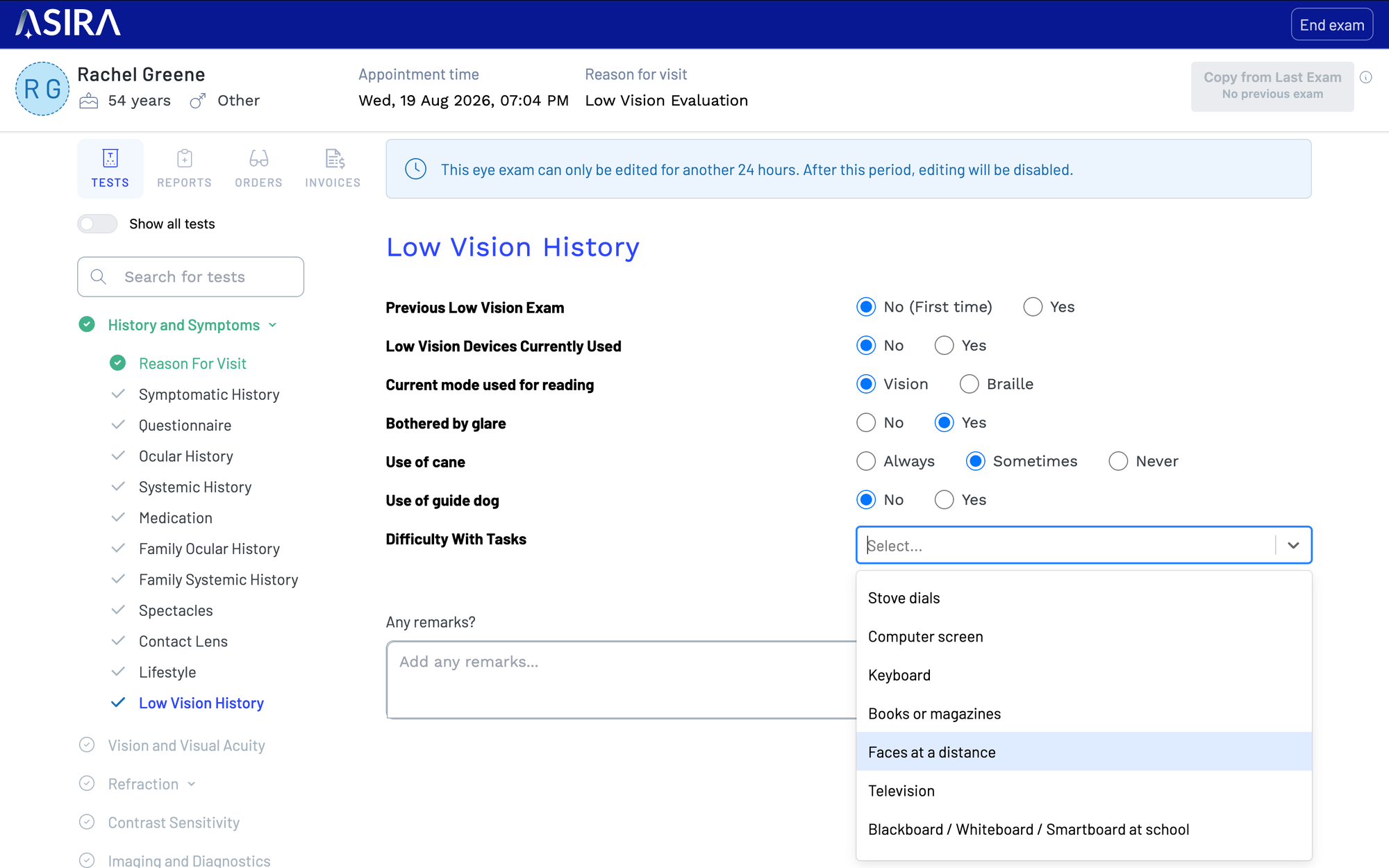
ASIRA's Low Vision Template provides a structured framework for documenting this information. Rather than relying on memory or starting with a blank clinical record, the optometrist is guided through the important areas that need to be explored. This helps ensure that relevant aspects of the patient's history and functional difficulties are captured while also making the process more consistent from one consultation to the next.
The result is a more comprehensive clinical record without requiring the optometrist to spend unnecessary time working out what needs to be documented.
Spend less time documenting and more time with the patient
Low vision consultations can already be lengthy. Adding extensive documentation to the end of the consultation can make the process even more demanding.
A structured template helps reduce this burden by bringing the relevant information into one place. Instead of repeatedly typing the same headings or creating a new format for every patient, the clinician can work through a familiar structure and record the findings as part of the examination.
This saves time while also reducing the risk of important information being overlooked. More importantly, it allows the clinician to focus on the conversation with the patient and the clinical decision-making rather than spending the consultation thinking about how to structure the notes.
Clear documentation of low vision aids and recommendations
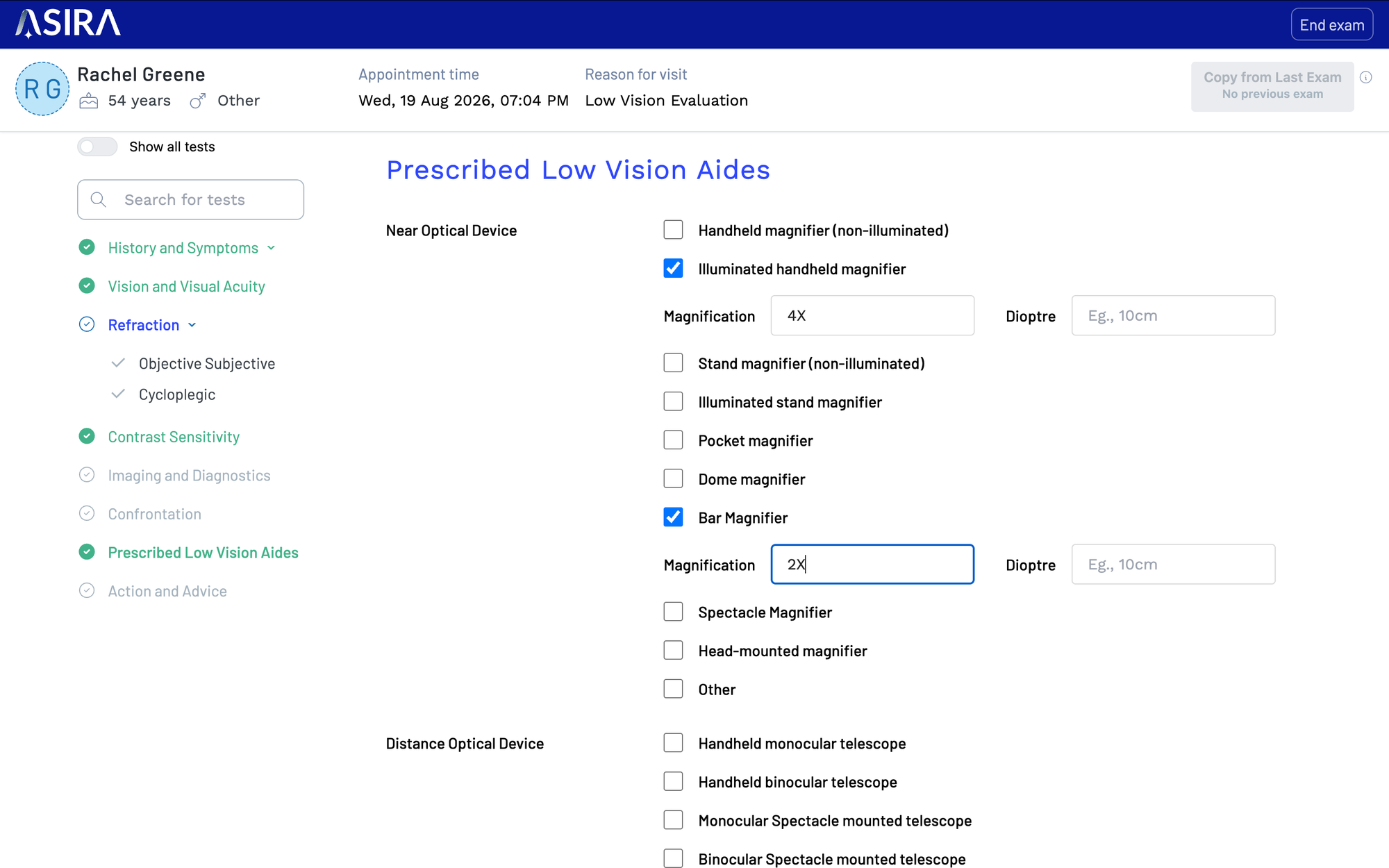
Prescribing a low vision aid is only one part of the process. It is also important to document what was prescribed, the purpose of the aid, and how the patient performed with it during the assessment.
For example, a patient may be prescribed a particular magnifier for reading, a telescope for distance tasks, or a digital solution for specific functional needs. Having a clear record of these recommendations makes it much easier to understand the rationale behind the intervention when the patient returns.
ASIRA's Low Vision Template provides a dedicated structure for recording the low vision aids prescribed and the relevant clinical information associated with them. This creates a useful reference for future consultations rather than leaving the clinician to reconstruct what was done during the previous visit.
Making follow-up more meaningful
Low vision rehabilitation is rarely completed in a single appointment. Patients often need time to adapt to an aid and incorporate it into their daily routines. Some may return because they are struggling to use the device, while others may have new visual goals or require additional interventions.
A well-documented initial assessment makes these follow-up visits much easier. The optometrist can quickly review the patient's original concerns, functional goals, assessment findings and prescribed aids before beginning the next consultation. This provides continuity and allows the follow-up to focus on what has changed rather than repeating the entire history.
It also makes it easier to identify when a patient needs further intervention or when their visual needs have changed.
Monitor whether the intervention is actually helping
Perhaps the most important reason to document a low vision assessment thoroughly is to evaluate whether the intervention has made a meaningful difference.
A low vision aid should not simply be recorded as "prescribed." The clinician needs to know whether it helped the patient achieve the activity they wanted to perform. Can they read the newspaper again? Are they able to use their phone more independently? Can they recognise faces more easily? Are they using the prescribed aid in their daily life?
By maintaining a clear record of the patient's goals, interventions and follow-up findings, ASIRA makes it easier to monitor these outcomes over time. This shifts the focus from simply documenting what was prescribed to understanding whether the intervention was successful.
Supporting better low vision care
Good documentation is an important part of good clinical care. In low vision practice, it helps create a complete picture of the patient, their functional needs, the interventions provided and the outcomes achieved.
ASIRA's Low Vision Template brings this information into a structured clinical workflow. It helps the optometrist take a more thorough history, document the assessment and low vision aids clearly, and return to that information easily during follow-up visits.
Ultimately, the aim is not simply to make documentation faster. It is to make the entire low vision journey easier to manage, from the first assessment through to rehabilitation and long-term follow-up.
Successful low vision care isn't just about prescribing an aid. It's about understanding what the patient needs, finding a solution that works for them, and knowing whether it has actually made a difference.
ASIRA is a cloud-based EMR and practice management software built by eye care professionals for eye care professionals. We have helped hundreds of practices change the way they work. To find out more, visit www.asira.health and sign up for a FREE TRIAL!


Comments ()