
How Better Clinical Documentation Can Improve Optical Conversion
Better clinical documentation can connect clinical recommendations with the right optical solutions, improve the patient experience, and support better optical conversion.
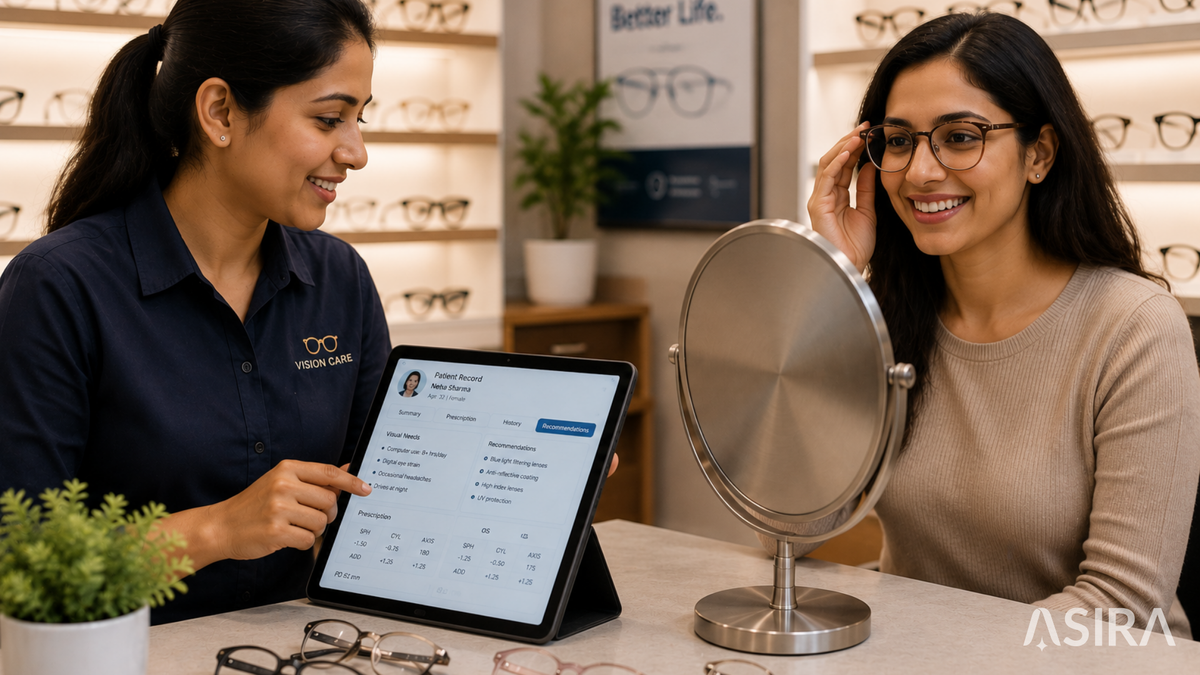
When we talk about clinical documentation, we usually think about patient records, clinical accountability and continuity of care. We don't usually think about optical sales. Yet, in an optometry practice, these two areas are much more closely connected than they might appear. A well-documented eye examination does more than record what happened during a consultation. It captures the patient's visual needs, lifestyle, concerns and the reasoning behind the optometrist's recommendations. When that information is communicated effectively to the optical team, it can help create a better patient experience and, ultimately, improve optical conversion.
A prescription is only part of the story
Consider two patients with exactly the same prescription. One spends eight hours a day working at a computer and has been experiencing eyestrain by the end of the working day. The other spends most of their time outdoors, drives regularly at night and complains about glare from oncoming headlights. Although their prescriptions may be identical, their visual requirements are very different.
If the only information that reaches the optical team is the prescription, an important part of the clinical consultation has been lost. The optical team knows the patient's refractive error, but not necessarily the problem they are trying to solve.
This is where good clinical documentation becomes valuable. Recording occupational demands, lifestyle, visual complaints, previous spectacle experience and specific recommendations gives the optical team a much better understanding of what the patient actually needs. Instead of simply discussing the available lens options, they can have a more relevant conversation about how those options relate to the patient's everyday visual requirements.
Connecting the clinical recommendation with the optical solution
Patients don't always remember everything that was discussed during their eye examination. They may remember that their prescription has changed, but forget why a particular lens design was recommended. They may not remember mentioning that they spend most of their day on a computer or that they struggle with night driving.
When these details are documented clearly, the optical team can reinforce the clinical reasoning behind the recommendation. Rather than simply saying, "The optometrist has recommended this lens," they can explain how the recommendation relates to the patient's specific needs.
This distinction is important because patients are generally more comfortable making a purchase when they understand the reason behind it. A recommendation that is connected to a problem the patient has already described feels much more relevant than a product recommendation presented without context.
This isn't about selling more products
There is an important difference between improving optical conversion and encouraging unnecessary sales. Clinical documentation should never be used to justify recommending products that a patient does not need. The purpose is to make sure that clinically appropriate recommendations are communicated accurately and consistently.
If an optometrist identifies that a patient would benefit from a particular lens design, occupational solution, coating or low vision aid, that recommendation should be based on the patient's clinical and visual requirements. Good documentation simply makes it less likely that this information will be lost when the patient moves from the consulting room to the optical area.
In that sense, better documentation isn't about turning the optometrist into a salesperson. It is about making sure that the patient's clinical needs are translated into an appropriate optical solution.
Creating a seamless patient journey
In many practices, the clinical and optical parts of the patient journey can feel like separate processes. The patient explains their concerns to the receptionist, repeats them to the optometrist and then finds themselves explaining the same things again to the optical team. This can create unnecessary friction and can make the practice feel less coordinated.
A well-documented clinical record can help create continuity. When the optical team can see the relevant information from the consultation, they don't need to start the conversation from scratch. They already understand the patient's concerns and can continue from where the optometrist left off.
For the patient, this creates a very different experience. Instead of feeling as though they are moving between separate departments, they experience a practice where everyone appears to understand their needs.
Documentation can reveal what is happening in your practice
There is another benefit that practice owners often overlook. Consistent clinical documentation can provide useful business information about what is happening within the practice.
For example, how many patients are being prescribed new spectacles? How many of those patients purchase their spectacles from the practice? How often are specific lens solutions being recommended? Are certain recommendations frequently documented but rarely converted? Are particular patient groups more likely to require occupational lenses, contact lenses or low vision solutions?
If this information is not being recorded consistently, these questions are difficult to answer. Once clinical and optical information is structured properly, however, patterns begin to emerge. Practice owners can identify where patients are being lost, where recommendations are not being followed through and where the patient journey could be improved.
The goal isn't to turn every clinical interaction into a sales metric. It is to understand whether the practice is successfully delivering the solutions that its patients have been clinically recommended.
Where technology can help
This is one of the areas where a well-designed optometry EMR can make a meaningful difference. The objective shouldn't simply be to replace a paper record with a digital version of the same paperwork. Technology should make it easier to capture the information that matters and ensure that it remains useful throughout the patient's journey.
Structured clinical templates can prompt optometrists to document relevant information without requiring them to write lengthy notes from scratch. Recommendations can be recorded clearly, and information that is relevant to dispensing can be made accessible to the optical team. When this is integrated into the practice workflow, documentation becomes part of patient care rather than an additional administrative burden.
The best technology should make this process easier, not create more work for an already busy optometrist.
From prescription to solution
A prescription tells us what the patient needs to see clearly. A good clinical record can help us understand how the patient needs to see.
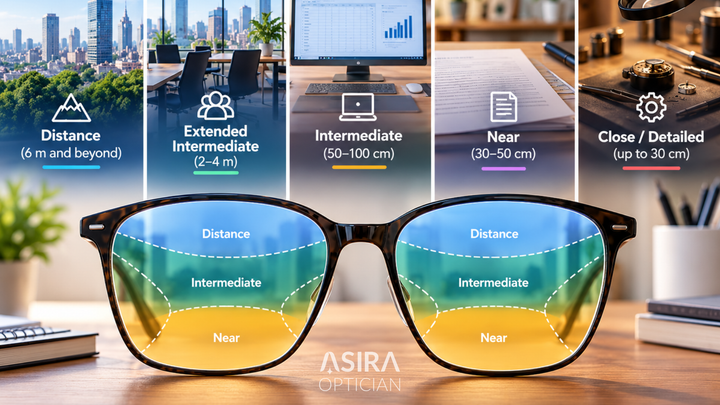
That distinction is important for modern optometry practices. Patients don't come to us simply because they need a particular refractive power. They come because they have a visual problem they want to solve. They may want to work comfortably at a computer, drive safely at night, read for longer without discomfort, manage glare, improve their visual performance or simply see more comfortably throughout the day.
When those needs are documented and communicated effectively, the optical team is in a much better position to help the patient find an appropriate solution.
Better clinical documentation therefore has the potential to benefit both sides of the practice. It supports continuity of care and better communication while also helping practice owners understand whether clinically appropriate recommendations are actually translating into solutions for their patients.
Ultimately, the strongest practices don't separate clinical care from business performance. They recognise that when you understand your patients better, document their needs properly and make sure the entire team acts on that information, better patient outcomes and better business outcomes can often follow naturally.
Clinical documentation shouldn't end when the examination ends. It should help carry the patient's needs through the entire practice.
ASIRA is a cloud-based EMR and practice management software built by eye care professionals for eye care professionals. We have helped hundreds of practices change the way they work. To find out more, visit www.asira.health and sign up for a FREE TRIAL!


Comments ()