

How Ayushman Bharat is Transforming Eye Care in India
Discover the difference between EMRs and EHRs, how Ayushman Bharat is transforming digital healthcare, and why connected eye care is the future.
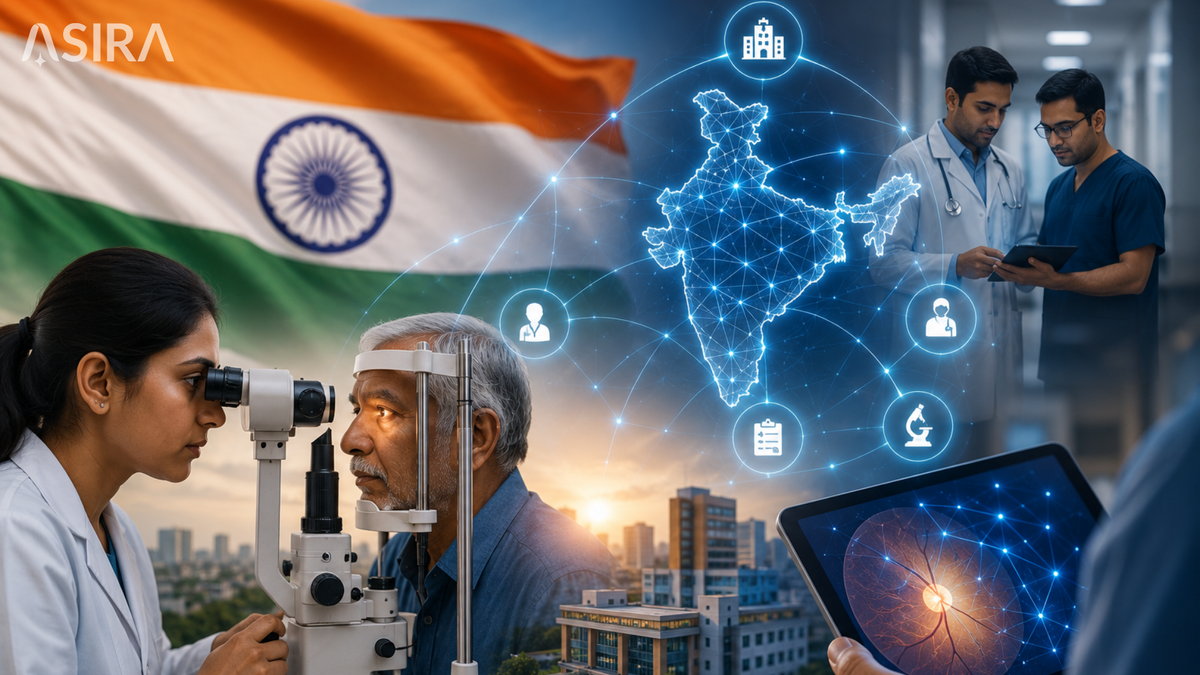
Digital technology has transformed the way eye care is delivered. Paper records have largely given way to electronic systems that allow practitioners to document examinations, store images, manage appointments and retrieve years of clinical history within seconds. For many practices, this shift has improved efficiency, reduced administrative burden and enhanced the quality of patient care.
Yet despite these advances, one significant challenge remains. Most digital records exist only within the practice that created them. When patients visit another optometrist, an ophthalmologist or a physician, they are often asked to repeat their medical history, carry printed reports or rely on memory to fill the gaps. Healthcare may have become digital, but it is not always connected.
This distinction highlights an important difference between an Electronic Medical Record (EMR) and an Electronic Health Record (EHR). Although the terms are often used interchangeably, they serve different purposes.
An EMR is the digital version of a patient's record within a single practice. It contains consultation notes, prescriptions, investigation results and clinical findings recorded by that healthcare provider. For an optometry practice, this may include refractions, retinal images, OCT scans, contact lens records and treatment plans. An EMR is invaluable for managing patients within the clinic, but its usefulness often ends there.
An EHR takes a broader view. Rather than belonging to a single organisation, it brings together health information from multiple healthcare providers to create a more complete picture of the patient's health. Importantly, this information is shared only with the patient's explicit consent. Instead of isolated records, clinicians can access relevant information that supports better informed and more coordinated care.
For eye care practitioners, this matters more than ever. Optometrists are increasingly involved in detecting conditions that extend far beyond the eye. Diabetic retinopathy, hypertensive retinopathy and neurological disorders are just a few examples where ocular findings can influence wider medical management. Equally, access to a patient's systemic health information can provide valuable context when making clinical decisions. When records remain disconnected, opportunities for collaboration are often lost.
As healthcare becomes increasingly multidisciplinary, the ability to exchange information securely will become just as important as the ability to record it. The future of digital healthcare is therefore not simply about replacing paper with computers, but about enabling different healthcare providers to work together while ensuring patients remain in control of their own information.
Recognising this need, the Government of India launched the Ayushman Bharat Digital Mission (ABDM), an ambitious initiative designed to create a nationwide framework for secure, consent-based sharing of health information. Rather than replacing the software already used by hospitals and clinics, ABDM aims to connect them through common standards, allowing healthcare providers to communicate more effectively without changing the way they work.
For eye care professionals, understanding this shift is becoming increasingly important. As digital health continues to evolve, the question is no longer whether practices should use an EMR, but whether their software is ready for a future in which healthcare is truly connected.
The Vision Behind the Ayushman Bharat Digital Mission
Connecting millions of healthcare providers across a country as large and diverse as India is no small task. Hospitals, clinics and diagnostic centres use hundreds of different software platforms, many of which were never designed to communicate with one another. Replacing them with a single national system would be both impractical and disruptive. Instead, the Ayushman Bharat Digital Mission (ABDM) takes a different approach. Its goal is to create a common digital framework that allows existing systems to exchange information securely and efficiently.
At the centre of this ecosystem is the Ayushman Bharat Health Account (ABHA), a unique digital health identifier that enables individuals to link their health records across different healthcare providers. Contrary to a common misconception, ABHA does not store a patient's medical records. Those records remain with the hospitals and clinics that created them. Instead, ABHA acts as a secure key that allows information to be located and shared when the patient chooses to do so.
Patient consent is fundamental to the entire system. Before one healthcare provider can access records held by another, the patient must authorise that request. They decide who can view their information, which records can be shared and for how long. This ensures that patients retain control over their health information while enabling healthcare professionals to access the data they need to make informed clinical decisions.
To support this digital ecosystem, the National Health Authority has also created the Healthcare Professionals Registry (HPR) and the Health Facility Registry (HFR). These national registries provide verified directories of healthcare professionals and healthcare facilities, helping establish trust and consistency across the system. Behind the scenes, internationally recognised interoperability standards ensure that information created in one software platform can be accurately understood by another.
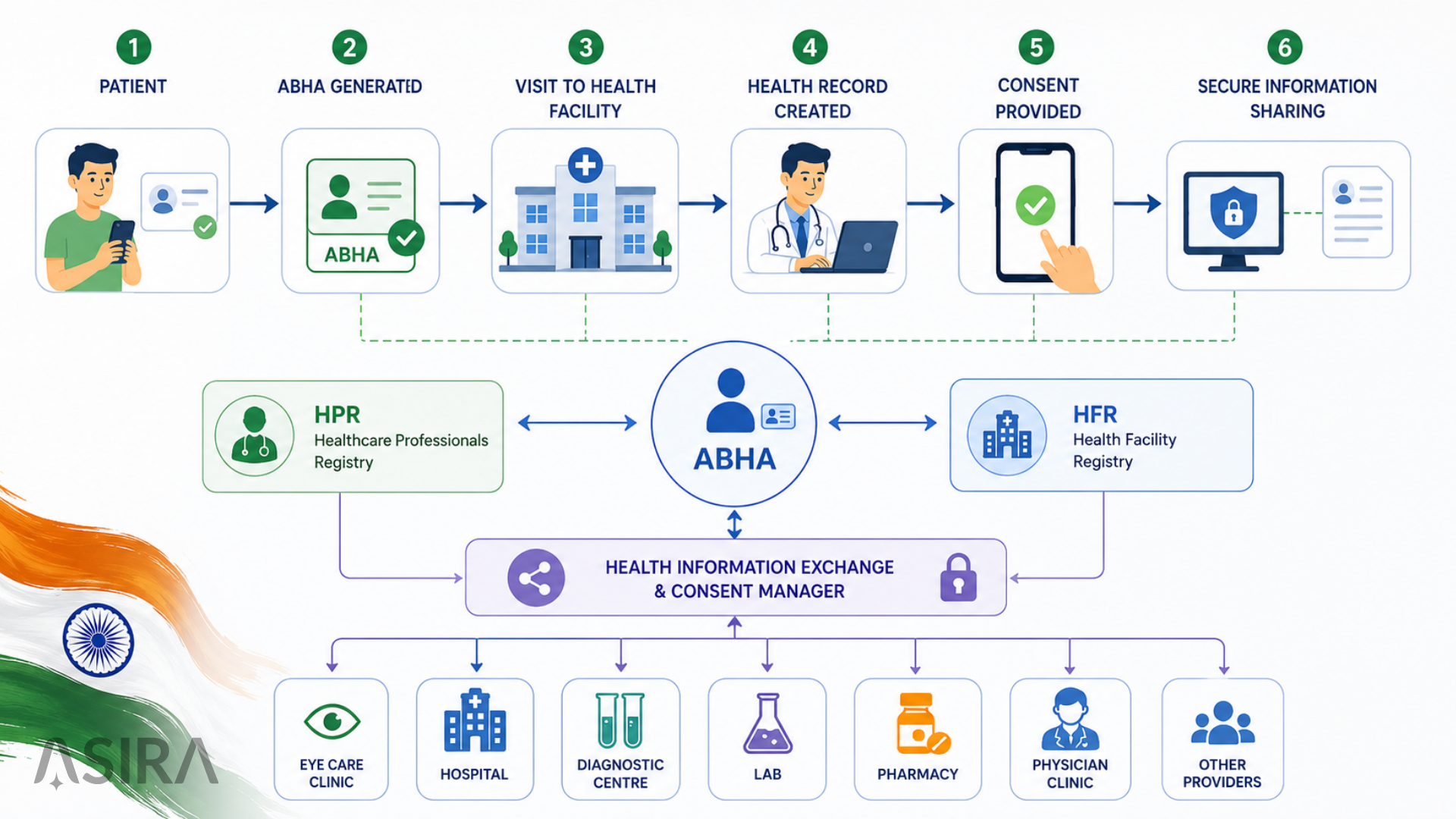
The benefits become clear in everyday clinical practice. Imagine a patient with diabetes attending a routine eye examination. An optometrist identifies early diabetic retinopathy and refers the patient to an ophthalmologist. Within an ABDM-enabled ecosystem, the ophthalmologist could access the referral information with the patient's consent, while the optometrist could later view the specialist's diagnosis and management plan. The patient's physician could also become part of that information exchange, creating a far more coordinated approach to care than today's fragmented system often allows.
The Ayushman Bharat Digital Mission is still evolving, and widespread adoption will take time. However, its direction is clear. By creating common standards rather than mandating a single software platform, India is laying the foundation for a healthcare system where information can move as seamlessly as patients do. For eye care practitioners, this represents an opportunity to become more closely integrated with the wider healthcare ecosystem and to deliver more connected, informed and collaborative care.
What This Means for Eye Care and the Future of ASIRA
For many independent eye care practices, the Ayushman Bharat Digital Mission may appear to be a policy initiative aimed primarily at large hospitals. In reality, it has the potential to reshape the way every healthcare provider shares information and collaborates in patient care. As interoperability becomes the norm, the value of practice management software will extend beyond documenting consultations to enabling secure communication across the healthcare system.
This is particularly important in eye care. Optometrists are often the first healthcare professionals to detect signs of systemic diseases such as diabetes, hypertension and neurological disorders. Their findings frequently influence the patient's next steps, whether that involves referral to an ophthalmologist, physician or another specialist. A connected health record ensures that these clinical insights do not end with the referral but become part of the patient's ongoing healthcare journey.
Beyond improving communication, connected records can reduce duplication of investigations, improve continuity of care and give practitioners a more complete understanding of their patients' health. At the same time, the consent-based design of the Ayushman Bharat Digital Mission ensures that patients remain in control of who can access their information, balancing better collaboration with strong privacy protections.
At ASIRA, we believe that software built for eye care should evolve alongside the profession itself. From the beginning, our focus has been on creating workflows designed specifically for optometrists and primary eye care practitioners. As India's digital health ecosystem matures, that vision naturally extends to interoperability.
We are therefore working towards making ASIRA compatible with the Ayushman Bharat Digital Mission, enabling practices that use our platform to participate in this emerging ecosystem. By aligning with ABDM standards, including secure patient identification and consent-based information exchange, we aim to help practitioners remain future-ready without changing the way they work.
The transition from paper records to electronic records transformed individual practices. The transition from EMRs to connected health records has the potential to transform healthcare itself. While this journey is still in its early stages, one thing is becoming increasingly clear: the future of eye care will not be defined simply by the software used within a clinic, but by how well that clinic connects with the wider healthcare system.
For eye care practitioners across India, preparing for that future starts today.
ASIRA is a cloud-based EMR and practice management software built by eye care professionals for eye care professionals. We have helped hundreds of practices change the way they work. To find out more, visit www.asira.health and sign up for a FREE TRIAL!

Comments ()