

Different Roles and Shared Goals in Teleoptometry and Teleophthalmology, and How ASIRA Connects Them.
Telemedicine has reshaped healthcare delivery over the past decade, and eye care is no exception.
Introduction
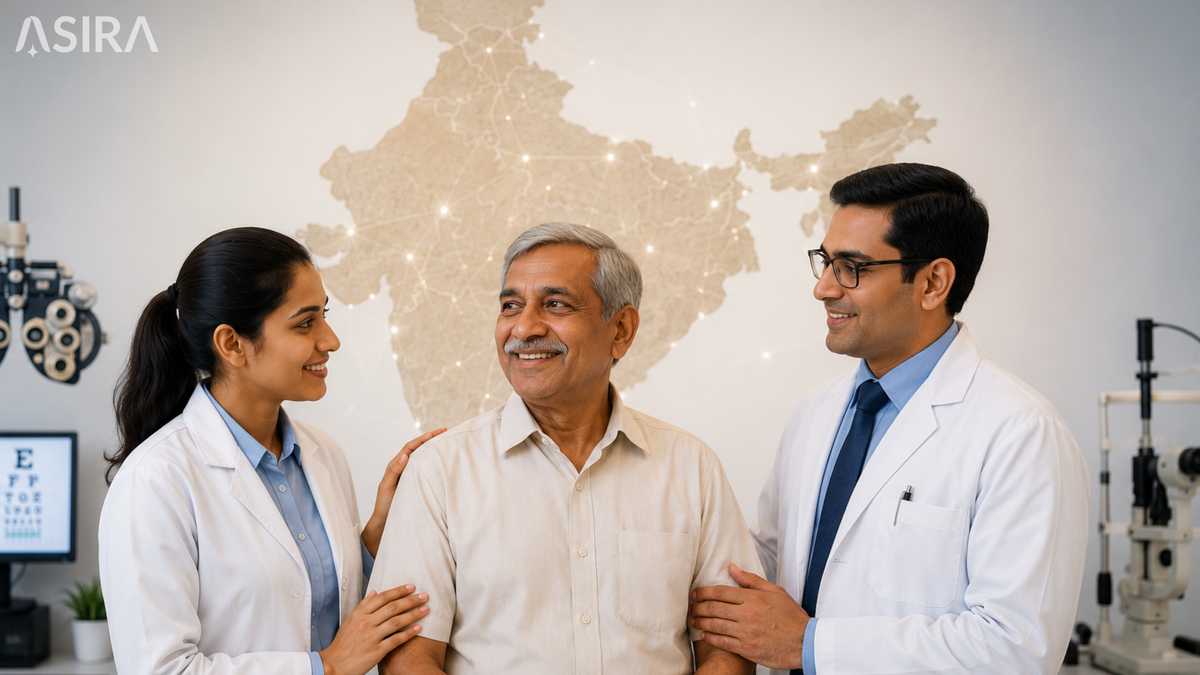
Telemedicine has reshaped healthcare delivery over the past decade, and eye care is no exception. As digital tools mature and patient expectations evolve, teleoptometry and teleophthalmology are gaining traction. Both bring eye care closer to patients by using remote technologies, but they play distinct roles.
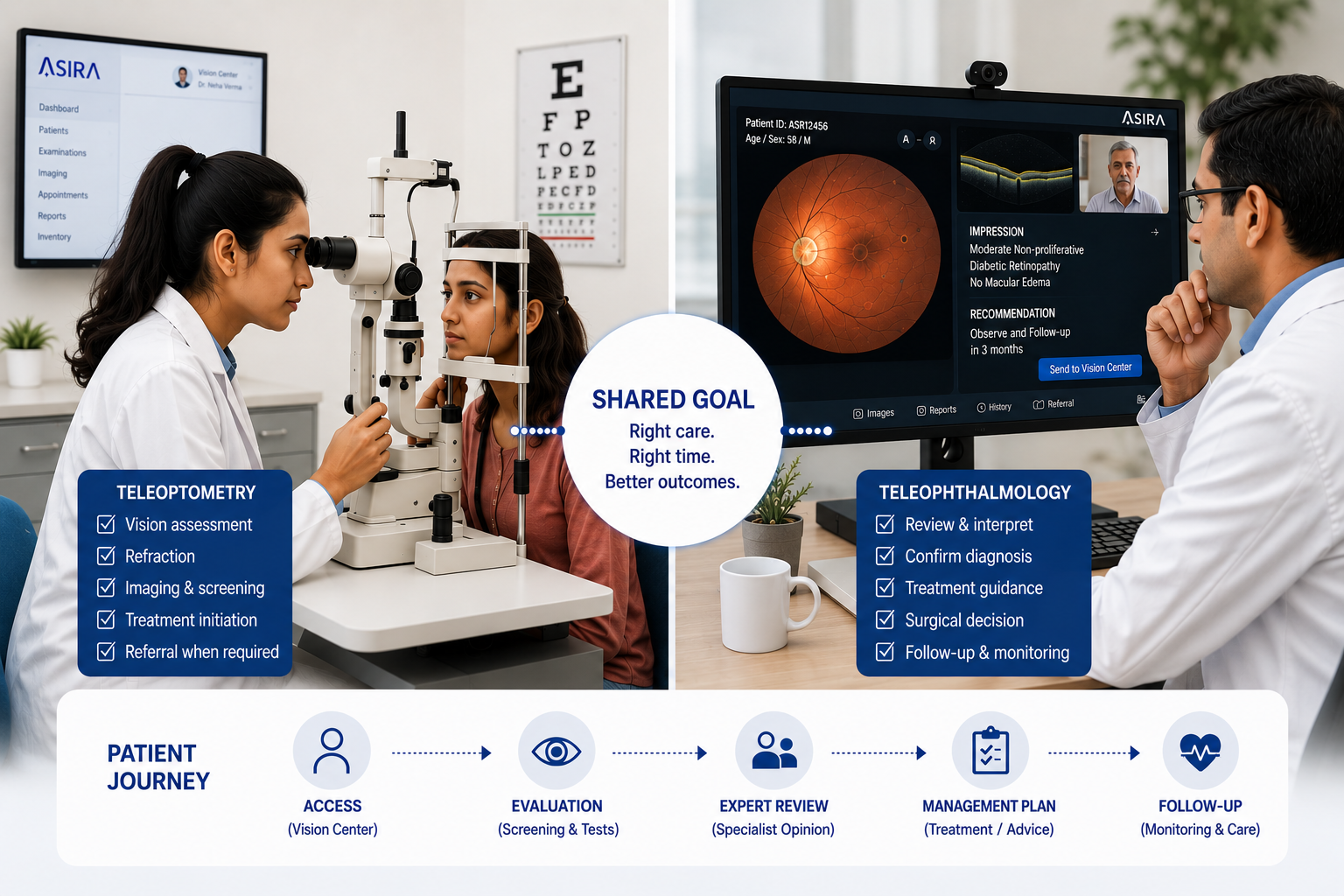
- Teleoptometry focuses on primary eye care
- Refractive services, triage, chronic disease monitoring, and optical product support.
- Teleophthalmology focuses on specialist eye care
- Medical and surgical management of diseases like glaucoma, diabetic retinopathy, and cataract.
These models are not competitors but complements. Together, they create a continuum of care that stretches from the first point of contact to advanced disease management.
In countries like India, where eye care needs are immense and unevenly distributed, tele-eye care holds particular importance, with a high burden of uncorrected refractive error, cataract, diabetic retinopathy, and glaucoma. With most ophthalmologists concentrated in urban areas, remote care is not just convenient, it is essential.
At ASIRA, we see both teleoptometry and teleophthalmology as integral to the future of eye care. Our goal is to provide an EMR platform that supports each discipline’s specific needs while also bridging the overlap between them.
This article explores how teleoptometry and teleophthalmology differ, where they intersect, why tele-eye care is especially critical in India, and how ASIRA is building tools to make both more effective.
Defining Teleoptometry
Teleoptometry is the use of digital tools to deliver optometric care remotely. It is usually the first point of contact for patients and includes:
- Initial consultations and triage for symptoms like red eye, dryness, or blurred vision.
- Remote follow-ups for refractive services, such as checking adaptation to new lenses.
- Chronic disease monitoring for conditions like dry eye or progressive myopia.
- Optical product support, including orders for spectacles and contact lenses.
The strength of teleoptometry lies in accessibility. Patients often seek optometrists for routine care, and the ability to connect remotely for advice or follow-up reduces barriers. In resource-limited settings, this becomes even more valuable, as optometrists can guide patients on whether a trip to a distant ophthalmology center is truly necessary.
Defining Tele-ophthalmology
Tele-ophthalmology refers to the delivery of ophthalmology services remotely by specialists. It includes:
- Diabetic retinopathy screening, where fundus photos are captured remotely and graded by ophthalmologists.
- Triage of urgent cases like acute glaucoma or trauma, guiding whether patients need immediate referral.
- Post-operative follow-ups after cataract or refractive surgery, conducted remotely when safe.
- Second opinions using shared images and reports for complex diagnoses.
Teleophthalmology is highly dependent on diagnostic imaging and structured referrals, often using asynchronous workflows (images captured locally, reviewed later by specialists).
Where Teleoptometry and Teleophthalmology Overlap
Despite their differences, there is meaningful overlap between the two:
- Triage and referral coordination: Teleoptometrists identify red flags and escalate cases to ophthalmologists via teleophthalmology.
- Chronic disease co-management: Optometrists monitor stable conditions, while ophthalmologists focus on progression and escalation.
- Shared data flows: Diagnostic images captured at the optometry level can be reviewed by ophthalmologists, with management plans sent back.
- Patient education: Both models use teleconsults to explain conditions, treatments, and preventive measures.
The Importance of Tele-Eye Care in India
India faces one of the world’s largest burdens of avoidable blindness and visual impairment. The National Blindness and Visual Impairment Survey (2019) estimated that over 60 million people in India live with vision impairment, and cataract and uncorrected refractive error remain leading causes. Conditions like diabetic retinopathy and glaucoma are also rising sharply with the diabetes epidemic and aging population.
The challenge is not just disease prevalence but geographic distribution of eye care providers. Around 70% of India’s population lives in rural areas, while most ophthalmologists and tertiary eye hospitals are concentrated in cities. This leaves millions with limited access to timely eye care.
Tele-eye care provides a scalable way to bridge this gap. Its importance in India lies in:
- Reaching underserved communities: Remote triage and screening reduce the need for unnecessary long-distance travel.
- Supporting primary-level eye workers: Optometrists and vision technicians in rural vision centres can connect with ophthalmologists for second opinions.
- Chronic disease monitoring: Tele-eye care ensures patients with glaucoma, diabetic retinopathy, or myopia receive regular screening without frequent travel.
- Reducing hospital overload: Tertiary hospitals can reserve in-person appointments for complex cases, while routine examinations shift to remote platforms.
Several large-scale Indian teleophthalmology initiatives, such as diabetic retinopathy screening through fundus cameras at primary health centers, have already shown success. By combining these efforts with robust EMR integration through platforms like ASIRA, tele-eye care can scale even further.
How ASIRA Supports Teleoptometry
ASIRA makes teleoptometry more practical by embedding it into the patient’s full clinical journey:
- Teleconsults can be scheduled or initiated directly in the EMR. Notes from the consult sit alongside in-person records.
- Task Management allows responsibilities after tele-consults, such as arranging follow-ups or checking compliance, to be clearly assigned with due dates and email notifications.
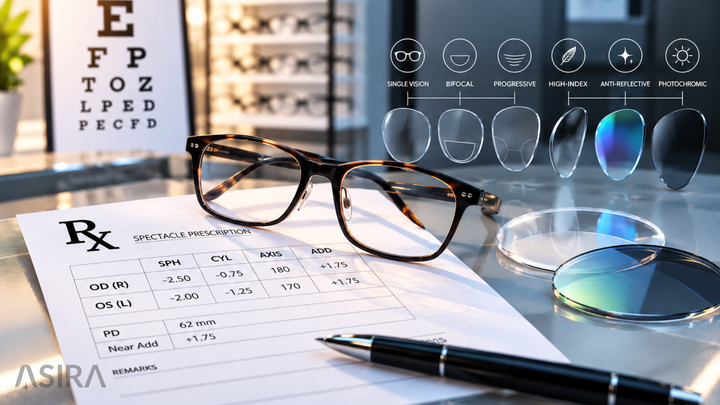
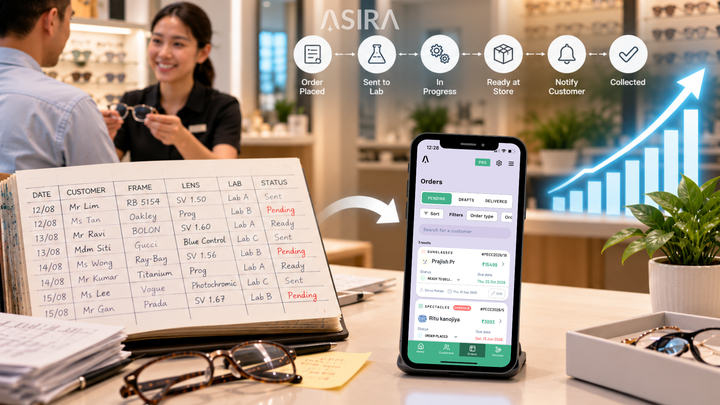
- ASIRA enables practices to create, share, and confirm spectacle or contact lens orders remotely, connecting product delivery directly to appointments.
- Performance analytics show how teleoptometry impacts outcomes, such as order volumes or follow-up rates.
This ensures teleoptometry is not an isolated service but a connected workflow.
How ASIRA Supports Teleophthalmology
For specialists, ASIRA enables teleophthalmology through:
- Image and report sharing: Fundus photographs or OCT scans from satellite centres can be uploaded for remote review.
- Asynchronous consults: Ophthalmologists can log in, review cases, and provide management plans without needing synchronous video calls.
- Referral tracking: Optometrist referrals can be monitored to ensure they are completed and feedback loops are closed.
- Integrated billing: Teleophthalmology services are billed in the same way as in-person services, normalising remote care within practice economics.
ASIRA ensures collaboration between primary and specialist care is smooth, documented, and transparent.
Building a Connected Ecosystem
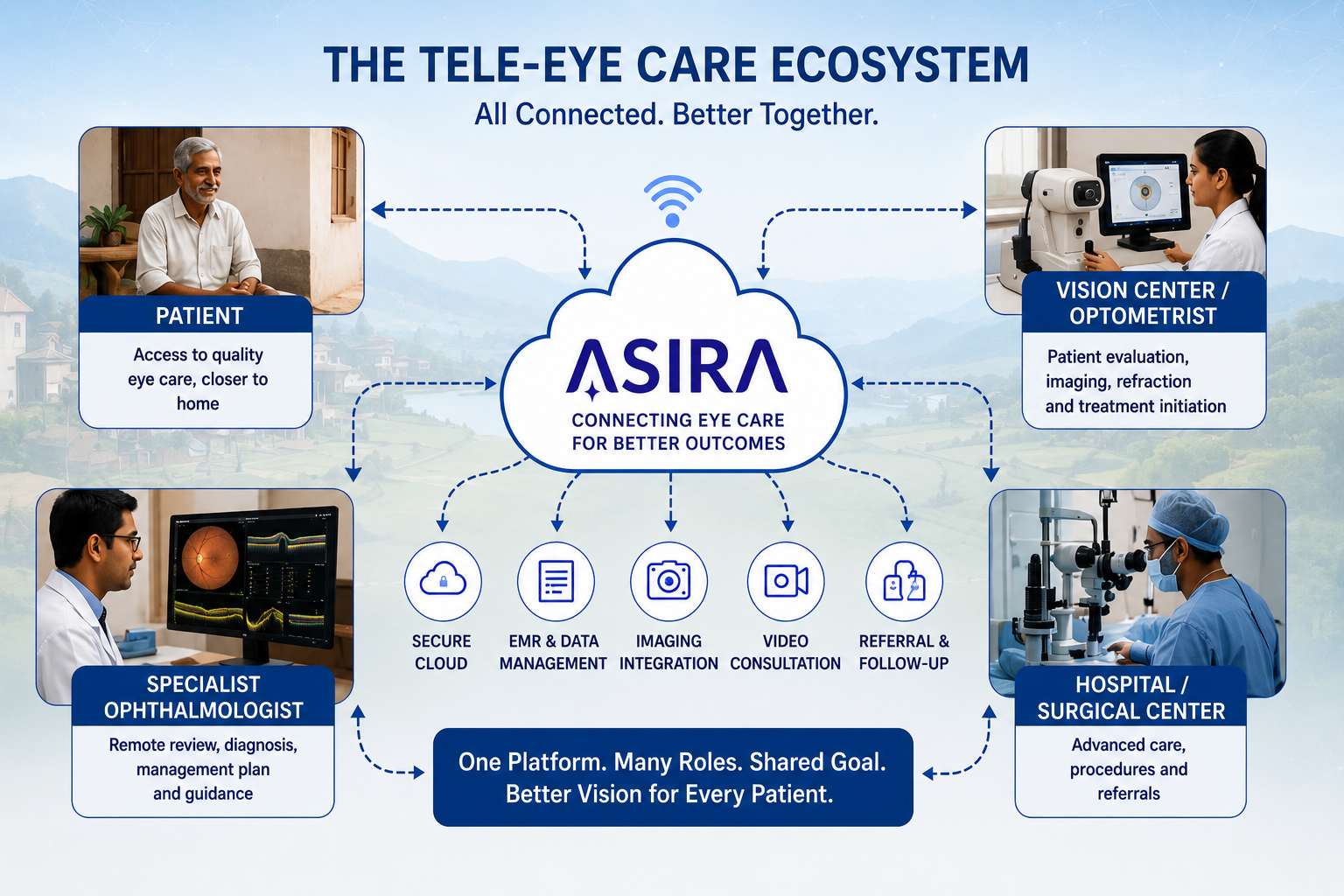
The true power lies in linking teleoptometry and teleophthalmology within one platform. Consider this patient pathway in India:
- A farmer in rural Maharashtra reports blurry vision through a teleoptometry consult with a local optometrist.
- The optometrist suspects diabetic retinopathy and refers the patient for fundus photography at a nearby vision center.
- Images are uploaded into ASIRA, where an ophthalmologist in Mumbai reviews them via teleophthalmology.
- The specialist confirms early-stage diabetic retinopathy and sends back a management plan.
- The optometrist explains the plan to the patient, places an order for new glasses through ASIRA, and assigns a task to staff for scheduling the next follow-up.
Throughout this journey, ASIRA ensures all records, communications, and orders are connected, turning fragmented care into a continuous, coordinated experience.
Why This Matters
For patients, this model provides access, reduces travel, and builds trust through timely communication. For optometrists, it creates confidence in escalation decisions. For ophthalmologists, it ensures they see the right cases, informed by complete records. And for Indian healthcare as a whole, tele-eye care supported by platforms like ASIRA helps address the imbalance between urban providers and rural patients.
Conclusion
Teleoptometry and teleophthalmology are distinct yet complementary pillars of modern eye care. Teleoptometry excels in accessibility, triage, and optical support, while teleophthalmology provides specialist care for complex disease. Where they overlap, in referrals, chronic disease monitoring, and patient education, lies the opportunity to create seamless care.
In India, where millions still lack timely access to eye care, the importance of tele-eye care cannot be overstated. By bridging urban-rural divides and supporting both optometrists and ophthalmologists, it offers a way to scale services and reduce avoidable blindness.
ASIRA is building the infrastructure to make this vision possible. With integrated teleconsults, task management, orders, billing, and performance analytics, our platform connects the dots between teleoptometry and teleophthalmology. The result is a unified, patient-centric system that extends care beyond clinic walls and adapts to the realities of Indian healthcare.
In the future, practices that embrace both models, supported by ASIRA, will not only provide better care but also play a key role in tackling India’s eye care challenges at scale.
To Book a Demo or to learn more, contact ASIRA at contact@asira.health or via WhatsApp: +919152391194. Visit www.asira.health to learn more about how ASIRA can help your eye care business grow.
Comments ()