

Why ASIRA Sends WhatsApp Messages from an ASIRA-Verified Number (and NOT a Personal Number)
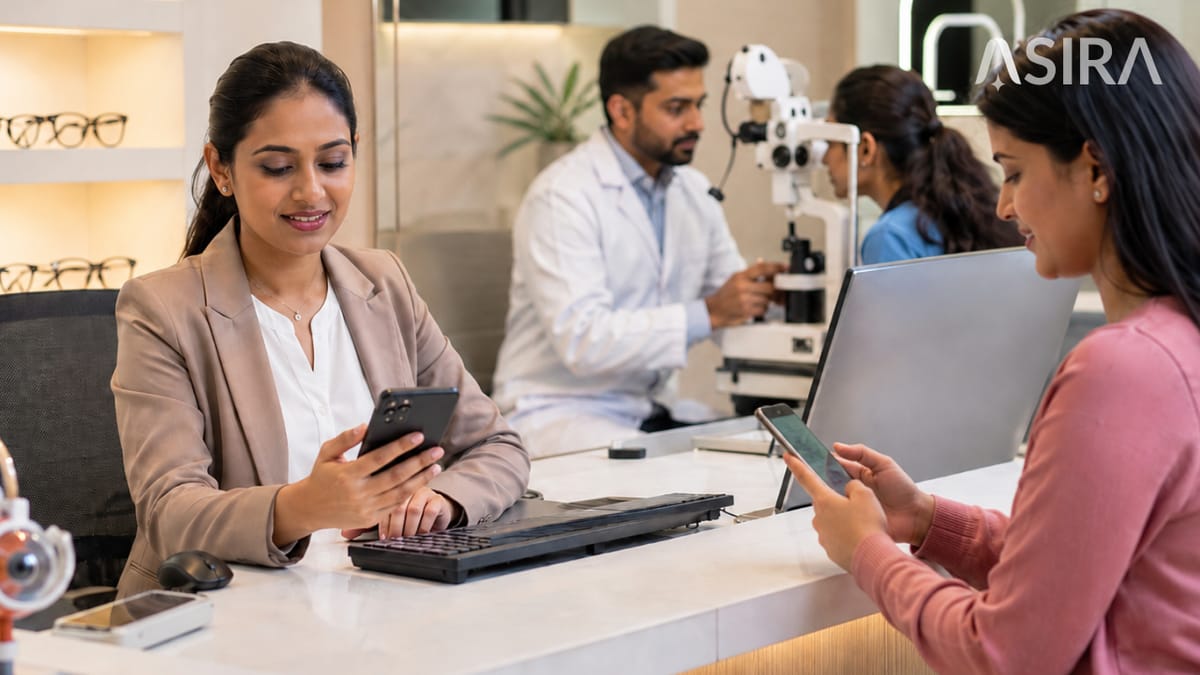
For eye care practices, every patient message must be trusted, traceable, and compliant. That is exactly why ASIRA sends WhatsApp messages through an ASIRA-managed, verified business channel instead of a practitioner’s personal WhatsApp number.
1) WhatsApp Business API requires verified sender identity
On the official WhatsApp Business Platform, phone numbers must be registered and verified before API messaging is allowed.
In simple terms: you cannot legally or technically send API WhatsApp messages as any random personal number.
2) Better patient trust and less “spam” perception
When all communication comes from one known ASIRA sender identity, patients quickly recognize the source. This reduces confusion, improves open/read behavior, and lowers the chance your reminders are ignored as spam.
3) Audit trail and accountability for clinics and hospitals
ASIRA logs outbound message activity with template type, status, sender/recipient IDs, timestamps, and provider responses. That gives your practice a clean communication history for operations, quality checks, and admin governance.
4) Safer communication workflow for healthcare teams
Using personal numbers creates risk: staff turnover, inconsistent messaging, and zero centralized control. Using ASIRA’s dedicated sender flow means communication stays with the system, not with an individual employee’s phone.
5) Reliable delivery through template-based, policy-aligned messaging
ASIRA sends approved WhatsApp template messages via Meta Graph API and tracks delivery outcomes through webhook events. This structured approach is more stable and hence predictable than ad-hoc manual messaging from personal devices.
What happens if a service tries to mimic another user’s phone number?
If any service attempts to impersonate a number or mislead users about sender identity, it enters policy-violation territory.
Potential outcomes include:
- Message failures or rejection by platform checks
- Account quality decline and messaging restrictions
- Suspension or removal of platform access
- Reputation damage with patients
- Possible legal/compliance exposure depending on region
WhatsApp’s Business Messaging Policy explicitly prohibits impersonation and misleading identity, and enforcement can escalate from warnings to restrictions and bans.
How should practitioners explain this to patients?
Use this short onboarding line at registration/check-in:
“You’ll receive appointment and care updates on WhatsApp from ASIRA, our secure communication partner.
Please save the number and treat those messages as official clinic communication.”
You can also add:
- A one-line note on consent forms
- A mention in appointment cards/SMS
- A reminder at first visit: “ASIRA messages are official, not spam”
To Book a Demo or to learn more, contact ASIRA at contact@asira.health or via WhatsApp: +919152391194. Visit www.asira.health to learn more about how ASIRA can help your eye care business grow.
Comments ()