
Are You Recording Enough Data During Every Eye Examination?
Learn why comprehensive clinical documentation protects patients, reduces medico-legal risk and helps optometrists deliver better eye care.
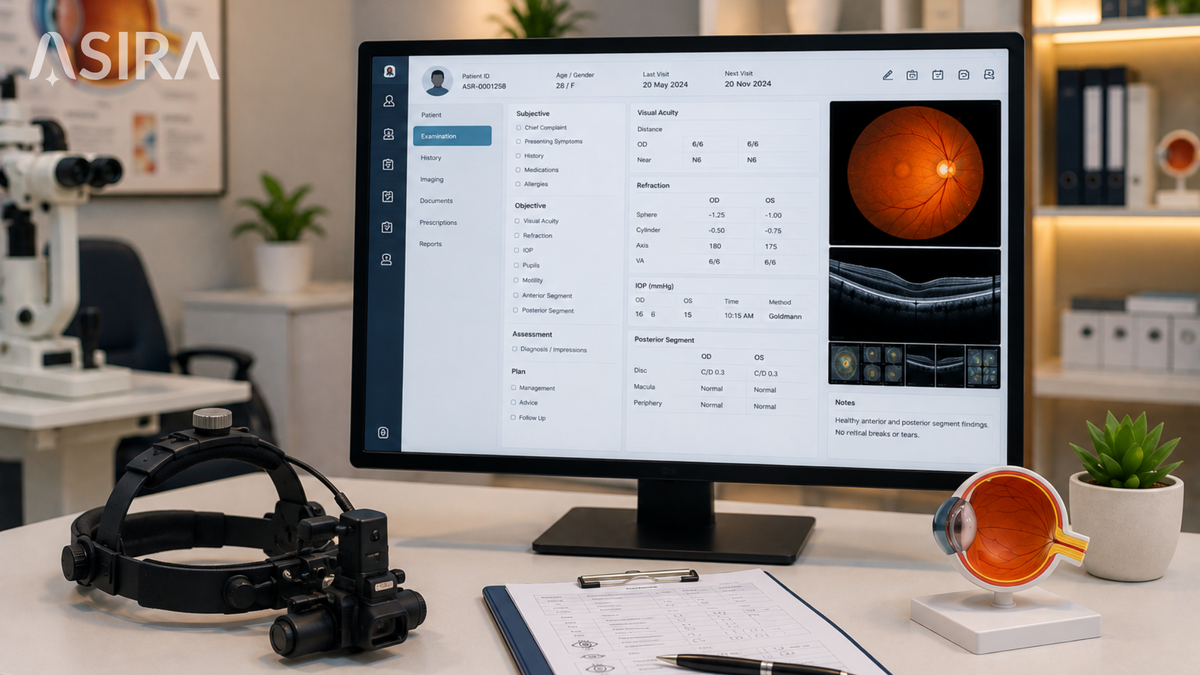
Every eye examination tells a story. From the patient's presenting symptoms and medical history to your clinical findings, diagnosis and management plan, every piece of information contributes to that patient's ongoing care. Yet there is one question that every optometrist should ask themselves: are you recording enough data during every examination?
Clinical documentation is often viewed as an administrative task that takes valuable time away from patient care. In reality, it is one of the most important professional responsibilities an optometrist has. A comprehensive clinical record supports sound clinical decision-making, improves continuity of care, facilitates referrals, enables disease monitoring and provides an accurate account of the care delivered. Just as importantly, it demonstrates professionalism, accountability and adherence to accepted standards of clinical practice.
The quality of an eye examination is only as good as the quality of its documentation. An excellent clinical assessment loses much of its value if key findings, discussions or management decisions are not recorded. As optometry continues to evolve as a healthcare profession, comprehensive documentation is no longer simply good practice. It is becoming an essential component of delivering safe, high-quality patient care.
Clinical records are more than patient notes
Across healthcare systems worldwide, clinical documentation is recognised as a fundamental part of clinical practice. Professional organisations such as the General Optical Council, the College of Optometrists and the American Optometric Association all emphasise that patient records should be accurate, complete, contemporaneous, legible and attributable to the clinician who created them. These principles exist because the clinical record is far more than a collection of notes. It is the official record of the clinical encounter.
A well-documented record should allow another suitably qualified practitioner to understand exactly why the patient attended, what examinations were performed, what findings were identified, how clinical decisions were reached and what management was recommended. It should clearly demonstrate the practitioner's clinical reasoning rather than simply list observations. When documentation is thorough, it supports continuity of care and ensures that future clinical decisions are based on complete and reliable information.
High-quality documentation also contributes to better clinical governance. It allows practices to monitor standards of care, supports clinical audits, facilitates research and creates opportunities to improve patient outcomes over time. Good records therefore benefit not only individual patients but also the wider profession.
Documentation is becoming increasingly important in India
The importance of comprehensive clinical documentation is becoming even more relevant as optometry continues to develop within India. The introduction of the National Commission for Allied and Healthcare Professions (NCAHP) Act represents an important milestone in the regulation and recognition of allied healthcare professionals. As the profession moves towards greater standardisation and accountability, expectations surrounding documentation, record keeping and professional responsibility are likely to become increasingly aligned with internationally accepted standards.
For optometrists, this represents an opportunity to strengthen professional practice. Consistent and comprehensive documentation demonstrates clinical competence, supports quality assurance and reinforces public confidence in the profession. It also creates consistency across clinicians, making it easier for practices, educational institutions and healthcare organisations to maintain high standards of care. As primary eye care continues to expand across India, robust documentation will become an increasingly important foundation for delivering safe, evidence-based and accountable clinical services.
Documentation protects both the practitioner and the patient
Comprehensive documentation benefits everyone involved in the delivery of eye care. For patients, accurate records improve continuity of care by ensuring that future consultations build upon previous findings rather than starting from the beginning each time. They allow disease progression to be monitored over time, improve communication with other healthcare professionals and support timely referrals when required. Every well-documented consultation contributes to better-informed clinical decisions throughout the patient's journey.
Practitioners benefit equally. Clinical records provide evidence of the care delivered, demonstrate adherence to accepted standards of practice and create an objective record of the practitioner's clinical judgement. A complete record shows that an appropriate history was obtained, relevant examinations were performed, significant findings were documented and appropriate advice and management were discussed. Rather than simply protecting against complaints, comprehensive documentation reflects a commitment to delivering consistently high standards of patient care.
The medico-legal consequences of poor documentation
One of the most overlooked aspects of clinical documentation is its importance in protecting practitioners from medico-legal risk. In the event of a patient complaint, professional inquiry or legal claim, the clinical record is often the most important piece of evidence available. It provides an objective account of what occurred during the consultation, what examinations were performed, what findings were identified and what advice or treatment was recommended. Without a comprehensive record, it becomes difficult to demonstrate that the appropriate standard of care was provided, even when the examination itself was performed thoroughly.

There is a well-established principle across healthcare that states, "If it wasn't documented, it wasn't done." While this phrase may appear simplistic, it reflects the reality of many medico-legal proceedings. Courts, regulatory authorities and professional indemnity providers place significant weight on contemporaneous clinical records because they are considered more reliable than recollections made months or years later. Missing documentation of patient consent, advice provided, management options discussed or significant clinical findings can introduce unnecessary uncertainty and make it considerably more difficult for practitioners to defend their clinical decisions.
Comprehensive documentation should also capture the practitioner's clinical reasoning. Recording why a particular management decision was made, why certain investigations were or were not performed, or why referral was considered unnecessary provides valuable context when reviewing a case retrospectively. Good documentation demonstrates that decisions were thoughtful, evidence-based and made in the patient's best interests. In this way, robust record keeping protects not only the practitioner but also the integrity of the profession itself.
Why documentation often falls short
The challenge is not that optometrists fail to appreciate the importance of documentation. Most clinicians understand exactly why detailed records matter. The difficulty lies in maintaining comprehensive documentation while managing busy clinics and increasing patient volumes. Paper records provide little structure, free-text documentation depends heavily on memory and individual practitioners often develop different approaches to recording clinical findings. As a result, important examinations may be performed but never documented, while small omissions gradually accumulate over time.
These inconsistencies become particularly apparent when reviewing historical records, referring patients to colleagues or analysing clinical outcomes across a practice. Incomplete documentation not only affects continuity of care but also reduces the value of the clinical record as a professional and legal document. The solution is therefore not simply encouraging practitioners to write more. Instead, documentation should become an integrated part of the clinical workflow, making comprehensive record keeping both efficient and consistent.
Building documentation into the clinical workflow
The most effective documentation systems support clinicians throughout the consultation rather than expecting them to remember every detail afterwards. Structured examination templates guide practitioners through each stage of the eye examination, helping ensure that important findings are consistently recorded while still allowing flexibility for individual clinical judgement. This approach reduces variation between clinicians, minimises omissions and creates more complete patient records.
Structured documentation also generates meaningful clinical data that extends beyond the individual consultation. Consistently recorded information supports clinical audits, quality improvement initiatives, teaching, research and population health analysis. As healthcare becomes increasingly data-driven, well-structured documentation is rapidly becoming one of the most valuable assets within any clinical practice.
How ASIRA supports comprehensive documentation
At ASIRA, we believe that documentation should enhance clinical care rather than interrupt it. That philosophy has shaped every aspect of our electronic medical record system. Instead of simply replacing paper records with a digital alternative, ASIRA guides practitioners through a structured clinical workflow that encourages complete, consistent and defensible documentation during every eye examination.
Built specifically for optometrists, ASIRA includes comprehensive examination templates for routine eye examinations, contact lens practice, dry eye assessments, glaucoma evaluations, low vision consultations and many other clinical scenarios. Practices can also create their own customised templates to reflect their preferred examination protocols and workflows. By integrating documentation directly into the examination process, ASIRA reduces the likelihood of missing important findings while allowing practitioners to document additional observations whenever required.
The result is a complete longitudinal patient record that supports continuity of care, improves communication between clinicians, strengthens medico-legal protection and aligns with the principles of good clinical governance. Rather than relying on memory or inconsistent note-taking, practitioners can be confident that every consultation is documented to a consistently high standard.
The future of optometry starts with better records
As optometry continues to develop as a recognised healthcare profession, expectations surrounding documentation, accountability and clinical governance will only continue to grow. Comprehensive clinical records are no longer simply an administrative requirement. They are central to delivering safe, evidence-based and patient-centred eye care.
Recording enough data during every eye examination is not about creating more paperwork or filling more boxes. It is about accurately documenting the care you provide, supporting better clinical decisions, protecting both practitioner and patient, reducing medico-legal risk and contributing to the long-term advancement of the profession. Every complete clinical record strengthens patient care today while helping build a more accountable, respected and trusted future for optometry.
ASIRA is a cloud-based EMR and practice management software built by eye care professionals for eye care professionals. We have helped hundreds of practices change the way they work. To find out more, visit www.asira.health and sign up for a FREE TRIAL!

Comments ()