

Practice Analytics in Eye Care: How ASIRA’s New Performance Section Turns Data Into Better Care and Higher Revenue
With modern electronic medical records (EMRs), data is increasingly accessible and, more importantly, it can be transformed into insights that directly improve patient outcomes and practice performance.

Every patient encounter in an eye care practice generates data. Appointment details, diagnoses, prescriptions, investigations, orders, invoices, and follow-ups all leave behind a digital footprint. Traditionally, much of this information was locked away in paper records or siloed within billing and scheduling systems. But with modern electronic medical records (EMRs), this data is increasingly accessible and, more importantly, it can be transformed into insights that directly improve patient outcomes and practice performance.
That is where practice analytics comes in. Analytics is not about collecting more information for the sake of it. It’s about organizing, interpreting, and acting on the information you already have. By doing so, practices can improve clinical decision-making, strengthen patient engagement, and identify opportunities to operate more efficiently.
With this in mind, ASIRA has just launched its Performance section, a dedicated space within the EMR that summarizes the most important clinical, operational, and financial indicators of your practice. It brings together everything from appointment trends to billing values and disease prevalence in one place. The goal is simple: help clinicians and administrators make better decisions with less guesswork.
This blog explores why practice analytics matters in eye care, what kinds of metrics are most useful, and how ASIRA’s new Performance section can help practices use their data to deliver better care and build sustainable growth.
Why Practice Analytics Matters in Eye Care

Eye care has always been both a clinical and a business enterprise. Clinicians want to provide the highest quality of care, but practices also need to remain financially healthy to keep delivering that care. Analytics bridges these two priorities by providing clarity on what’s really happening inside the practice.
- For clinicians, analytics highlights trends in diagnoses, treatment outcomes, and patient compliance. Knowing, for example, whether a high proportion of patients are returning with uncontrolled dry eye symptoms can help guide treatment protocols and patient education efforts.
- For administrators, analytics provides visibility into appointments, cancellations, and no-shows, helping staff adjust scheduling policies. It also reveals billing and revenue patterns, ensuring the financial side of the practice is healthy.
- For patients, analytics translates into better care. Practices that monitor and act on their data are more likely to identify gaps in follow-up, address common conditions proactively, and maintain shorter wait times.
In short, practice analytics connects the dots between clinical quality, operational efficiency, and financial sustainability.
The Common Gaps Without Analytics
Many eye care practices still operate in a way where data exists but isn’t being fully utilized. Some common gaps include:
- Appointments without context: Practices may know how many patients came in, but not how many cancelled, didn’t show, or rebooked later.
- Billing without insight: Invoices are issued, but few practices regularly analyze trends in average invoice value or the relationship between certain clinical services and revenue.
- Clinical data without trends: Refractive errors, eye diseases, and outcomes are recorded in patient charts, but practices rarely aggregate this information to identify population-level patterns.
- No clear performance benchmarks: Staff and clinicians often rely on anecdotal impressions of whether the clinic is “busy” or “quiet,” without objective data to back it up.
These blind spots can lead to inefficiencies, lost revenue, and missed opportunities for clinical improvement.
Introducing ASIRA’s Performance Section
ASIRA’s new Performance section is designed to address exactly these gaps. Instead of making practices sift through endless reports or raw data, the Performance section provides a clean, structured summary of key indicators. It transforms day-to-day clinical and administrative activity into actionable insights.
Here’s what it includes:
1. Appointment Performance
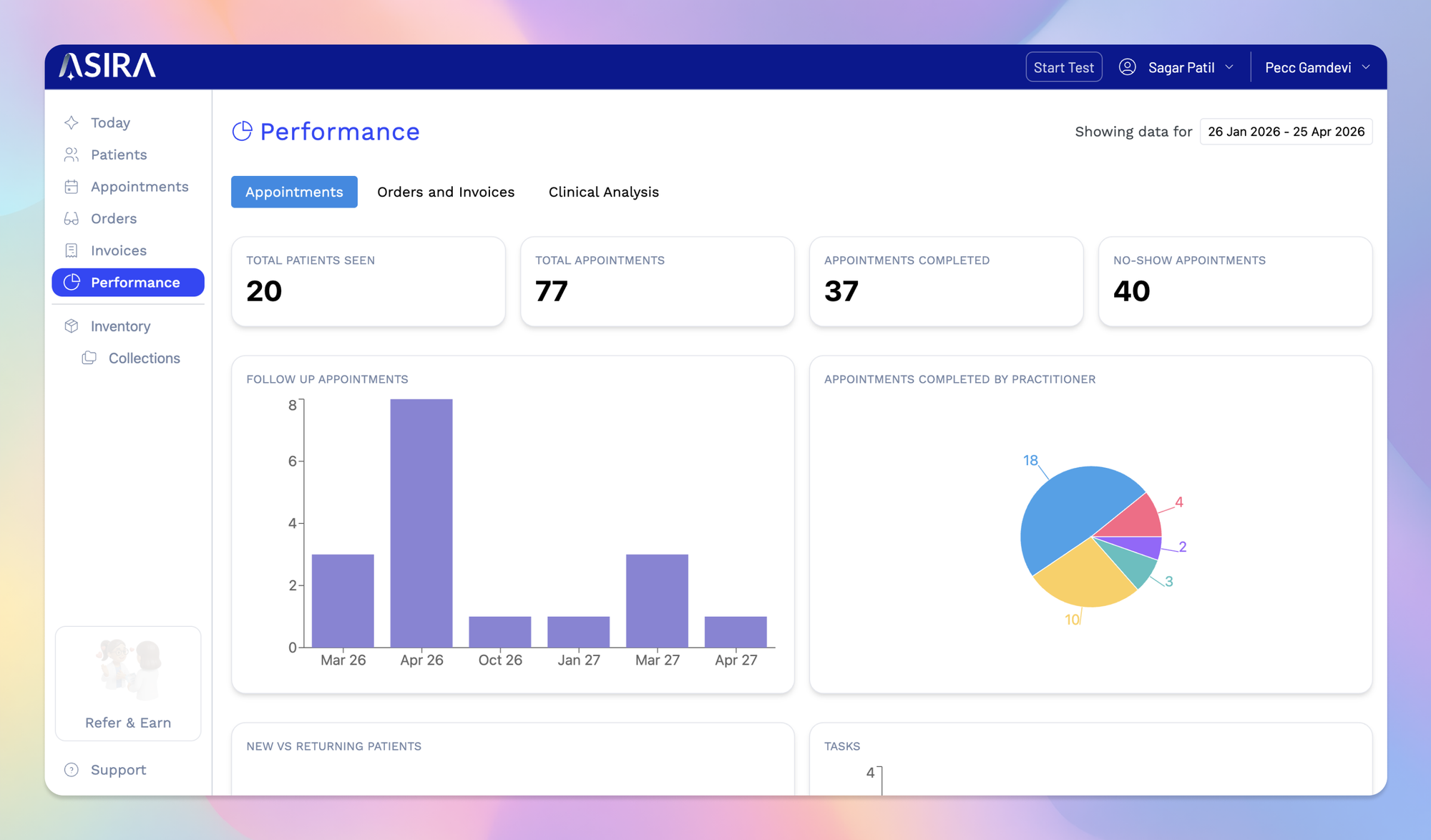
- Total appointments scheduled in a given period
- Completed visits vs. cancellations and no-shows
- Trends over weeks or months
This helps practices identify patterns, for example, if no-shows spike on particular days of the week or during certain time slots. Practices can then adapt scheduling strategies or send targeted reminders.
2. Orders and Billing
- Number of orders placed
- Invoices issued
- Total and average invoice values
With this data, administrators can see which services or product categories drive the most revenue. They can also track whether invoice values are increasing in line with clinical activity, or whether missed billing opportunities exist.
3. Clinical Performance
- Distribution of refractive errors seen in the practice
- Most common eye diseases diagnosed
- Trends in disease prevalence across patient populations
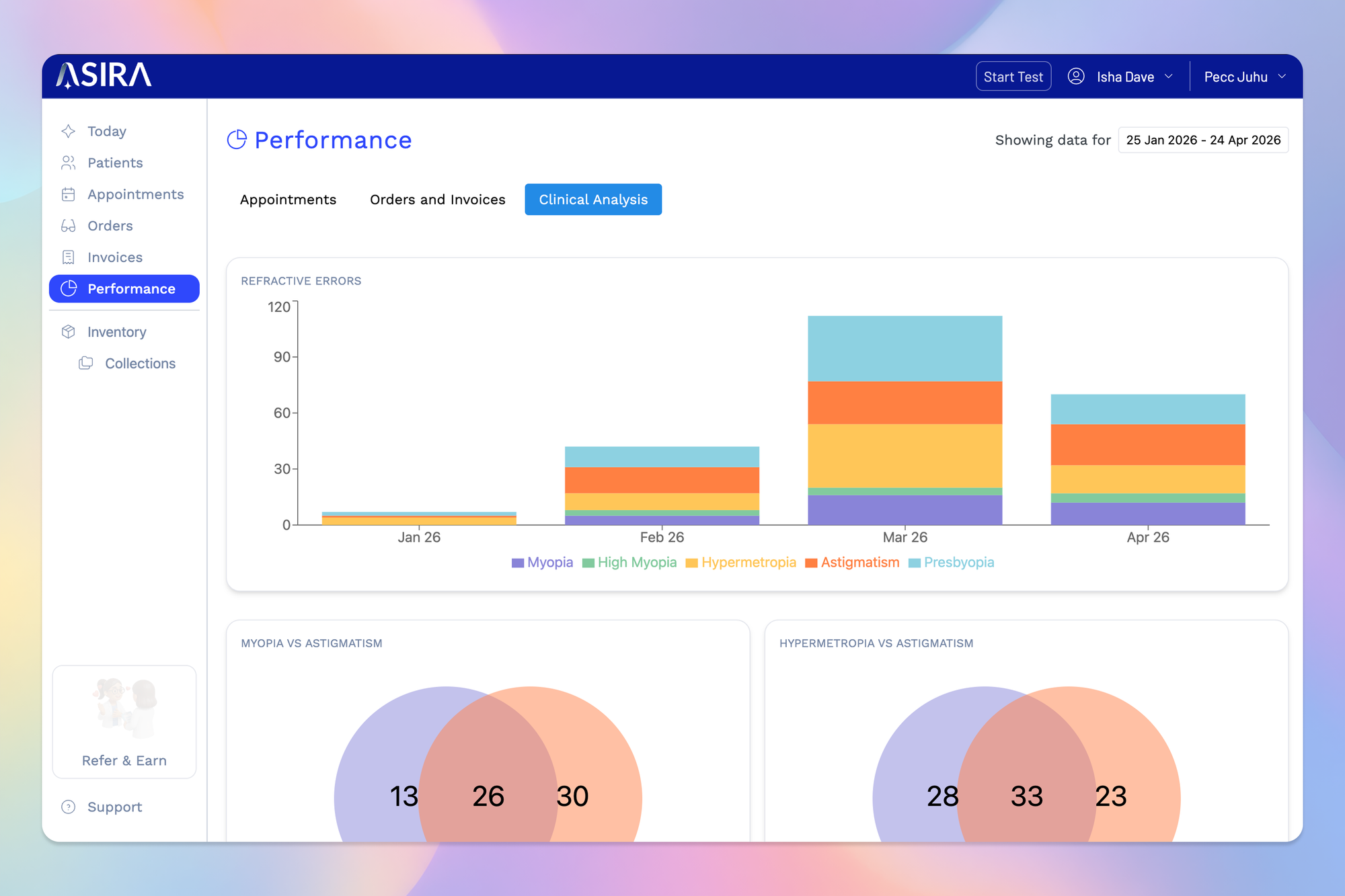
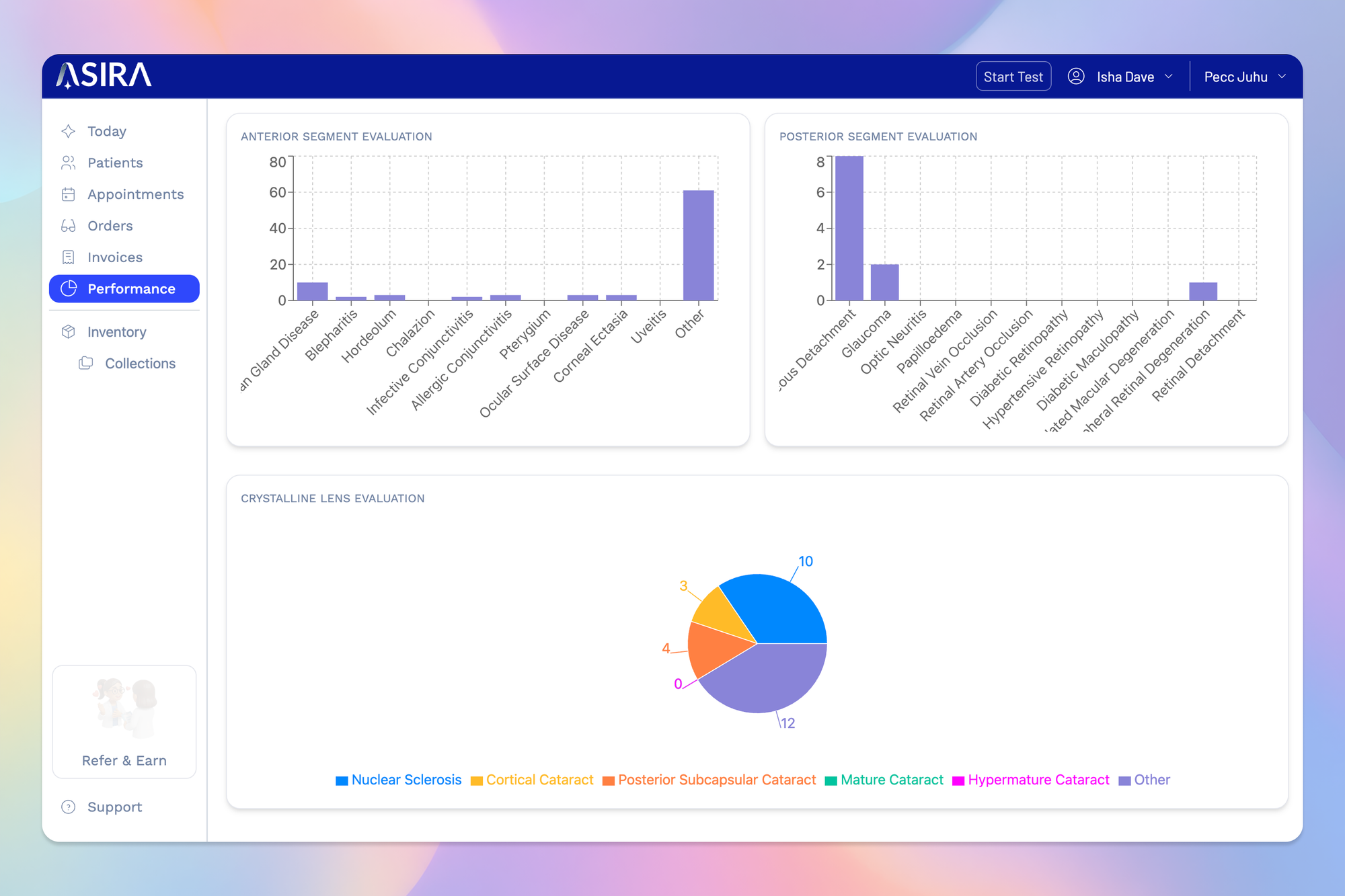
By aggregating clinical data, practices can spot shifts in the types of conditions they are treating. For example, a rising prevalence of myopia in younger patients may support the introduction of myopia control services.
How Analytics Translates to Better Care
Analytics isn’t only about business performance; it has a direct clinical benefit as well. With a structured performance dashboard, eye care professionals can:
- Identify underserved conditions: If glaucoma suspects or dry eye cases are increasing but follow-up rates are low, the practice can create targeted recall campaigns.
- Benchmark outcomes: Practices can compare refractive error correction rates or post-operative complication rates over time.
- Improve patient education: Knowing the most common diseases seen in the clinic allows practices to create tailored educational materials that meet the needs of their population.
For example, a practice noticing a large number of digital eye strain complaints could run patient seminars on visual ergonomics or promote blue light-filtering lens options.
How Analytics Strengthens Practice Management
On the operational side, ASIRA’s Performance section supports managers and administrators in making informed decisions.
- Appointment optimization: By analyzing no-show patterns, practices can decide whether to introduce double-booking strategies, adjust reminder systems, or enforce cancellation policies.
- Revenue forecasting: Invoice trends allow for more accurate monthly or quarterly financial planning.
- Inventory planning: Order trends help practices anticipate demand for lenses, frames, or medications, reducing waste and stockouts.
- Staff performance: Data on completed appointments and order volumes can be linked with staffing patterns, ensuring the right number of clinicians and support staff are available at peak times.
Turning Insights Into Action
The real value of analytics lies not just in seeing the data, but in acting on it. Here are a few scenarios where ASIRA’s Performance section can transform raw numbers into strategic action:
- Reducing no-shows: If the dashboard shows a 20% no-show rate on Monday mornings, the practice could switch to afternoon scheduling or implement SMS reminders for that slot.
- Boosting revenue: If average invoice values are below industry benchmarks, administrators can review whether billing is capturing all relevant services. For example, are follow-up visits being charged correctly? Are diagnostic imaging services consistently billed?
- Expanding clinical services: If the prevalence of myopia among children is rising year-on-year, practices could expand into myopia control services, offering orthokeratology or low-dose atropine.
- Community health planning: If diabetic retinopathy diagnoses are climbing, the practice could collaborate with local physicians to strengthen screening and referral pathways.
Each of these actions has both a clinical and a financial impact, translating to better care for patients, and healthier revenue for the practice.
Addressing Common Concerns
Some clinicians worry that focusing too much on analytics may shift attention away from patient-centered care. But the opposite is true. Analytics is not about reducing care to numbers; it is about uncovering patterns that would otherwise remain invisible. When used thoughtfully, data enhances clinical judgment rather than replacing it.
Another concern is complexity. Many EMR systems overwhelm users with endless reports that require technical expertise to interpret. ASIRA’s Performance section is designed to be simple and intuitive. The most important metrics are presented clearly, without requiring advanced analytics skills.
Building a Data-Driven Culture in Eye Care
Implementing practice analytics is not just a technological change; it requires a cultural shift within the clinic. Clinicians and staff need to view data as a resource, not a burden. Managers need to create routines around reviewing the Performance section, perhaps in monthly team meetings. By making analytics part of the clinic’s culture, practices can ensure that decisions are grounded in evidence rather than intuition.
This is where ASIRA’s role is particularly valuable. By providing analytics in a user-friendly format, the platform reduces the barriers to adopting a data-driven mindset.
The Future of Practice Analytics
Looking ahead, the potential for practice analytics in eye care is enormous. As EMRs integrate with diagnostic devices, data will become even richer. Future performance dashboards could include outcome measures like visual acuity improvements after cataract surgery, or adherence to treatment guidelines for glaucoma. Predictive analytics could help practices anticipate patient flow, identify high-risk patients, or project revenue more accurately.
ASIRA’s Performance section is a first step in this direction, providing practices with the clarity they need today, while laying the foundation for more advanced analytics in the future.
Conclusion
Eye care practices generate vast amounts of data every day, but without the right tools, that data remains underutilized. Practice analytics offers a way to unlock its value, connecting clinical quality with operational efficiency and financial sustainability.
ASIRA’s new Performance section makes this process easier than ever. By summarizing appointment outcomes, billing and order trends, and clinical data on refractive errors and eye diseases, it gives practices the insight they need to improve care, reduce inefficiencies, and strengthen revenue streams.
In a field where both patient outcomes and practice viability are at stake, having a clear view of performance is not a luxury, it’s essential. With the launch of this new section, ASIRA is helping eye care practices turn data into actionable knowledge, bridging the gap between good intentions and measurable results.
To Book a Demo or to learn more, contact ASIRA at contact@asira.health or via WhatsApp: +919152391194. Visit www.asira.health to learn more about how ASIRA can help your eye care business grow.



Comments ()