

Nutrition and Myopia: What the Evidence Really Says and How to Counsel Patients
One of the most common questions eye care practitioners hear from parents of children with myopia is: “Can diet help my child’s eyes?” The belief that nutrition influences eye health is widespread, and for good reason. We know that nutrition plays a role in growth, body composition, and overall health. It seems reasonable to assume that diet might also influence how the eye grows and whether a child becomes myopic.
A recent systematic review published in Optometry and Vision Science set out to answer this question by analyzing 27 studies that explored the relationship between nutrition and myopia. The review covered both observational studies (cross-sectional, cohort, retrospective) and interventional trials where specific nutrients or supplements were given.
The findings are nuanced. While the evidence does not support nutrition as a major tool for controlling myopia progression, certain nutrients and dietary elements may have some influence. Understanding these findings can help practitioners counsel families more effectively, balancing realistic expectations with practical advice.
What the Review Found
The review looked at 27 studies published before the end of 2021, including 24 non-interventional studies and 3 interventional trials. Together, they examined a wide range of nutrients and dietary elements, from proteins and vitamins to trace minerals and supplements like crocetin and 7-methylxanthine (7-MX).
1. Inconsistent Findings Across Studies
- Most observational studies showed no clear or consistent association between specific nutrients and myopia.
- Where associations were found, they were often weak (odds ratios close to 1, with wide or overlapping confidence intervals).
- Some nutrients seemed protective in one study but irrelevant or even risky in another.
This inconsistency makes it hard to recommend any single nutrient as a reliable preventive or treatment strategy.
2. Nutrients That Showed Some Association
Despite the inconsistencies, a few nutrients and dietary patterns stood out:
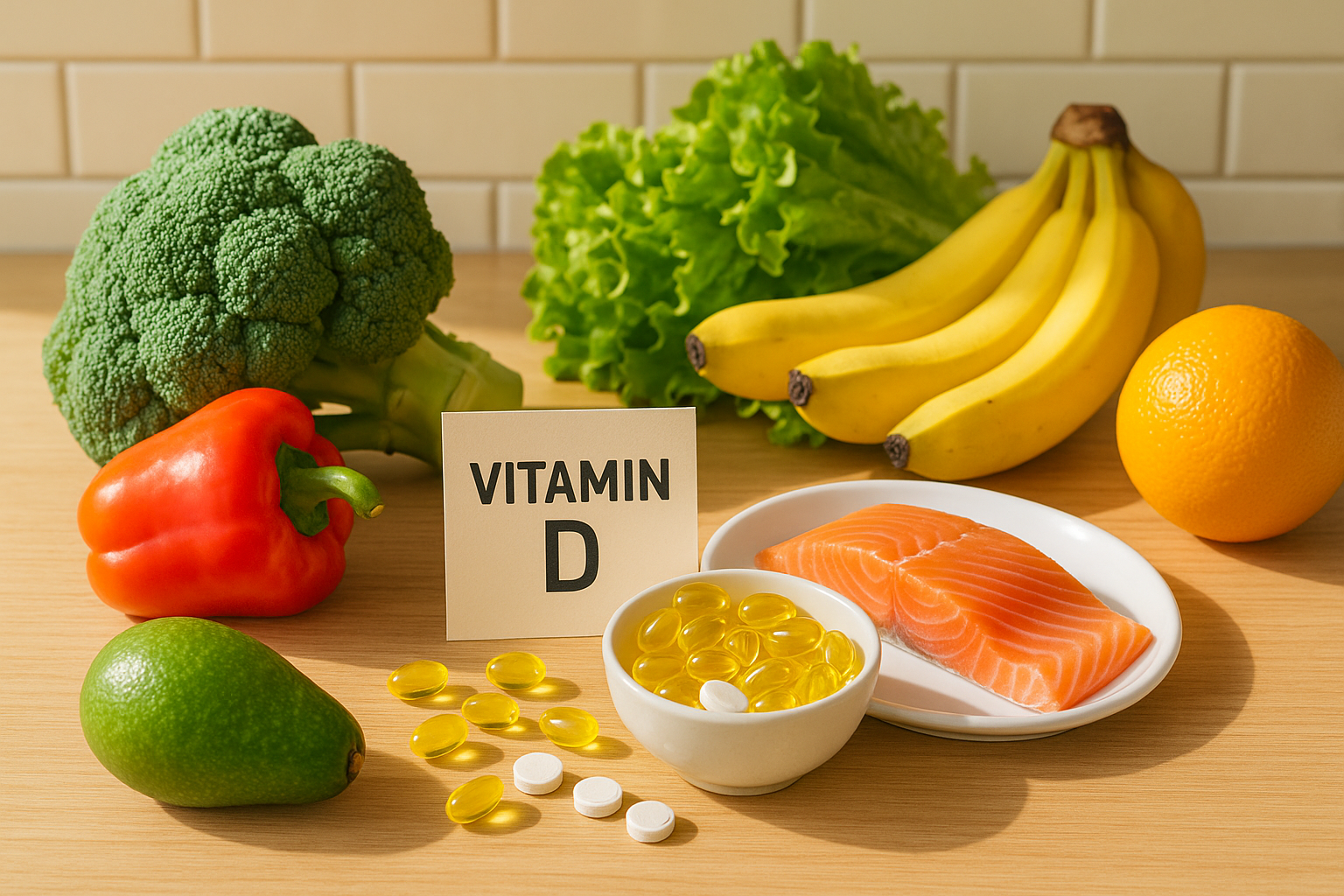
- Higher protein, vitamin B1, vitamin B2, vitamin C, iron, and phosphorus intake were linked with a lower risk of developing myopia in some studies.
- Vitamin D levels, especially serum concentrations, were lower in myopic individuals across several studies. However, it is unclear whether vitamin D itself influences myopia or whether it simply reflects less time outdoors, which is a strong protective factor.
- Zinc and selenium were found to be lower in the serum of myopes in some studies, although hair analysis showed the opposite for zinc, highlighting how complex interpretation can be.
- Refined carbohydrates (high glycemic load diets) were associated with higher risk of myopia in some populations, particularly in girls. This aligns with theories linking high sugar intake, insulin resistance, and eye growth.
3. Interventional Trials
Three clinical trials looked at specific dietary interventions:
- Animal protein (1958 study, London): Children who consumed more animal protein had slightly slower myopia progression compared with controls.
- 7-methylxanthine (7-MX, a caffeine metabolite): A three-year trial found no significant difference in refractive error progression, though some children showed slightly less axial elongation.
- Crocetin (a saffron extract): A short trial reported a minimal slowing of myopia progression (~0.08 D over 24 weeks).
These effects were either small or clinically insignificant, suggesting that nutrition alone is not an effective myopia control therapy.
What This Means for Clinical Practice
Nutrition is Not a Substitute for Proven Myopia Control
The strongest evidence for myopia control still lies in increased outdoor time, optical interventions (like myopia control contact lenses or spectacles), and pharmacological treatments (low-dose atropine). Nutrition cannot replace these strategies.
However, given that parents often ask about diet, practitioners should be ready with evidence-informed answers rather than dismissing the question.
How to Counsel Patients and Parents
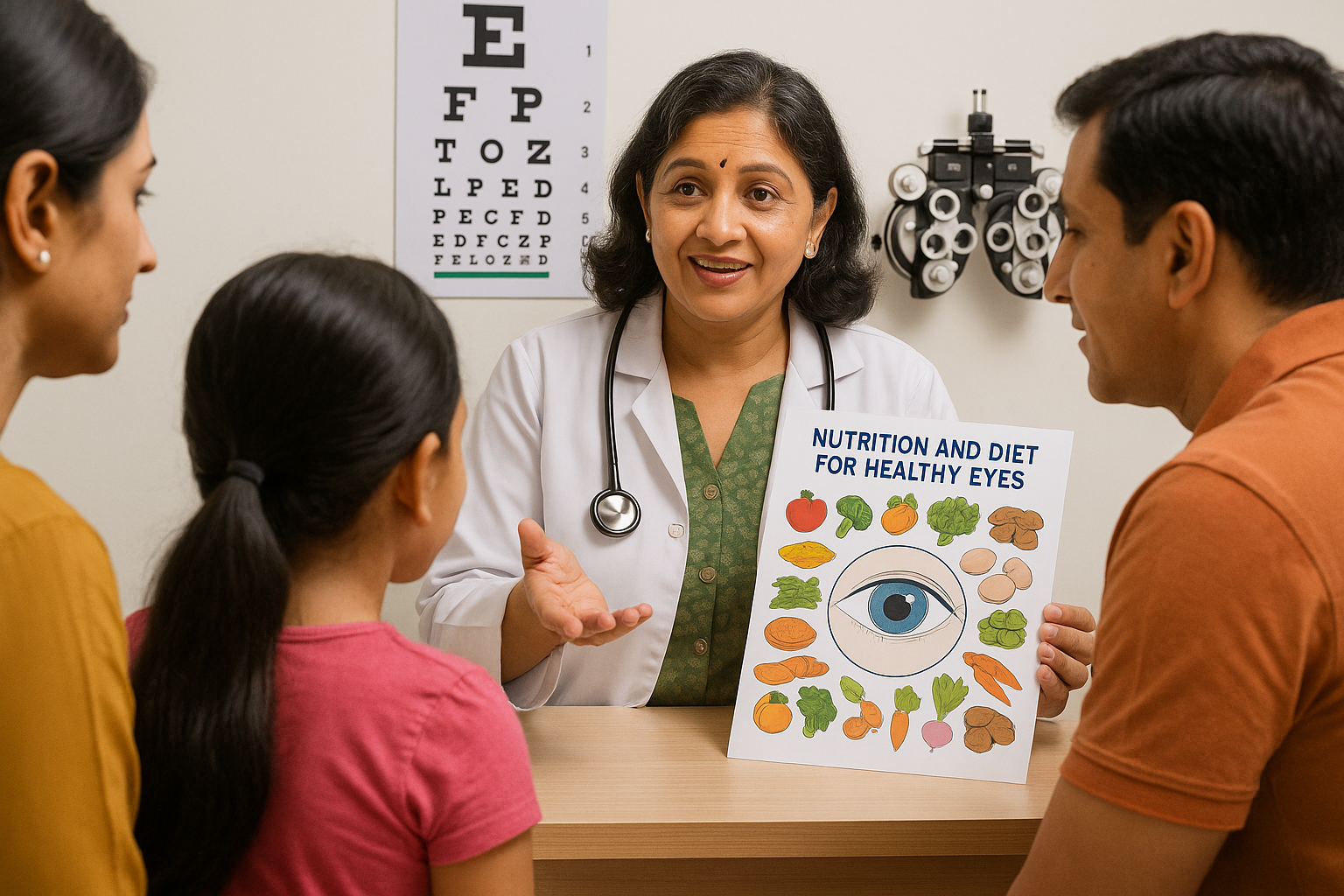
- Acknowledge the Question:Parents are not wrong to think nutrition matters. It does, but probably not in the way they expect. Nutrition supports overall growth and eye development, but it’s not a proven way to stop myopia progression.
- Promote a Balanced Diet:Encourage children to eat a diet rich in fruits, vegetables, protein, whole grains, and essential vitamins and minerals. Even if this does not directly prevent myopia, it supports overall health and may reduce the risk of other eye conditions in adulthood.
- Discuss Vitamin D Wisely:Many studies found lower vitamin D levels in myopes. But this likely reflects less time outdoors, not diet alone. So instead of recommending supplements as a myopia control strategy, reinforce the importance of outdoor playtime, which has robust evidence.
- Manage Expectations Around Supplements:Emerging supplements like 7-MX and crocetin are being studied, but current trials show minimal benefit. Families should be cautious about products marketed as “myopia nutrition solutions.”
- Highlight Lifestyle Over Diet Alone:Remind families that lifestyle factors like time outdoors and reduced near work have much stronger evidence than diet in slowing myopia progression. Nutrition plays a supportive, not primary, role.
Translating Evidence Into Everyday Conversations
Here are some examples of how this knowledge can be used in practice:
“Should I give my child more vitamin D or supplements to stop their myopia?”
Vitamin D is important for general health, but the best way to improve levels is regular outdoor activity. We know outdoor time itself is protective against myopia, so that’s a better focus than supplements.“I heard sugar makes eyesight worse. Should I cut sweets completely?”
Some studies suggest high sugar diets may be linked with eye growth, but the evidence isn’t conclusive. Still, limiting refined carbohydrates is healthy for many reasons, so it’s a good idea, but it’s not a magic fix for myopia.“Is there any special food that can slow down my child’s eye power increase?”
No food has been proven to slow myopia progression. What works best is outdoor time and treatments like special lenses or eye drops. A healthy diet is always good, but it’s not a substitute for these strategies.The Bigger Picture: Why Nutrition Still Matters
Even though nutrition is not a key player in myopia control today, it should not be ignored for several reasons:
- General Eye Health: Nutrients like vitamin A, C, zinc, and antioxidants are important for long-term eye health, especially for conditions like macular degeneration.
- Systemic Health: Childhood diet influences growth, immunity, and metabolic health. A balanced diet ensures children are in the best position to benefit from proven myopia treatments.
- Potential Future Discoveries: The science of nutrition and eye growth is still developing. As research into molecular pathways grows, nutrition could play a more targeted role in future interventions.
Conclusion
The systematic review makes one thing clear: there is no strong evidence that diet alone can prevent or control myopia progression. While some nutrients and dietary elements have shown possible associations, the effects are small, inconsistent, and not yet clinically actionable.
For practitioners, the key takeaway is to counsel families with balanced advice:
- Encourage healthy eating for overall growth and eye health.
- Emphasize outdoor time and proven myopia control strategies.
- Caution against relying on supplements or dietary “fixes.”
By framing the discussion this way, practitioners can validate parents’ concerns, promote healthier lifestyles, and keep the focus on strategies with the greatest impact.
References
- Chamarty S, Gupta SK, Dhakal R, Verkicharla PK. Is There Any Association Between Nutrition and Myopia? A Systematic Review. Optom Vis Sci. 2023;100(7):475–485.
- Fedor M, Socha K, Urban B, et al. Serum concentration of zinc, copper, selenium, manganese, and Cu/Zn ratio in children and adolescents with myopia. Biol Trace Elem Res. 2017;176(1):1–9.
- Choi JA, Han K, Park YM, et al. Low serum 25-hydroxyvitamin D is associated with myopia in Korean adolescents. Invest Ophthalmol Vis Sci. 2014;55(4):2041–2047.
- Tideman JWL, Polling JR, Voortman T, et al. Low serum vitamin D is associated with axial length and risk of myopia in young children. Eur J Epidemiol. 2016;31(5):491–499.
- Berticat C, Mamouni S, Ciais A, et al. Probability of myopia in children with high refined carbohydrate consumption in France. BMC Ophthalmol. 2020;20:337.
- Mori K, Torii H, Fujimoto S, et al. The effect of dietary supplementation of crocetin for myopia control in children: a randomized clinical trial. J Clin Med. 2019;8(8):1179.
- Tang SM, Lau T, Rong SS, et al. Vitamin D and its pathway genes in myopia: systematic review and meta-analysis. Br J Ophthalmol. 2019;103(1):8–17.
Comments ()